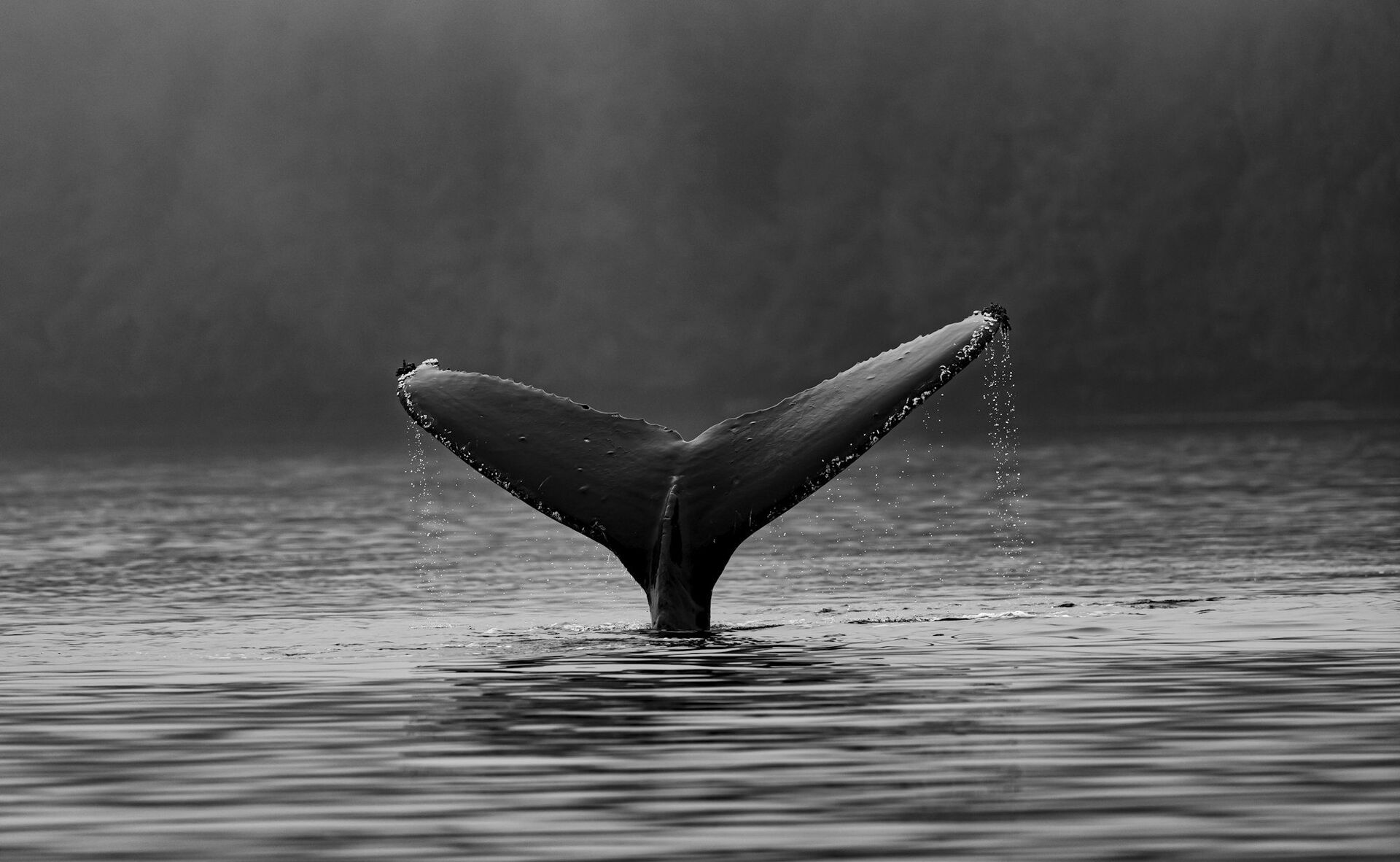
25 Mind-Blowing Whale Facts for Kids
Last updated: November 18, 2026
7 min read
Whales are some of the most amazing animals on Earth. They are mammals like us, but they spend their whole lives in the ocean. Some are bigger than the biggest dinosaurs that ever lived. Some sing songs that travel for hundreds of kilometres underwater. Some grow a tooth that looks like a unicorn horn. Here are 25 whale facts, each one traced back to a scientist or a conservation body rather than to a list on the internet. Read them on your own or share them with a grown-up. For more, see our 15 facts about whales guide too.
Key facts at a glance
- Number of species: 94 living cetaceans in the April 2026 list, counting whales, dolphins and porpoises
- Biggest whale: blue whale, around 30 metres long
- Smallest whale: dwarf sperm whale, about 2.7 metres. The smallest cetacean of all is the vaquita, a porpoise under 1.5 metres
- Closest land relative: the hippopotamus
- Longest dive: Cuvier’s beaked whale, 3 hours 42 minutes
1. The blue whale is the biggest animal ever
Blue whales are heavier than any dinosaur we know of, including the biggest sauropods. An adult can reach about 30 metres, and the heaviest on record weighed around 190 tonnes. A 2025 review accepted a 33.26 metre specimen as the longest reliable measurement. This is an exceptional record, not a normal adult length. Its heart weighs around 180 kilograms, roughly the size of a golf cart, and its tongue alone can weigh as much as an elephant.
2. Whales are mammals, not fish
Whales breathe air with lungs, give birth to live babies, feed their babies milk, and have a tiny bit of hair. All of these are mammal things. Fish lay eggs, breathe with gills, and have scales. See our piece on the differences between sharks and whales (one is a mammal, the other a fish).
3. Whales evolved from a land animal
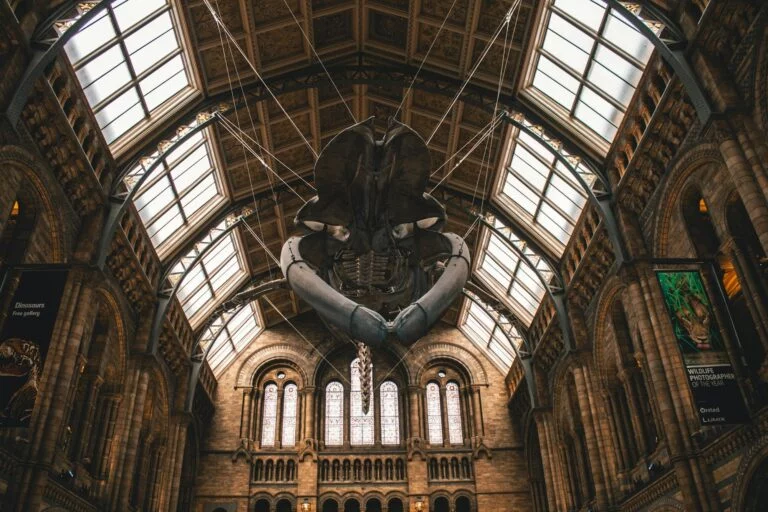
About 50 million years ago, a four-legged animal roughly the size of a wolf waded into the sea. Over millions of years its descendants lost their back legs, turned their front legs into flippers, and became whales. Their closest living land relative is the hippopotamus. See our piece on whale ancestors for the whole story.
4. Most whales sleep with half their brain at a time
Whales would drown if they fell completely asleep, because they have to decide to breathe. So most of them rest one half of the brain at a time and keep the other half awake to handle breathing. They often keep one eye open while they do it. Read more in our piece on how whales sleep.
5. Sperm whales have the biggest brain on Earth
A sperm whale’s brain weighs about 8 kilograms, roughly six times more than a human brain. Sperm whales live in family groups led by older females, and calves are minded by the rest of the group while their mothers are down hunting.
6. Humpback whales sing long songs
Male humpback whales sing songs that run 10 to 30 minutes and repeat for hours. Every year the song slowly changes, and all the males in an ocean basin end up singing the new version. It works a lot like a hit song spreading around the world.
7. Whales have belly buttons
Because whales are mammals and grow inside their mother before being born, they have belly buttons, just like you. The scar is hard to spot on most whales but it is there.
8. The narwhal’s horn is really a tooth
Narwhals are small Arctic whales, and the males grow a long spiral tooth straight through the upper lip. It can pass 2.5 metres. The tooth is packed with nerve endings, and scientists think narwhals use it to sense what is happening in the water around them. See our narwhal species profile.
9. Whales can hold their breath for hours
A Cuvier’s beaked whale holds the record for the longest dive by any mammal: 3 hours 42 minutes on a single breath, recorded off North Carolina in 2020. Most whales dive for far shorter times, but still much longer than any human freediver.
10. Whales talk by clicking and singing
Different whales make different sounds. Toothed whales like sperm whales and dolphins click. Baleen whales like blue whales and humpbacks moan, sing, and pulse very low notes. Low sounds carry a long way underwater, which is why a blue whale call can be picked up hundreds of kilometres from the animal making it.
11. A diving blue whale’s heart can slow to 2 beats a minute
In 2019 a Stanford team stuck a heart monitor to a blue whale with suction cups, the first time anyone had recorded the heart rate of the largest animal alive. On a deep feeding dive the heart dropped as low as 2 beats a minute. Back at the surface, gulping air, it sped up to about 37.
12. Baby blue whales grow about 90 kilograms a day
A blue whale calf can put on roughly 90 kilograms of body weight every single day. Its mother’s milk is 35 to 50 percent fat, which is closer to butter than to the milk in your fridge. A human baby would need years to grow that much.
13. Whales eat with baleen or with teeth
Some whales have teeth (sperm whales, dolphins, orcas). Others have baleen, which is like a giant comb made of keratin, the same stuff as your fingernails. Baleen whales gulp big mouthfuls of water and tiny animals, then push the water out and swallow the food.
14. Orcas are actually dolphins
The killer whale, or orca, is the largest member of the dolphin family. So technically an orca is a very big dolphin. Orcas are excellent hunters and live in tight family groups that stay together for life.
15. Some whales are white
The beluga whale is white as snow when it is an adult. Calves are grey and turn white as they grow. Belugas are sometimes called canaries of the sea because they make so many different calls. See our beluga species profile.
16. Whale poop helps the ocean
Whale poop is loaded with nutrients that feed tiny floating plants called phytoplankton. Those plants make oxygen and feed the fish. So whale poop is part of what keeps the ocean healthy. Read more in our piece on why whale poop matters.
17. A whale’s blow has a shape
Each species blows a different shape at the surface. Sperm whales blow forward and to the left. Blue whales make a tall, narrow column. Right whales make a V. Experienced watchers can name the whale from its breath alone.
18. Some whales live over 200 years
Bowhead whales are the longest-lived mammals on Earth. Some are estimated to be over 200 years old, based on chemical changes in the lens of the eye and on old stone and ivory harpoon points found buried in their blubber. See our bowhead whale profile.
19. Killer whales hunt great white sharks
Orcas sit at the top of the ocean food chain. Off South Africa, two orcas nicknamed Port and Starboard have been recorded killing great white sharks and eating the liver, leaving the rest. Great whites now clear out of those stretches of coast when the pair shows up.
20. Humpback whales help other animals
Humpbacks have been filmed putting themselves between killer whales and their prey, including seals and grey whale calves. Scientists are still arguing about why they bother. See our piece on humpbacks saving seals.
21. Whales play
Whales breach (jump out of the water), spy hop (stick their heads up to look around), slap their tails, and surf in big waves. Some of this has no obvious purpose beyond enjoying it, which is a fair description of play.
22. Millions of people go whale watching
The last full global survey, published by IFAW in 2009, counted 13 million whale watchers a year across 119 countries, spending 2.1 billion dollars. Whale watching is one of the ways whales bring money into coastal towns without being harmed. See our guide to ethical whale watching.
23. Whales feel pain and emotion
Whales have large, complex brains and nervous systems much like other clever mammals. They react to pain and stress, they stay with sick relatives, and mothers have been watched carrying dead calves for days on end.
24. Some whales dive deeper than submarines
A Cuvier’s beaked whale has been recorded at 2,992 metres, deeper than most submarines can safely go. The pressure down there would crush a person. The whale’s ribcage folds, its lungs collapse on purpose, and its blood and muscle store enough oxygen to keep it going in the dark.
25. Whales need our help
Many whale species are still recovering from centuries of hunting. Scientists estimated that only about 382 North Atlantic right whales were left in 2025. Ships hit whales, lost fishing gear traps them, and engine noise drowns out the sounds they use to find each other. Quieter ships, ropeless fishing gear, marine protected areas and the ban on commercial whaling are all making a difference, and some populations are climbing again.
How you can help whales
- Use less plastic. Plastic that ends up in the sea gets swallowed by whales that mistake it for food.
- Eat seafood with a certified label such as MSC.
- Tell your family and friends about whales. People who care about them are the ones who protect them.
- If you go whale watching, pick a company that keeps its distance and cuts its engine.
- Support a conservation group such as WWF, NOAA Fisheries, or your local marine mammal rescue centre.
Read next
- Whale Species: A Complete Guide to the Cetaceans of the World
- Can A Whale Swallow A Human Being? Let's Consider The Facts
- Surprising Facts About Whale Ancestors
Frequently asked questions
What is the biggest whale?
The blue whale, about 30 metres for a big adult and up to roughly 190 tonnes. It is the largest animal that has ever lived on Earth.
How long do whales live?
It depends on the species. Some dolphins live 20 to 40 years. Sperm whales live 60 years or more. Bowhead whales can pass 200.
Do whales sleep?
Yes, but most of them rest half the brain at a time, because they have to keep deciding to breathe. Some float vertically, some drift at the surface.
Are whales dangerous to humans?
Whales do not hunt people. Accidents happen when boats and whales collide, but there is no confirmed record of a wild orca killing a human, and orcas are the biggest predators in the family.
What do whales eat?
Baleen whales eat small animals in huge numbers: krill, copepods, small fish. Toothed whales eat squid and fish, and orcas also take seals, sharks and other whales.
Are whales smart?
Yes. They have very large, complex brains, they teach hunting skills to their young, and different groups of the same species have different traditions, which researchers call culture. Bottlenose dolphins and orcas have also passed mirror tests, meaning they appear to recognise themselves in a reflection.
Know a child who loves whales? Our guide to the best whale gifts covers books, art and adopting a real whale.
Updated 14 September 2026: updated the North Atlantic right whale population figure.
Updated 17 November 2026: updated the North Atlantic right whale population to the consortium’s 2025 estimate of 382, released on 16 November 2026.
Updated 18 November 2026: aligned the heaviest blue whale on record to 190 tonnes, the 1947 female.