

Captain Boomer Collective Sperm Whale Art
Last updated: September 14, 2026
4 min read
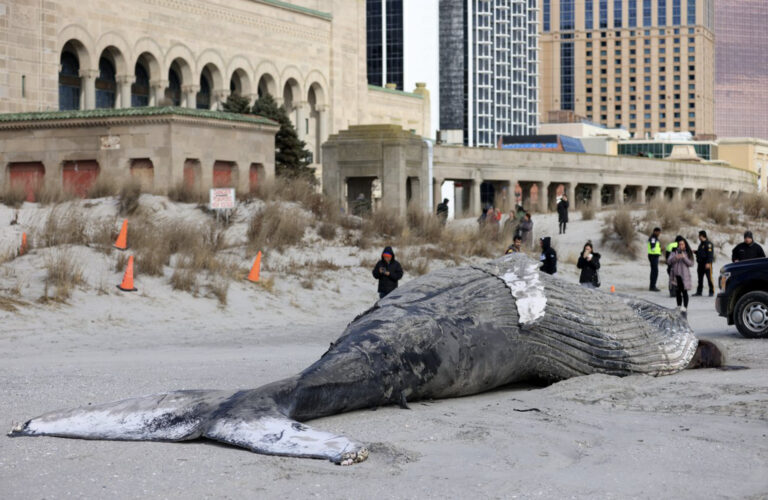
A full-size dead sperm whale turns up on a riverbank in the middle of a city. Crowds gather. People in white coats cordon it off and start cutting. None of it is real, and that is the point. The Belgian Captain Boomer Collective tours a hyper-real, life-size beached whale, roughly 16 metres of sculpture, and stages a scientific response around it in public places where nobody is expecting one.
Photo: Happy Lee via Unsplash
What the installation actually is
The centrepiece is a life-size model of a stranded sperm whale, cast using moulds taken from real whales and finished to look convincing down to the scuffs, the eye and the teeth. It is not shown in a gallery. The collective puts the whale in public space, on riverbanks and city waterfronts, so that ordinary people walk straight into it, free of charge and without warning. At some beachings the smell is added too, with hidden buckets of rotting fish.
Past beachings listed by the collective include London (Greenwich), Paris, Valencia, Madrid, Antwerp, Oostende, Scheveningen, Duisburg, Rennes, Warsaw, Zingst on the Baltic, Savines-le-Lac, and Adelaide in Australia. In November 2024 the whale appeared on Baku Boulevard beside the Caspian Sea during the COP29 climate summit, at the invitation of the FINS Initiative, and stayed until 22 November. Sperm whales do not inhabit the modern Caspian Sea, which sharpened the effect considerably. The piece never stays long: it arrives, draws a crowd, and goes.
The performance: an autopsy in public
What lifts this above a clever prop is the live performance wrapped around it. Members of the collective work the site in the role of a stranding response team, cordoning off the whale, taking measurements and carrying out a dissection in front of whoever has stopped to watch. The collective describes itself as a mix of performers, sculptors and scientists, and says it works with real scientists to supply the information given out on site. The material on display is not all theatre either: past beachings have included parasites, teeth, and samples of skin and real spermaceti oil.
So the crowd is pulled in by a sculpture and then told genuinely accurate things about sperm whales: how they live, how deep they dive, why they strand, and what threats they face. The blurred line between a convincing fiction and a real public lecture is the whole design.
Why a dead whale, and why it works
The collective calls the beached whale a gigantic metaphor for the disruption of our ecological system. A dead giant lying out of place is meant to be disturbing rather than pretty. Standing beside it, the comfortable mental picture of whales roaming a healthy open ocean collapses.
The installation works on a few clear levels:
- Confrontation: a real-looking corpse in a public place forces a reaction in a way a poster never could.
- Community: strangers gather around the same object, comparing notes and asking each other whether it can possibly be real.
- Questions: the obvious next thought is why did this happen, and did people cause it.
- Education: the dissection comes with genuine facts about sperm whales and the pressures they face.
By staging the piece in free, open space, the collective makes sure the message is not limited to an art-going audience. A commuter, a child and a passing tourist all meet the same whale on the same terms.
Hyperrealism as an environmental tool
Captain Boomer’s whale belongs to a wider tradition of art that inserts a jarring object into everyday life rather than showing a campaign image, and lets the public react on its own terms. The choice of a sperm whale is deliberate. Whales are charismatic, instantly recognisable, and already read as a measure of the ocean’s health. A model whale is also large enough to be unmissable yet specific enough to feel like news rather than abstraction. The craft is what carries it: if the sculpture looked fake, the spell would break. The scuffs, the weathered skin and the staged decay all exist to keep a viewer uncertain long enough to feel something.
The real strandings behind the art
The installation carries because real sperm whale strandings happen and are often grim. Sperm whales are the largest toothed whales, deep-diving squid hunters that normally live far from shore. When one ends up on a beach, the causes can include illness, disorientation, separation from a pod, ship strikes, entanglement in fishing gear or ingested plastic. Some strandings remain unexplained even after a full necropsy.
Captain Boomer’s whale never lived, but it stands in for the ones that did, and it gives a city the experience of a stranding without the loss of an animal. To read about the real species the artwork imitates, including how and why these whales dive and strand, see our sperm whale species profile.
Catching the whale yourself
Because the installation tours and never announces a long stay, seeing it is a matter of timing. The collective keeps taking the whale to new cities and to events like climate summits, where the symbolism lands hardest. If a beached whale does appear in your town with a team in white coats around it, stay and listen to the dissection. The facts they hand out are real even though the whale is not.
Updated 14 September 2026: corrected an unbounded claim about sperm whales in the Caspian.



That installation would stop me in my tracks.
Art like this reaches people who would never read about strandings.