
Another Dead Humpback Whale in NJ
Last updated: October 14, 2026
4 min read
A run of dead humpback whales washing ashore in New Jersey raised an obvious, uncomfortable question: why does this keep happening here? The short answer is that these strandings are part of a long running event that scientists have been tracking since 2016, and the cause most consistently identified in the animals that can be examined is human interaction, chiefly vessel strikes and entanglement, not the offshore wind farms many headlines blamed at the time.
This post keeps the original local report and turns it into something more useful: a clear, evidence based explanation of why whales strand on the New Jersey, New York and Virginia coast, and how to read the competing claims about it.
The strandings that prompted the question
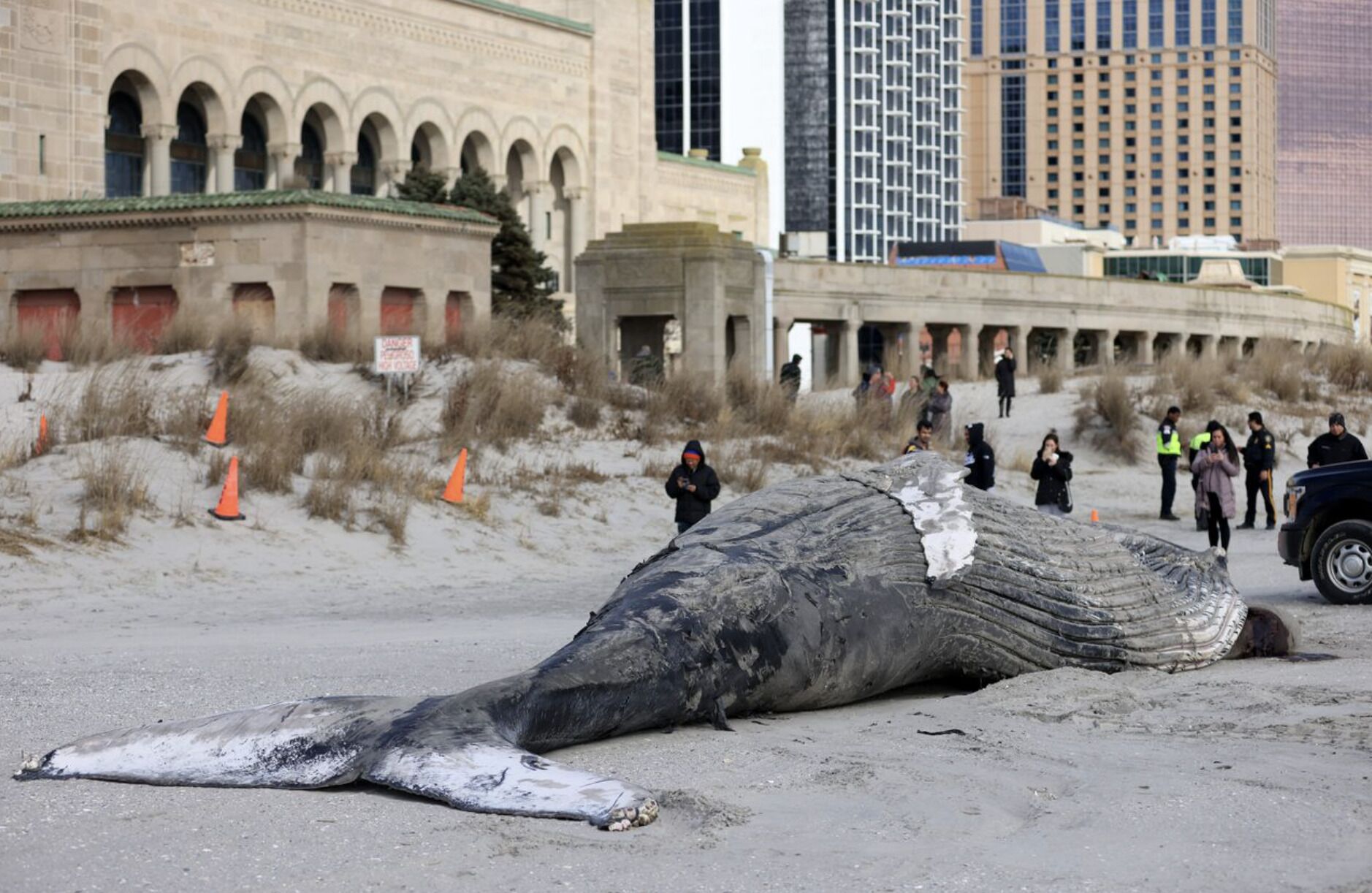
The whale at the centre of this story washed ashore in New Jersey at around 8 in the morning. Sheila Dean, co-director of the Marine Mammal Stranding Center in Brigantine, said her team could see no visible signs that it had been hit by anything. They took fat and muscle samples to help determine the cause of death, a process that can take months. The carcass was moved up the beach near the boardwalk and buried after the necropsy.
It was not an isolated case. In the weeks before, a roughly 30 foot dead humpback had come ashore near Chelsea Avenue, and another whale was found dead before that. Earlier still, a small sperm whale of about 12 feet had stranded. A cluster of large dead whales in a short stretch of coastline is exactly the kind of pattern that draws public alarm.
The bigger picture: an unusual mortality event
These deaths are not random and they are not new. Since January 2016, NOAA Fisheries has tracked elevated humpback whale deaths along the Atlantic coast from Maine to Florida, and in April 2017 it formally declared an Unusual Mortality Event, or UME. A UME is a legal designation that triggers a coordinated scientific investigation. The New Jersey strandings are individual cases inside that much larger, multi year pattern.
The numbers give a sense of the scale and of the limits of the evidence. NOAA has recorded 268 humpback deaths in the event through 2026. Of the 129 whales examined as of July 2025, about 45 percent showed evidence of human interaction, either a vessel strike or entanglement. The rest either died of something else or were too decomposed to say.
Why vessel strikes are rising
There is a likely reason humpbacks are being hit more often. Humpback numbers off the East Coast have grown, and the whales have been following prey such as menhaden into busy, near shore waters close to major ports like New York and Newark. More whales feeding in heavily trafficked shipping lanes means more chances for a collision. A struck whale does not always show obvious external damage, which is why a necropsy, an animal autopsy, is needed to find internal injuries.
Not every death in the UME is a vessel strike. Some causes are undetermined because decomposition limited what could be examined. Others died of different causes entirely, including organ damage from parasites and starvation. The honest summary is that there are several causes, with human interaction the most consistently identified one.
What about offshore wind?
At the time of these strandings, groups including Protect Our Coast NJ argued that offshore wind surveying and turbines were to blame. This claim deserves a direct, fair answer rather than a dismissal.
Multiple scientific bodies have examined it. NOAA Fisheries and the Marine Mammal Commission, an independent federal agency that oversees marine mammal conservation, have both stated there is no evidence linking the whale deaths to offshore wind development. Two facts make the timing point clear: the UME began in 2016, years before significant offshore wind construction in the region, and the strandings span the entire Atlantic coast, far beyond any wind lease area. Concern about ocean noise and industrial activity is reasonable, and monitoring continues, but the available evidence does not support offshore wind as the cause of this die off.
What a necropsy can and cannot reveal
It helps to understand why answers take so long. A necropsy on a humpback is a major undertaking: an adult can weigh 30 tons or more, and the work happens on a beach against the tide and the weather. Responders look for broken bones, internal bleeding, and propeller cuts that point to a vessel strike, for net marks and rope scars that point to entanglement, and they take fat and muscle samples to test for disease, contaminants, and condition. Decomposition is the enemy of all of this. A whale that has been dead and drifting for days may simply not preserve the evidence a pathologist needs, which is why so many UME cases end up classified as undetermined. That uncertainty is not a cover up. It is the honest limit of what a degraded carcass can tell anyone, and it is why a freshly reported, recently dead whale is so much more valuable to science than one found long after death.
If you find a stranded whale
Sheila Dean’s advice in the original report is sound and worth repeating. If you come across a stranded or beached whale:
- Do not try to push it back into the water. A whale strands for a reason, and a sick or injured animal pushed back out will often strand again, more stressed and weaker.
- Keep your distance and keep others, including pets, away.
- Contact the local marine mammal stranding network or authorities so trained responders can assess the animal humanely.
For a critically ill whale, the kindest outcome may be a managed euthanasia by professionals rather than a slow death on the sand.
Why reporting and necropsies matter
Each stranded whale, examined properly, becomes a data point. The reason scientists can say vessel strikes are a leading cause, and can rule offshore wind in or out, is precisely because stranding teams document and necropsy these animals year after year. For a closer look at one of the species involved, see our profile of the sperm whale. A dead whale on a beach is a loss, but a dead whale that is studied is also how the next one might be saved.
Updated 14 September 2026: updated NOAA’s mortality event total.


The stranding team on the Jersey Shore does so much with so little.
Marisol, agreed. Local stranding centres depend on donations.
Let’s wait for the necropsy results before blaming anything.
Thanks for including the bit about not pushing a stranded whale back.
Would love an update on the New Jersey strandings.