How Scientists Work Out a Whale’s Age
4 min read
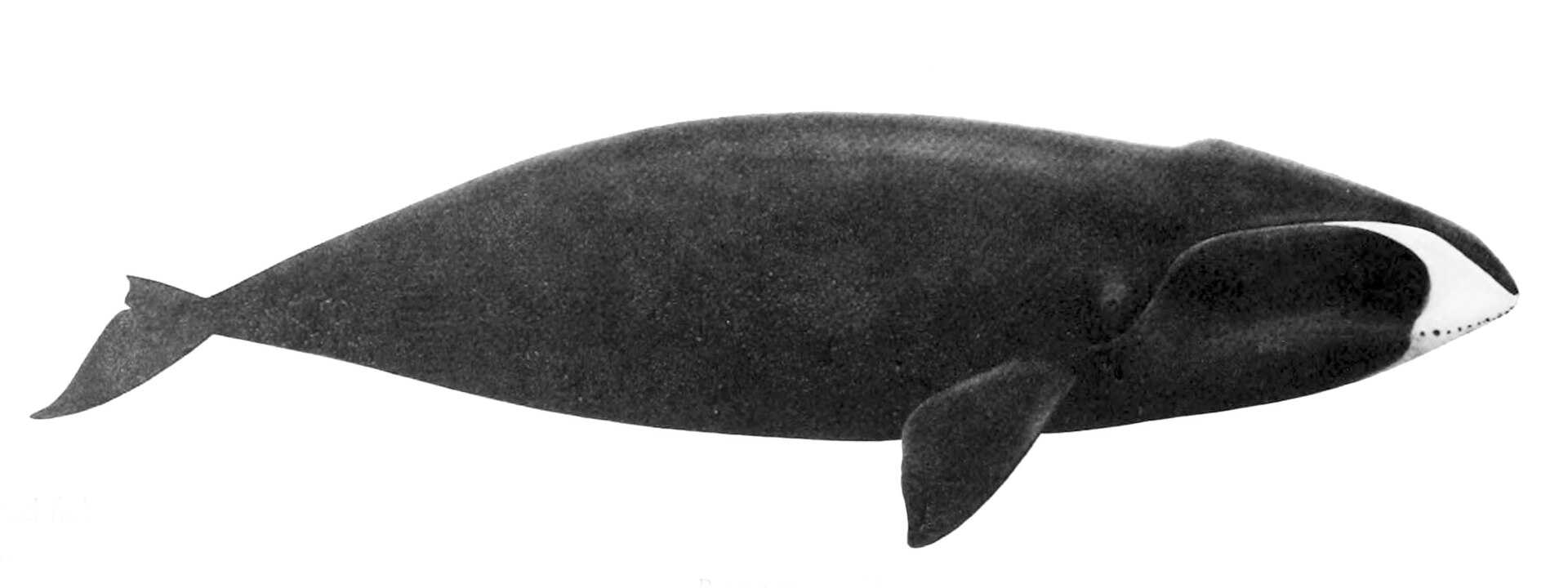
A tree gives up its age when you cut it down and count the rings. A whale is harder. It has no rings you can see, it spends its life underwater, and stranded animals are often too decayed to read. So when a source says a bowhead can live over 200 years, the fair question is how anyone knows. NOAA Fisheries is open about this: it says age determination in bowheads “has been difficult” and that the lifespan is unknown, although the evidence suggests more than 200 years.
The answer is a handful of methods, each with its own weakness. Together they give a picture that is surprisingly firm.
Stone harpoon tips: the oldest clue
The first hint of great age came from metal and stone. NOAA notes that stone harpoon tips have been recovered from harvested bowheads, which is why it says the whales “live well over 100 years.” A 2024 paper in Science Advances adds detail: points last used in the 1880s have turned up in the blubber of bowheads taken in the modern Indigenous subsistence hunt. In 2007 one whale was found with an explosive Yankee Whaler harpoon tip embedded in it, a type last manufactured in 1885.
A harpoon tip proves a minimum. The whale had to be alive when it was struck, and it carried the point for years afterwards. It does not say how old the animal was on the day it was hit.
Earplugs: counting layers of wax
Some whales build up a plug of earwax in the ear canal. It grows through life as alternating dark and light layers, called laminae. The authors of a 2013 PNAS study describe the plug as made of lipids, waxes and keratin, with layers linked to periods of feeding or migration. Counting the layers gives an age, a little like counting rings.
That study used the earplug of a male blue whale killed in a ship strike. The plug had 24 discrete layers, which put the age at death at about 12 years, give or take six months. The layers did more than count years. Testosterone levels suggested the whale reached sexual maturity at about 10. Cortisol, a stress hormone, peaked in a layer from when the whale was around 10 and a half to 11 years old, at about 800 percent above its baseline level.
The same plug recorded pollutants. Pesticides and flame retardants showed up in the earliest layers, covering the first 12 months, which the authors read as transfer from the mother. If you want to know what ship traffic does to these animals, our piece on ship strikes and large whales covers the toll.
The catch, as the Science Advances paper points out, is that earplugs and eye lenses “are extremely sensitive to decay” and must be collected fresh by someone with the skill to read them. That is why stranded whales are rarely aged this way.
Eye lens chemistry: the 211 year bowhead
The most precise method now available looks at the eye. Over time an amino acid in the proteins of the eye lens, aspartic acid, slowly changes form, and the amount of change works as a clock. This is called aspartic acid racemization, or AAR. The Science Advances paper reports that AAR estimates for several bowheads exceeded 150 years, and that one otherwise healthy animal was estimated to be 211 years old.
The method needs the eye, so it only works on animals that have died or been harvested. It also gives an estimate with an error range, not a birth certificate. Even so, it agrees with the harpoon evidence, and that agreement is what makes the 200 year claim credible. For more on this species, see our bowhead whale species profile.
Photo-ID: following a living whale
Living whales are hard to age directly, so researchers watch them for a long time. They photograph the unique marks on individuals, such as the callosity patterns on a right whale’s head, and match new photos against a long-running catalogue. The same Science Advances paper used 40-plus-year mark-recapture records from southern right whales and North Atlantic right whales to model how long females in each population live.
The results are striking. For southern right whales the median life span came out at 73.4 years, with 10 percent of individuals surviving past 131.8 years. North Atlantic right whales fared far worse: a median of 22.3 years, with 10 percent living past 47.2 years. The authors suggest the Atlantic figure has been shortened by human activity. Our right whale recovery update explains the pressures behind that.
The gap is a useful reminder that a short average lifespan can reflect the dangers a population faces and not what the species is capable of. NOAA gives humpbacks about 80 to 90 years.
Why bowheads last so long
Age is only half the puzzle. A body that large and old should be riddled with cancer, and bowheads are not. A 2025 paper in Nature found that bowhead cells repair broken DNA better than cells of other mammals, and that a protein called CIRBP, which is highly expressed in bowheads, helps with that repair. The authors suggest this may contribute to the whale’s long life and low cancer incidence. It is a hypothesis supported by cell experiments, not a settled explanation.
What we still do not know
Every figure above is an estimate built from indirect evidence. The numbers differ between methods, and an age of 211 years is one animal, not a rule. The honest summary is that bowheads very likely live well beyond a century, and that scientists are still improving the tools to say how far beyond.
Do you know of a whale with a long documented history, or have you seen an earplug in a museum collection? Add what you know in the comments.
Sources
- NOAA Fisheries, Bowhead Whale
- NOAA Fisheries, Humpback Whale
- Science Advances (2024), Extreme longevity may be the rule not the exception in Balaenid whales, via PubMed Central
- PNAS (2013), Blue whale earplug reveals lifetime contaminant exposure and hormone profiles, via PubMed Central
- Nature (2025), Evidence for improved DNA repair in the long-lived bowhead whale
Photo: NOAA National Marine Fisheries Service, Public domain, via commons.wikimedia.org.