
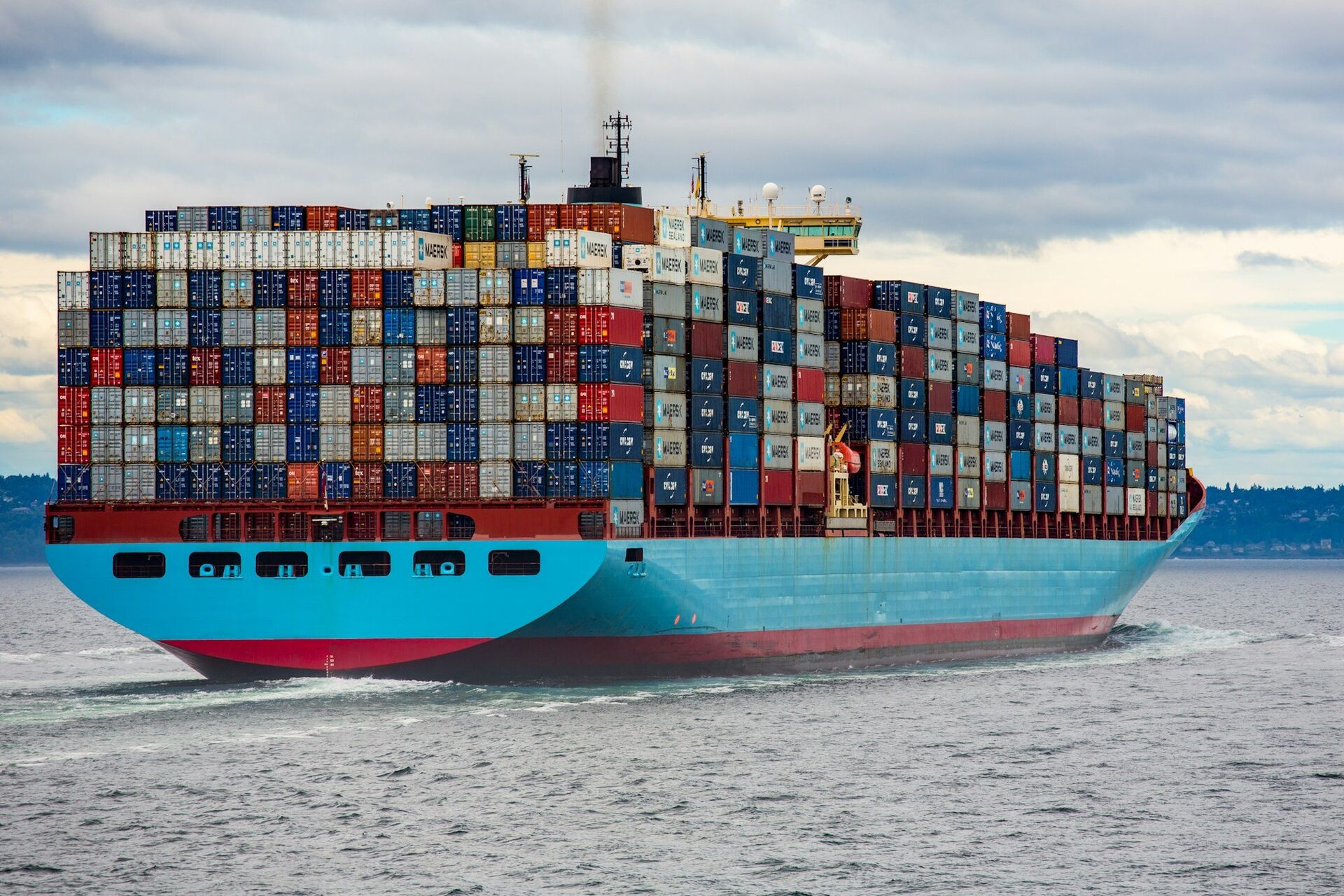
Ship Strikes: The Silent Killer of Large Whales
Last updated: November 17, 2026
6 min read
Ship strikes are one of the leading direct causes of death for several large whale species. Most are silent: the whale is hit and sinks, and the vessel either does not notice or does not log it. Only a fraction are documented. Yet the population level impact on slow recovering species like the North Atlantic right whale is severe enough to have produced new shipping rules, court cases, and a running legislative fight. This guide covers the biology of why whales get hit, the rules and technology that reduce strikes, and the species in the worst trouble.
Key facts at a glance
- Documented cases: hundreds globally each year, with the true total certainly higher
- Worst affected species: North Atlantic right whale, fin whale, blue whale, sperm whale, humpback whale
- Speed: strike lethality rises sharply above 10 knots
- Highest risk vessels: container ships, fast ferries, and other large fast traffic
- Best mitigation: speed limits and routing away from known whale concentrations
Why ship strikes happen
Whales evolved into a quiet ocean. Shipping has transformed that acoustic environment in a century, and a whale’s threat detection is not built around large fast objects arriving from above. Collisions usually come down to the whale being unaware of the ship until it is too late, or aware and unable to get out of the way. Animals that spend time slow and shallow are the most exposed: right whales feeding at the surface, fin whales resting near the surface, humpback mothers with calves.
Ship operators have their own version of the problem. A large container ship at cruise speed needs miles to stop. Bridge officers often cannot see a whale until impact is unavoidable. Whales struck by a bulbous bow can be carried into port unnoticed and only found when the ship docks. Strikes can be lethal in the other direction too: five people died off Kaikoura in New Zealand in September 2022 when a charter boat capsized after almost certainly hitting a whale.
Speed kills
The single most important variable in ship strike mortality is vessel speed. Studies aggregating strike records find lethality rising from roughly 20 percent at 8 knots to over 50 percent at 12 knots and over 80 percent at 17 knots. That relationship is the basis of most speed based regulation worldwide. In the United States, NOAA’s Seasonal Management Areas for North Atlantic right whales require most vessels 65 feet and longer to slow to 10 knots or less during defined months in defined areas, and vessels must stay 500 yards from any right whale they see.
The North Atlantic right whale case
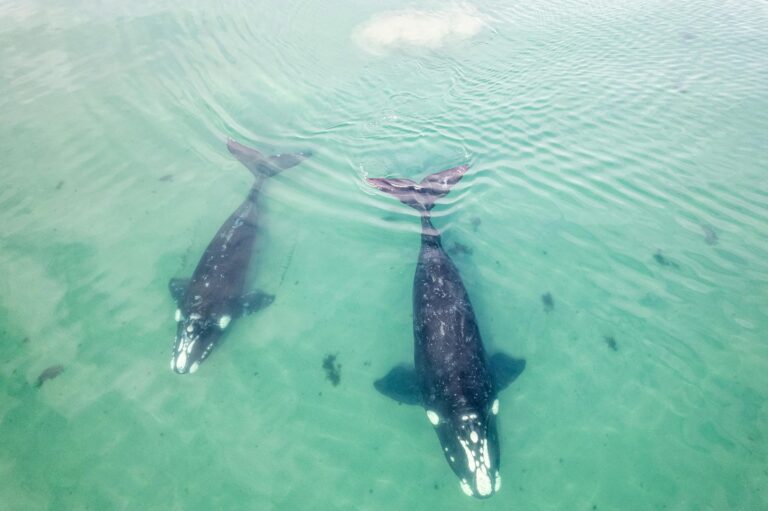
North Atlantic right whales are the textbook ship strike disaster. The North Atlantic Right Whale Consortium’s latest estimate, released in November 2026, put the population at about 382 animals in 2025, down from a revised 389 in 2024 after four years of small increases from a low of 359 in 2020 (IFAW). That growth was progress from a very low base, and the dip shows it does not make the species safe: ship strikes and entanglement together cause most of the deaths that are not natural, and a stressed female is a female that does not calve.
The United States has responded with Seasonal Management Areas (mandatory speed limits), Dynamic Management Areas (triggered by sightings), mandatory ship reporting, and shifted shipping lanes off Boston and in the Bay of Fundy. NOAA estimated that the Boston changes cut the relative risk of right whale strikes by around 74 percent over April to July. Strikes still happen. A right whale found entangled in rope and right whales dying in the Gulf of St Lawrence show how the pressures stack. Lawsuits continue to push for stronger protection.
Fin and blue whales
Fin whales are among the most frequently recorded species in ship strike databases. They are large, fast, and they travel the same water as the shipping lanes. Off California, blue whale feeding aggregations overlap directly with the Santa Barbara Channel lanes. The Blue Whales Blue Skies programme there pays incentives to shipping lines that slow down through known whale areas, and participation has grown since it started. The International Whaling Commission maintains a global ship strike database that feeds risk mapping work.
Sperm whales and beaked whales
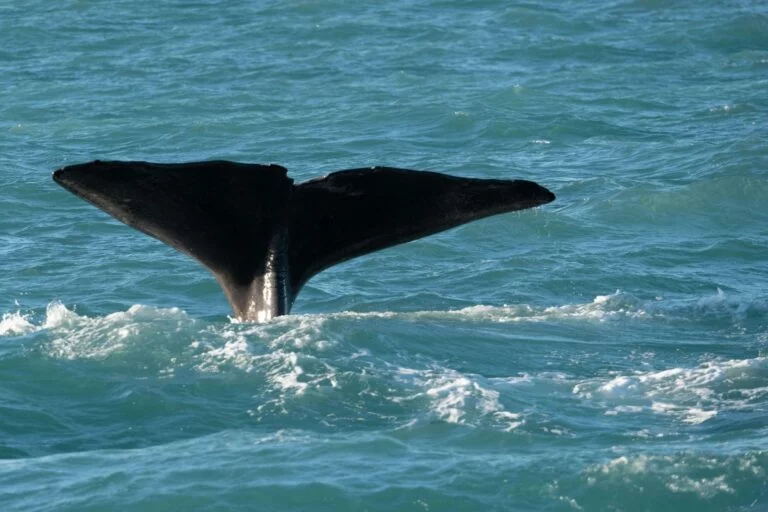
Sperm whales rest at the surface for long stretches between deep dives, which puts them directly in the path of traffic. They are struck in the Mediterranean, off Sri Lanka, and around the Canary Islands. A pygmy sperm whale died in Brooklyn and a sperm whale died at Rockaway Beach, both with possible vessel involvement. The Mediterranean carries dense traffic across resident sperm whale habitat, which is a bad combination for a species with a small local population.
Mitigation: what works
- Speed limits. Mandatory or voluntary slow zones in known whale areas, especially during seasonal peaks.
- Routing. Moving shipping lanes away from whale concentrations, as off Boston.
- Real time monitoring. Acoustic arrays and aerial surveys feeding near real time whale locations to shipping.
- Dynamic management. Speed restrictions triggered by recent confirmed sightings and applied within hours.
- Better lookouts. Dedicated whale lookouts on the bridge in high risk zones and in poor visibility.
- Ship design. Quieter, slower vessels cut strike risk and ocean noise at the same time.
Mitigation: what works less well
Bow mounted sonar for whale detection runs into simple geometry: by the time a moving ship detects a whale ahead acoustically, it cannot avoid it. Acoustic deterrents, sounds played to move whales out of the way, work for some species but habituate fast and risk pushing animals toward a different hazard. Ship mounted whale alert systems remain an idea rather than standard equipment, and none is in routine service.
The reporting problem
Even after a strike, reporting is patchy. Some operators do not realise they have hit a whale until they reach port. Others know and do not log it. National reporting requirements vary. The result is that the real strike rate is certainly higher than the documented one. Mandatory reporting with penalties for non disclosure is one of the policy levers conservation groups push hardest.
What you can do
- Support shipping lines that take part in voluntary slow steaming programmes such as Blue Whales Blue Skies in California.
- If you boat in coastal waters, follow local speed limits in known whale areas and learn the avoidance rules.
- Donate to organisations doing acoustic detection work, including Cornell’s K. Lisa Yang Center for Conservation Bioacoustics and the Marine Mammal Center.
- Push for stronger mandatory speed limits locally. Vessel speed is the most effective policy available.
Small vessels count too
Container ships get the coverage, but fast ferries, recreational craft and military vessels also strike whales, and small fast boats kill a great many dolphins and porpoises. Some jurisdictions are extending approach and speed rules to vessels under 65 feet and requiring strike aware navigation training for commercial operators. The Kaikoura capsize is the reminder that a collision between a whale and a small boat can kill the people aboard.
Looking ahead
Machine learning applied to hydrophone arrays, detecting whale calls in near real time, is the most promising technical lever. Autonomous gliders carrying onboard detection are already working in the Gulf of St Lawrence and off the United States east coast. The next step is feeding those detections straight into bridge displays and routing software. Combine that with stronger mandatory speed rules and stricter reporting and the picture for large whales could improve measurably. The Marine Mammal Commission publishes annual updates on progress.
Read next
- Whale Species: A Complete Guide to the Cetaceans of the World
- Humpback Whales Versus Killer Whales: Why Are Humpbacks Saving Seals?
- How Whales Sleep Without Drowning
Frequently asked questions
How many whales die from ship strikes each year?
Reports are incomplete, so they do not provide a reliable global annual total. Many strikes go unreported or unnoticed.
Which whale species are most at risk?
North Atlantic right whales, fin whales, blue whales, sperm whales, and humpback whales. The right whale case is the most acute because the population is so small.
Does ship speed really matter?
Yes. Strike lethality climbs from roughly 20 percent at 8 knots to over 80 percent at 17 knots. Speed limits are the single most effective mitigation available.
Can ships detect whales in time to avoid them?
Usually not. By the time a large vessel picks up a whale visually or acoustically it cannot manoeuvre or stop. Mitigation has to come from slower speeds and rerouting, not last second avoidance.
Are ship strikes increasing?
Documented strikes are up partly because reporting has improved. Actual rates may also be rising, because shipping traffic keeps growing.
What about smaller vessels?
Whale watching boats, recreational craft and fast ferries all strike whales, and most jurisdictions now apply approach and speed rules to them too.
Updated 14 September 2026: removed an unsupported global annual ship strike count.
Updated 17 November 2026: updated the North Atlantic right whale population to the consortium’s 2025 estimate of 382, released on 16 November 2026.
Interesting that insurers are starting to look at whale strike risk.
The shipping lane off southern Sri Lanka is a worry for blue whales.
Moving a shipping lane to protect whales seems like such an easy win.
Acoustic monitoring that warns ships in real time sounds hopeful.
Whatever the exact numbers, slower ships mean fewer deaths.
Jasper, agreed. The message is the same whichever study you use.
Small boats hitting whales get less attention than big ships.