
The Incredible But True Horror Story Behind Moby Dick
Last updated: October 14, 2026
9 min read
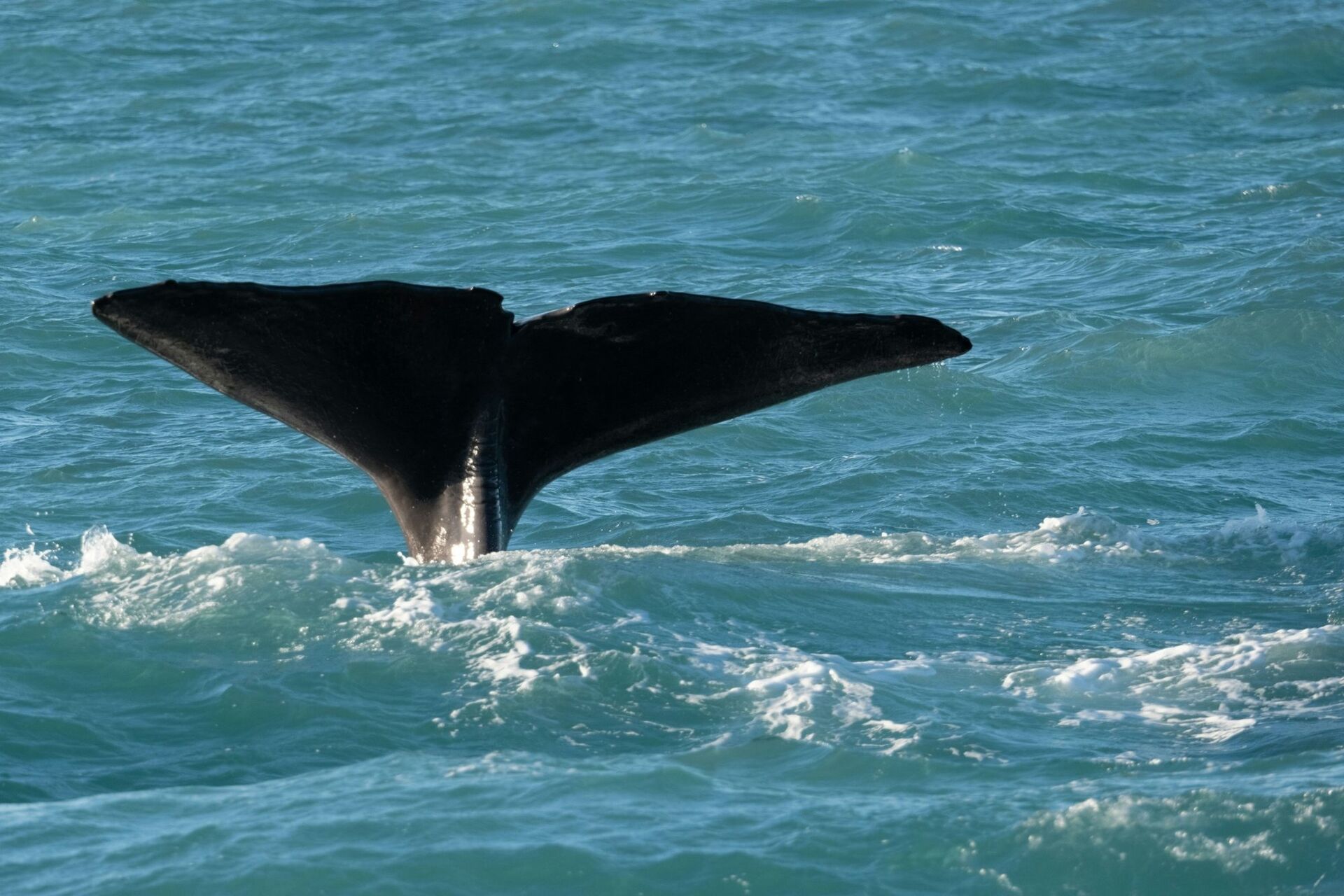
Most people who have read Moby Dick assume Herman Melville invented the climactic scene where a sperm whale rams and destroys a whaleship. He did not. The event happened in real life on 20 November 1820, in the middle of the South Pacific, to a Nantucket whaler called the Essex, and the survivors went through three months of horror that makes Melville’s fiction look almost restrained. This is the true story Melville built his novel on, drawn from the firsthand account of the ship’s first mate Owen Chase, the cabin boy Thomas Nickerson, and a second, separate whale named Mocha Dick that gave the book its name.
Key facts at a glance
- Ship: the Essex, an 87 foot Nantucket whaleship, built 1799
- Date of attack: 20 November 1820
- Location: the central South Pacific, roughly 0 degrees 40 minutes south, 119 degrees west, about 1,000 miles west of the Galapagos
- Attacker: a large bull sperm whale, estimated by Owen Chase at 85 feet (almost certainly an over estimate)
- Survivors: 8 of the 20 men who left the wreck, after about three months adrift
- Famous reader: Herman Melville, who read Chase’s account while at sea in 1841
- Second inspiration: Mocha Dick, a white bull sperm whale that fought whalers off Chile
The ship and her people
The Essex was small even by 1820 standards, an 87 foot whaleship built in Amesbury, Massachusetts in 1799 and owned out of Nantucket. She had already completed several profitable voyages by the time she sailed from her home port on 12 August 1819 under Captain George Pollard Jr., on what was supposed to be a two and a half year cruise to the Pacific whaling grounds. Aboard were 21 men, including Pollard, first mate Owen Chase, second mate Matthew Joy, third mate Obed Hendricks, several Black sailors, and a fourteen year old cabin boy named Thomas Nickerson who would later write his own account of what happened. Pollard was 29. Chase was 21.
Nantucket whaling at this point was a Quaker town’s main industry and a major source of lighting oil. The hunt was for the sperm whale specifically (see our sperm whale species profile), prized for the spermaceti wax in its enormous head that burned cleanly enough to light cities. Ships sailed for three to four years at a stretch and returned only when their hold was full of barrels of oil. The work was hard, brutally dangerous, and surprisingly democratic for the era.
The grounds
By autumn 1820 the Essex had rounded Cape Horn, taken oil off South America, and pushed deep into the central Pacific in search of the Offshore Grounds, a new sperm whaling area thousands of miles from any landmass. The ground was little known. Few ships had ever cruised it. On 20 November the Essex was at roughly 0 degrees 40 minutes south and 119 degrees west, hundreds of miles from any speck of land. One crewman, Henry DeWitt, was no longer aboard: he had jumped ship at Atacames in September 1820, leaving twenty men on the Essex.
The hunt that morning followed the usual routine. Whales had been sighted at dawn, and three small whaleboats had been launched. Each boat carried six men and was used to row up alongside a whale, throw a hand harpoon, then survive a ride at the end of the line until the whale exhausted itself enough to be lanced and killed. First mate Chase’s boat had already been stove by a tail flick earlier in the day and rowed back to the Essex for repairs. The Essex herself was hove to, with Chase and a couple of crewmen on deck nailing canvas over the hole in his damaged boat.
The attack
Around mid morning Chase noticed an unusually large sperm whale on the surface roughly a hundred yards off the bow. He estimated the animal at 85 feet, which is longer than any sperm whale ever properly measured and almost certainly an over estimate, but it does indicate a very large bull. The whale was lying still, as though watching them. Then it began to swim straight toward the Essex.
It struck the port bow at full speed. The ship shuddered and lifted. Crew were thrown to the deck. The whale passed under the hull, surfaced on the starboard side, and lay there shaking its head and snapping its jaw, apparently stunned. Then, in Chase’s account, the whale gathered itself and charged again, this time with even greater speed and head down. The second ram caught the Essex square at the bow, smashed through the planking, and the ship began to settle by the head almost immediately. The whale, in Chase’s words, “swept off to leeward and was never seen again”.
Sperm whales occasionally strike small boats today. The Essex is a famous case of a sperm whale disabling a whaleship. The Union was struck and sunk by a whale in 1807, and the Ann Alexander sank after a sperm whale struck it in August 1851, a couple of months before Moby Dick reached print. Melville heard about it and wrote to a friend that his imagination had somehow conjured the monster into being.
Three boats, twenty men
The whale strikes disabled and flooded the Essex quickly. The wreck remained afloat while the crew salvaged what they could on 21 and 22 November: a sextant, a Bowditch navigation manual, some powder, a little hardtack, water casks, and the three damaged whaleboats. The three boats were now home to all twenty men aboard, thousands of miles from any inhabited shore. The nearest land was the Marquesas Islands, around 1,200 miles west, downwind and downcurrent. But the crew had heard rumours that the Marquesans were cannibals, and Pollard was talked into heading east instead, into the wind, toward South America, more than 3,000 miles away.
The decision is the bitter heart of the story, and the arithmetic is merciless. Downwind to the Marquesas was roughly a fortnight with water and bread still in hand. Upwind against the South Pacific easterlies and the Humboldt current was three months of starvation in open boats. The islanders, as it turned out, were not waiting to eat them.
Starvation at sea
For the first month the three boats sailed and rowed together, rationing hardtack to a few ounces per man per day. On 20 December 1820 they reached a small uninhabited island, Henderson Island, and found a freshwater spring, a few seabirds, and some shellfish. Three men, William Wright, Seth Weeks and Thomas Chappel, chose to stay on the island and take their chances. The other seventeen pressed on.
Second mate Matthew Joy died on 10 January 1821 and was buried at sea. Ten days later Richard Peterson died in Chase’s boat and was also buried at sea. On the same day, in Obed Hendricks’s boat more than a hundred miles away, Lawson Thomas died, and that crew made the decision the other boats would soon make too: they ate the body. Charles Shorter, Isaiah Sheppard and Samuel Reed followed over the next few days. Hendricks’s boat separated from the others on 29 January and was never seen again.
In Pollard’s boat, with food gone and no more bodies, the four remaining men drew lots to decide who would be killed for the others. The lot fell to Owen Coffin, Pollard’s seventeen year old cousin. Pollard tried to refuse to allow it. Coffin insisted. He was shot on 6 February 1821 and eaten. Barzillai Ray died five days later and was eaten too. In Chase’s boat, Isaac Cole died on 10 February and the three survivors did the same thing.
When the boats were finally found, the men were sucking the marrow out of human bones. Pollard was reportedly discovered gnawing on a finger.
Rescue and return
Chase’s boat, carrying Chase, Benjamin Lawrence and Thomas Nickerson, was picked up by the British ship Indian on 18 February 1821 off the Chilean coast. Pollard’s boat, with Pollard and Charles Ramsdell, was found five days later by the Nantucket whaler Dauphin, almost within sight of land. The three men left on Henderson Island were taken off on 9 April by the Australian ship Surry. That makes eight survivors out of the twenty who left the wreck. Twelve men died.
Pollard returned to Nantucket and tried whaling again. His next ship, the Two Brothers, was wrecked on a reef in February 1823. After that the industry refused to give him another command and he spent the rest of his life as the town’s night watchman, walking the streets of Nantucket with a lantern. He kept a private fast every 20 November until he died in 1870. Owen Chase, by contrast, dictated his account to a ghostwriter within months of his return; it was published in 1821 as Narrative of the Most Extraordinary and Distressing Shipwreck of the Whale-Ship Essex.
Mocha Dick
The Essex gave Melville his ramming scene and his shipwreck. But the great white whale itself came from a second real animal: Mocha Dick. Mocha Dick was a bull sperm whale, white or near white, that haunted the waters around the island of Mocha off the Chilean coast in the early 19th century. He was famous among whalers for fighting back, ramming ships, biting boats in half, and breaching with old harpoons trailing from his back. A magazine article in The Knickerbocker in May 1839 by Jeremiah N. Reynolds, “Mocha Dick: Or The White Whale of the Pacific”, made him a celebrity. The name Moby Dick is plainly a reworking of Mocha Dick.
Reynolds reported that by the time Mocha Dick was killed in 1838 he had survived something like a hundred fights with whalers and carried around twenty harpoons in his body. See our guide to the biggest whales on Earth for where sperm whales rank among the giants.
Melville and the book
Herman Melville sailed on the whaleship Acushnet in 1841 and read Owen Chase’s account at sea. He also met Chase’s son, who lent him a copy. Melville was struck by both the ramming and by Reynolds’s Mocha Dick article. By 1851 he had combined the two into Moby Dick; or, The Whale. The whale that rams the Pequod is Mocha Dick’s white skin and aggression mapped onto the Essex’s ramming behaviour. Captain Ahab’s monomania is Melville’s invention, though Pollard’s later quiet life as a night watchman gives the whole story a real life epilogue almost as strange as the fiction.
Moby Dick was a commercial failure at the time. It only became canonised as the great American novel after Melville’s death. The Essex itself drifted in and out of public memory. Thomas Nickerson’s manuscript account, written decades after the event, was lost for over a century, rediscovered in 1960, and finally published in 1984.
Why it still matters
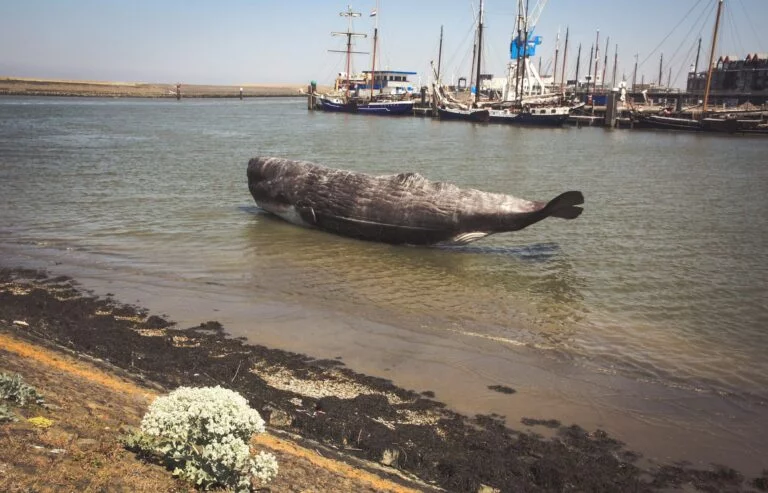
The Essex disaster sits at the intersection of natural history and human horror. Sperm whales today are protected and mostly curious of boats rather than aggressive (see, for example, our coverage of the sperm whale that beached at Rockaway). They are also intelligent and social. The Essex bull may have been defending a pod, may have been previously harpooned, or may have simply been a rogue. We will never know. What we do know is that a sperm whale, when it decides to ram a ship, can sink one. And that twenty Nantucket whalers in 1820 made a navigational decision out of pure fear that killed most of them. Want a quick dose of sperm whale natural history? Try our sperm whale trivia quiz.
Take whales home
If this piece pulled you in, our curated whale book collection is the next step: deep dives on biology, behavior, and the history of human relationships with cetaceans.
whale books
Read next
- Whale Species: A Complete Guide to the Cetaceans of the World
- Whale True or False Trivia Game
- Blue Whale Subspecies Explained: Antarctic, Pygmy, Northern, and Indian Ocean
Frequently asked questions
Is Moby Dick based on a true story?
Yes. Herman Melville built the novel from two real events: the 1820 ramming and sinking of the Nantucket whaleship Essex by a sperm whale, and the legend of Mocha Dick, a white bull sperm whale that fought whalers off the coast of Chile.
What happened to the Essex?
A large bull sperm whale struck the Essex twice on 20 November 1820 in the South Pacific. The flooded wreck remained accessible until the twenty crew left in three whaleboats on 22 November and tried to sail to South America. Eight of them survived.
Did the Essex survivors really resort to cannibalism?
Yes. Once men began dying from starvation and dehydration, the survivors ate the bodies. In Captain Pollard’s boat the four remaining men eventually drew lots to decide who would be killed and eaten. The lot fell to a seventeen year old named Owen Coffin, who was shot on 6 February 1821.
Who was Mocha Dick?
Mocha Dick was a bull sperm whale, white or near white, that lived off the island of Mocha near Chile in the early 19th century. Jeremiah N. Reynolds wrote him up in The Knickerbocker in 1839 as a whale that had fought off around a hundred attacks. His name and his colour gave Melville the idea for Moby Dick.
Why did the Essex crew sail toward South America instead of the nearer islands?
Pollard and his officers feared that the islanders to the west were cannibals. The fear was wrong, and it sent the boats into the wind and against the current for 3,000 miles instead of about two weeks downwind to safety.
How big was the whale that sank the Essex?
Owen Chase estimated the bull at 85 feet, which is larger than any sperm whale that has ever been properly measured. The real animal was smaller than that, but still an extremely large mature male.
What happened to Captain Pollard after the rescue?
Pollard took command of another whaleship, the Two Brothers, which was wrecked on a reef in February 1823. After that the industry refused to hire him again. He spent the rest of his life as Nantucket’s night watchman and kept a private fast every year on the anniversary of the Essex disaster.
Do sperm whales still attack ships?
Very rarely. The Ann Alexander was rammed and sunk by a sperm whale in August 1851 in a near copy of the Essex incident, but in modern times sperm whales avoid ships and very few are aggressive toward people. The Essex bull may have been defending a pod or reacting to a previous harpooning.
Updated 14 September 2026: corrected the timing of the Essex sinking.


Read In the Heart of the Sea after this. The story of the captain afterwards is so sad.
I always thought the whale’s size in the story sounded exaggerated.
Karim, the size came from the survivors’ own accounts, so it is hard to check.
Didn’t know Mocha Dick was the inspiration for the name.
The survival part of the story is grim.
Amazing that a survivor wrote it up so soon after.
Took this on a long walk and came back with ideas.
First piece that pulled the Essex story together for me.
Didn’t know Nantucket was a Quaker town. Strange contrast with the whaling.
Hannah, it is a big part of the story.
Saving this for when I’m avoiding my inbox.