
How Whales Sleep Without Drowning
Last updated: September 14, 2026
7 min read
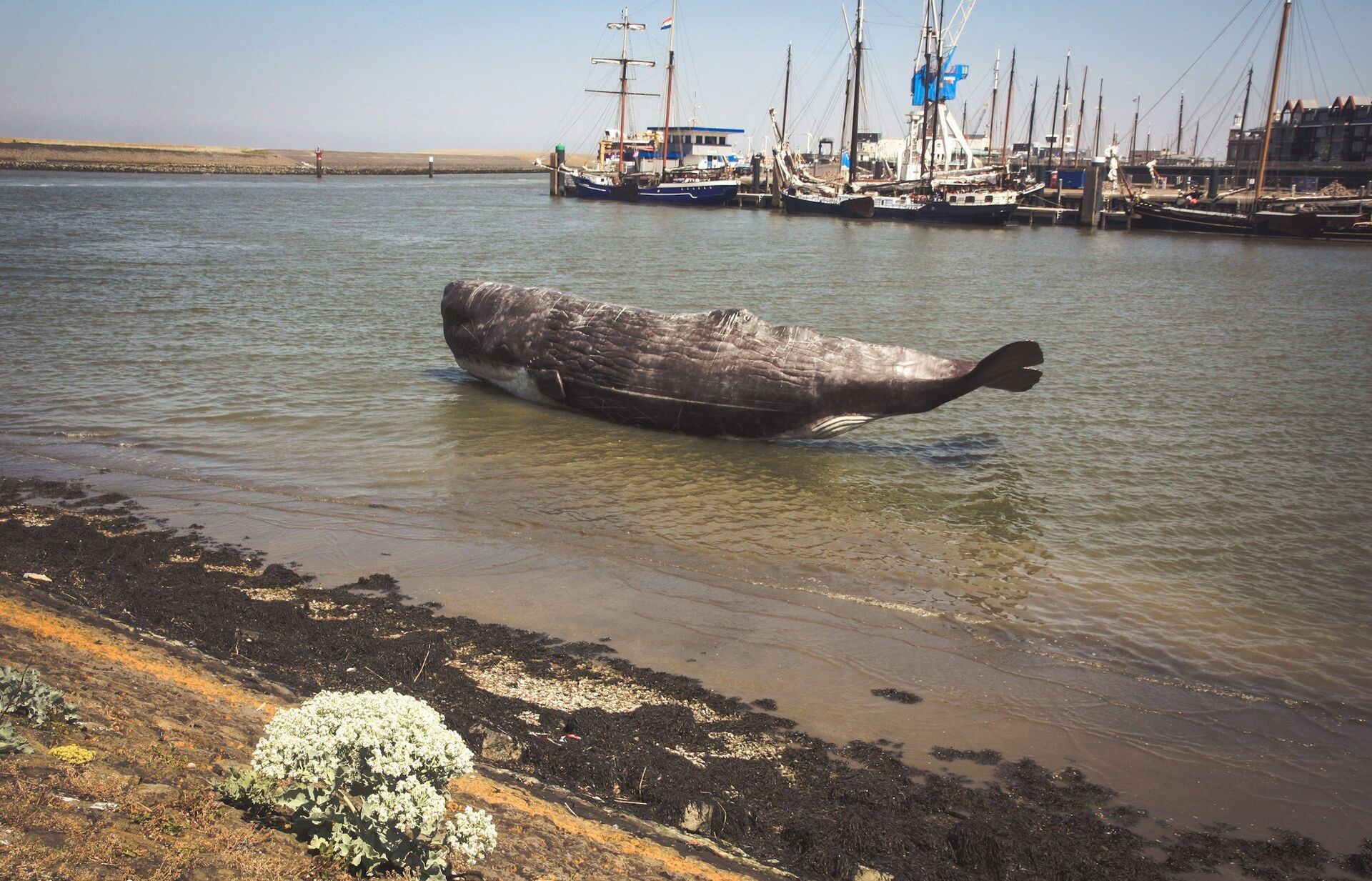
Whales never fully fall asleep. If they did, they would stop breathing and drown. Yet they obviously rest. Sperm whales have been photographed floating vertically in pods like silent towers, eyes closed, motionless for ten or twenty minutes at a time. Dolphins doze with one eye open. Humpbacks log at the surface, breathing slow and steady. The mechanics behind all of this are some of the strangest physiology in the mammal world, and they are also one of the strongest pieces of evidence that cetaceans evolved into something genuinely novel when they returned to the sea.
This guide walks through how whales solve the sleep problem, what unihemispheric sleep actually looks like in the brain, what the differences look like between species, and what we know (and do not know) about whether whales dream. We also cover practical implications: why disturbing sleeping whales is dangerous to them and to vessels, and why responsible whale watching practices specifically protect resting animals.
Key facts at a glance
- Sleep type: mainly unihemispheric, one brain hemisphere at a time
- Breathing: conscious, not automatic, so full sleep would stop breathing
- Sperm whale rest: vertical drift episodes of 10 to 15 minutes, several times a day
- Total sleep: estimated 3 to 8 hours per 24, in short bursts
- Newborns: calves and mothers can go weeks with almost no full rest after birth
The conscious breathing problem
Land mammals breathe automatically. The brainstem keeps the diaphragm working whether you are awake, asleep, or under general anaesthesia. Whales evolved from land mammals roughly 50 million years ago, but their respiratory control rewired in a fundamental way: they breathe consciously. Every blow at the surface is a deliberate act.
The advantage is precise control of long dives. A sperm whale can hold its breath for over an hour because it manages every exchange of gases at the surface and chooses when to descend. The cost is that ordinary mammalian sleep, where you lose conscious control of your body, would be a death sentence underwater. Evolution solved this with unihemispheric slow-wave sleep, where one brain hemisphere sleeps at a time while the other stays awake enough to manage breathing, swimming, and basic awareness.
Unihemispheric sleep, observed
The clearest evidence comes from captive bottlenose dolphins (close cousins of whales). EEG recordings show one hemisphere producing the slow-wave patterns of deep sleep while the other shows the fast, low-amplitude patterns of wakefulness. The opposite eye is closed. Every couple of hours the pattern flips: the other hemisphere sleeps, the other eye closes. Over a 24 hour cycle the dolphin gets several hours of effective sleep without ever fully losing consciousness.
Whales are harder to put in EEG harnesses, but field observations and the few captive belugas and orcas studied suggest the same pattern. There is also evidence that some whales (especially smaller toothed species) experience brief bilateral microsleeps lasting a few seconds at a time.
Sperm whale vertical sleep
The behaviour that made this famous is the sperm whale drift dive: a group hanging motionless in open water, bodies vertical, heads near the surface, doing nothing at all. A study published in Current Biology in 2008 put numbers on it using tag data, and concluded that sperm whales spend roughly 7 percent of their time in this deep resting state, most often between six in the evening and midnight, in bouts of ten to fifteen minutes.
Sperm whale rest is deep enough that a quiet boat can sometimes drift into a floating pod without the animals reacting. This is rare in the cetacean world and may reflect the relatively low predation pressure on adult sperm whales, who are too big for most threats.
Logging humpbacks
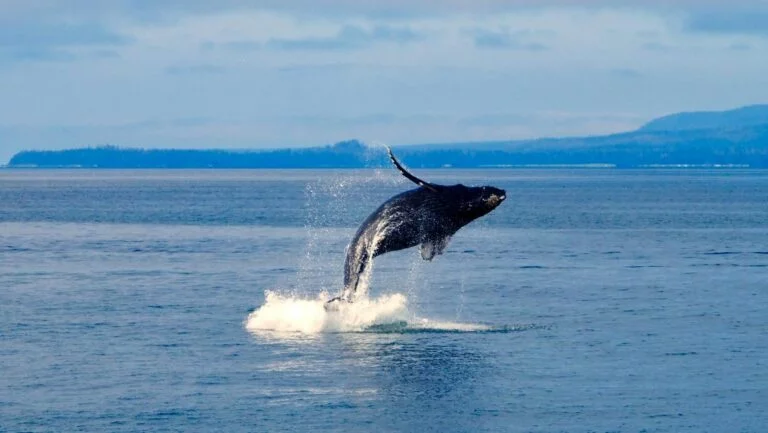
Surface-resting in humpback whales is called logging. The whale lies almost motionless at the surface, breathing every few minutes. Mothers with calves are often seen logging during the day in tropical breeding grounds. Tag data shows breathing rates drop and dive activity stops, but whether this is unihemispheric sleep, drowsy rest, or something in between is still debated.
Migration and sleep deprivation
Some of the strangest sleep stories come from newborn cetaceans. Killer whale and bottlenose dolphin calves, and presumably whale calves too, appear to forgo conventional sleep for the first weeks of life. The mother does the same. Both are active, swimming, vocalising, and eating, but neither shows the long sleep bouts seen in adults. By around 4 to 8 weeks, sleep patterns gradually return to normal. This may be an anti-predation adaptation: a sleeping calf cannot keep up with a moving pod, and a still calf is easier prey. See our coverage of gray whale births in the wild for a related field observation.
Do whales dream?
This is genuinely open. Researchers have not confirmed REM sleep in cetaceans with EEG. Observed twitches and eye movements do not prove REM sleep or dreaming. Larger whales have been so rarely studied with EEG that we do not have a definitive answer for them. Some researchers argue that the energetic cost of paralysis during REM (which protects land mammals from acting out their dreams) is incompatible with conscious breathing, and that whales have largely lost it. Others point to scattered observations of twitching, eye movement, and atypical surface behaviour that look REM-like.
The evidence does not show whether dolphins or larger whales experience REM sleep or dreaming. Smithsonian Ocean has a good rundown of the current state of cetacean sleep research.
Risks and disturbance
Sleeping whales are vulnerable. Vessels approaching a logging humpback or a vertical pod of sperm whales can collide with them before they react. NOAA Fisheries guidelines for responsible whale watching emphasise approach distances and engine-off rules precisely to protect resting animals. Repeated disturbance of resting cetaceans is one mechanism by which busy tourist or shipping areas can stress whale populations even without obvious incidents.
Species variation in rest patterns
Not every cetacean rests the same way. Coastal bottlenose dolphins switch sides more frequently than open-ocean dolphins, possibly because shallow water has more obstacles and predators to keep one eye on. Beluga whales in Arctic waters spend a lot of time hanging just below the surface in summer ice leads. Killer whales travel slowly in tight formations during apparent rest phases, with the pod moving as a single unit. Sperm whales lock into their vertical drift posture, while pilot whales tend to log horizontally.
Across species, the common thread is that rest is structured around two non-negotiables: breathing has to keep happening, and at least one sensory channel needs to stay live for predator detection or navigation. Every cetacean sleep posture solves that problem in a slightly different way, which is one of the reasons sleep is such a rich area of comparative cognition research.
What this tells us about consciousness
Unihemispheric sleep is the kind of fact that pushes biologists to be careful about assumptions. Whales solve a problem (continuous breathing plus rest) that mammals are not normally set up to solve, by rearranging their brains. It is one of several lines of evidence that cetacean cognition is not a watered-down version of human cognition but a genuinely different system shaped by a different environment. We look at this more closely in our overview of 15 whale facts that surprise people and our piece on what separates whales from sharks.
There is also a deeper question philosophers of mind keep returning to: if half a brain is awake and half is asleep, who is the sleeper? Is consciousness divided in cetaceans the way some split-brain humans are sometimes described, or is it integrated in a way we cannot easily characterise from the outside? Most cetacean researchers stay agnostic. The behaviour is robust and reproducible. The interpretation is open. See also our coverage of how whales, dolphins, and porpoises differ for related anatomy.
Why this matters for captivity debates
Captive cetaceans live in concrete tanks that bear little resemblance to their natural environment. Sleep is one of the welfare measures researchers have used to evaluate captivity quality. Captive dolphins have been recorded with altered sleep architectures, more frequent stress-related awakenings, and in some cases changes in the balance between hemispheric sleep cycles. This is part of why some marine biologists argue that even the best captive facilities cannot meet the physiological needs of a wide-ranging social cetacean. The captive sleep evidence is one strand of a broader welfare case.
Take whales home
If this piece pulled you in, our curated whale book collection is the next step: deep dives on biology, behavior, and the history of human relationships with cetaceans.
Frequently asked questions
Do whales sleep with one eye open?
Dolphins clearly do. Larger whales likely do too, though it has been directly observed less often. The hemisphere that is awake controls the opposite eye, so the open eye keeps watch.
How long do whales sleep each day?
Most estimates put cetacean rest in the range of 3 to 8 hours per 24, accumulated in short episodes rather than one long sleep block.
Can a whale drown in its sleep?
If a whale ever lost full consciousness it would stop breathing and could drown. The whole point of unihemispheric sleep is to prevent this by keeping one hemisphere awake enough to manage breathing.
Do whale calves sleep?
Newborn killer whales, dolphins, and likely large whales appear to suppress conventional sleep for the first weeks of life. Both calf and mother stay active. Normal sleep patterns return after several weeks.
Do whales dream?
REM sleep has not been confirmed in cetaceans with EEG. Whether whales dream remains an open question.
Is it dangerous to approach a sleeping whale?
Yes for both parties. The whale may not react in time to avoid a vessel, and the boat can collide with a still target. Whale watching guidelines specifically address this.
Updated 14 September 2026: corrected claims about REM sleep evidence.

Interesting angle on captivity and sleep.
Good that you said REM sleep in whales is still unclear.
My daughter asks every night if whales drown in their sleep. Now we have an answer.
Half the brain asleep at a time is such a strange idea.
Helena, it is one of the strangest parts of whale biology.
The photos of sperm whales sleeping upright are incredible.
Bram, they are amazing. Hard to believe how little they sleep.
New dad here. The bit about mothers and calves going without sleep hit home.
Never knew why boats have to cut engines near resting whales. Makes sense now.