

Ghost Gear: How Abandoned Fishing Nets Harm Cetaceans
Last updated: October 14, 2026
7 min read
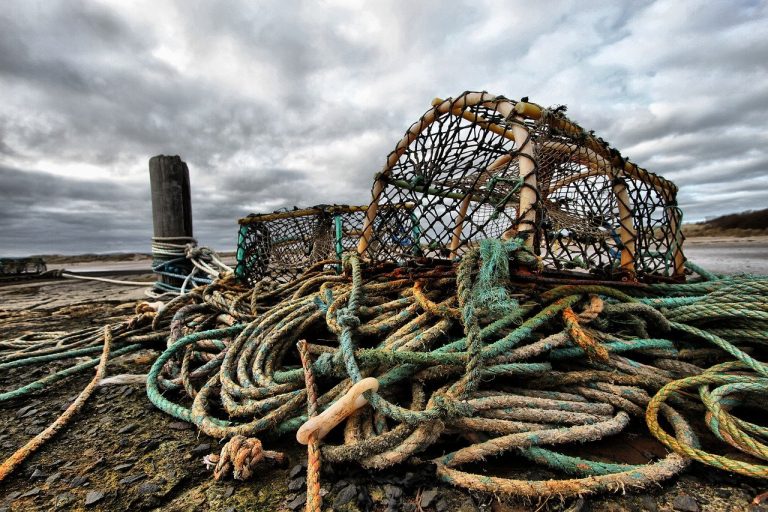
Ghost gear is fishing equipment that has been lost, discarded, or abandoned at sea. It keeps fishing long after no human is operating it. Nets drift for years catching whales, dolphins, turtles, seabirds, and fish in numbers that nobody can definitively count. By every reasonable estimate, ghost gear is one of the largest sources of unintended marine animal mortality on the planet, and it is one of the most preventable. This guide brings together what is known about the problem and what is being done about it.
Key facts at a glance
- Scale: the most-quoted figure is 640,000 tonnes, from a 2009 FAO and UNEP report
- Persistence: synthetic nets can keep fishing for decades before degrading
- Cetacean toll: no reliable global annual estimate exists for abandoned gear alone
- Most affected species: coastal dolphins, pilot whales, North Atlantic right whales, humpback whales
- Best response: gear marking, retrieval programmes, and ropeless fishing technology
What ghost gear is
Three categories: lost gear (storms, snags, equipment failure), discarded gear (illegal dumping or convenience disposal), and abandoned gear (left in place when fishing operations end). All three behave the same way in the water: synthetic ropes, monofilament nets, and plastic pots keep their structure for years, often decades, before fragmenting into microplastics. While they last, they continue to entangle anything large enough to be caught and not strong enough to break free.
How much is out there
The 640,000 tonne figure you will see quoted everywhere comes from a 2009 report by the Food and Agriculture Organization and the UN Environment Programme, which estimated that abandoned, lost or discarded fishing gear accounts for around 10 percent of marine litter. It is very often repeated as an annual input figure. It is worth knowing that the original report did not present it that cleanly, and that newer work has tried to estimate loss as a proportion of gear in use rather than as a single global tonnage. Nobody has a precise number. Everybody agrees the number is large.
Why cetaceans are particularly vulnerable
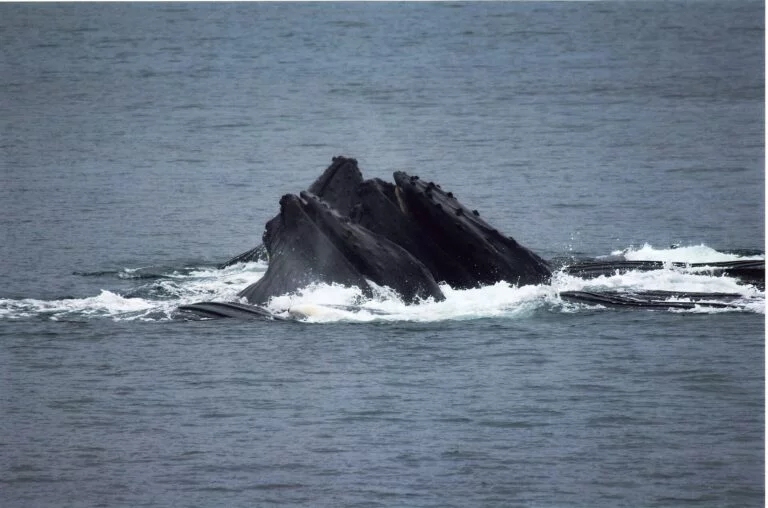
Whales and dolphins encounter ghost gear in three main ways. They swim into drifting nets at the surface, especially in feeding behaviours where mouths are open. They wrap their tail flukes in floating rope that resembles natural debris. They get tangled in vertical lines connecting surface buoys to bottom traps. An entangled humpback whale rescued in Spain and an entangled humpback freed in Maui illustrate that even strong, large whales need human help to escape some entanglements.
The North Atlantic right whale story
North Atlantic right whales are the species most analysed in the ghost gear literature. Scarring analysis covering 1980 to 2009 found that around 83 percent of the population had experienced at least one entanglement with fishing gear. A smaller but significant number carry rope still attached, sometimes embedded in the skin or wound around the mouth and flippers. Death from chronic entanglement is slow and painful: cuts go septic, weight is lost, swimming becomes inefficient, calving stops. A right whale entangled in rope and the ban on lobster fishing to save whales in Maine are part of the ongoing fight over how to keep the species alive while still allowing a working fishery.
The Pacific picture
In the Pacific, humpback whales off California, Alaska, and Hawaii routinely become entangled in commercial Dungeness crab and salmon gear. Response teams handle dozens of reports in some years, while successful disentanglements are fewer. The NOAA Large Whale Entanglement Response Program coordinates trained teams, and adds to a growing scar-marking database used to assess true entanglement frequency.
Lobster pots and ropeless fishing
Vertical lines from surface buoys down to bottom traps are the single biggest cetacean entanglement hazard in the US east coast lobster fishery. Ropeless fishing (also called on-demand gear) replaces these vertical lines with acoustic releases: when the fisher arrives, an acoustic signal triggers a buoy to surface, raising the trap on demand. The technology works. Adoption is slower than conservation groups want, partly because of cost and partly because some fishers feel singled out for what is really a multi-source problem. See our pieces on lobsters and saving whales and the Maine lobster ban for the political picture.
Gear marking and tracking
If a piece of gear can be traced back to its owner, accountability changes. The FAO’s Voluntary Guidelines on the Marking of Fishing Gear, adopted in 2018, are slowly being taken up nationally. Norway has run a gear retrieval programme for decades that recovers tens of tonnes of lost equipment a year. Gear marking can support tracing and recovery, but costs depend on the system, reporting rules, enforcement, and disposal arrangements.
Retrieval programmes
Dedicated ghost gear retrieval has become a respectable industry sub-niche. The Olive Ridley Project recovers gear in the Indian Ocean. Healthy Seas removes nets in the Mediterranean and Adriatic and recycles them into garments. NOAA’s marine debris programme funds US retrieval. Some commercial fishing fleets even self-report and self-recover when storms snag gear. Each recovered net stops fishing immediately.
Acoustic gear tagging
Acoustic transponders attached to fishing gear allow it to be located after loss. Some US lobster fishery pilots and several European trawl fisheries are now experimenting with acoustic tags on traps and net edges. When gear is lost, a vessel with the right receiver can locate and retrieve it. The cost per tag has dropped sharply over the last few years as the underlying technology has been mass-produced for other industries. Combined with mandatory gear marking and producer-responsibility schemes, acoustic tagging is one of the more credible levers for cutting ghost gear input.
Recycling and the circular economy
Recovered nets used to go to landfill. Now several companies turn them into nylon for clothing, carpets, and 3D printing filament. Bureo, Sea2See and Ecoalf are among the brands built around recycled fishing gear. The volumes are still small relative to total ocean plastic input, but the supply chain is being built, and as it grows the financial incentive to recover gear grows with it.
Hotspots around the world
Ghost gear concentrates in predictable places. A 2018 study of the Great Pacific Garbage Patch led by Laurent Lebreton found that fishing nets made up at least 46 percent of the patch’s mass. The Mediterranean has high gear density relative to fishing effort because of weak enforcement and high vessel traffic. The Gulf of Maine and the Gulf of St Lawrence are right whale entanglement hotspots. The Indian Ocean’s monsoon-driven currents concentrate drift nets in specific zones that the Olive Ridley Project targets for retrieval. South-east Asian coastal waters have some of the highest gear loss rates per unit fishing effort due to weather, sheer volume of fishing, and limited reporting.
Aquaculture’s emerging contribution
As marine aquaculture grows, lost or damaged net pens have become a smaller but rising source of ghost gear. Storm damage at fish farms can release tens or hundreds of metres of net into the water. Most farmed-fish certification schemes now require gear loss reporting and recovery planning, but the underlying problem is set to grow as global aquaculture expands. Whale interactions with aquaculture infrastructure are still rare but rising, especially humpbacks colliding with salmon farm nets in the North Atlantic and Pacific Northwest.
Causes of gear loss
- Storms snagging gear and breaking surface lines.
- Vessel traffic cutting through marked fishing gear.
- Conflict between mobile (trawl) and static (pot, gill net) fisheries.
- Equipment age and failure.
- Illegal fishing operations dumping gear to avoid inspection.
- Convenience disposal during shore-based operations.
Cumulative impact on smaller cetaceans
The high-profile cases involve large whales, but small cetaceans bear a disproportionate ghost gear load. Vaquitas, the world’s most endangered cetacean, are dying out almost entirely because of illegal totoaba gillnets in the Gulf of California. Hector’s and Maui dolphins in New Zealand face severe entanglement pressure. Coastal bottlenose dolphins in many regions show high entanglement scar rates. Porpoises drown in gill nets in the North Sea and Black Sea. Cumulatively, the small-cetacean ghost gear toll is far higher than the large-whale toll, but it gets less media attention because individual incidents are smaller.
Policy levers that matter
- Mandatory gear marking with traceability back to operator.
- Extended producer responsibility for fishing gear, so manufacturers help finance recovery.
- Subsidies and grants for ropeless or breakaway gear adoption.
- Port-based mandatory loss reporting and incentives for voluntary loss reporting.
- Targeted closures or seasonal restrictions in critical whale habitat.
- International coordination on high-seas fishing fleets through regional fisheries management organisations.
What you can do
- Buy seafood certified by responsible programmes such as MSC and ASC, or regional equivalents.
- Support legislation that funds gear retrieval and ropeless fishing adoption.
- Donate to or volunteer with retrieval organisations such as the Olive Ridley Project and Healthy Seas.
- If you boat, do not leave gear in the water. Report drifting nets to the coastguard or a marine wildlife agency.
- Choose brands using recycled-net fabrics where the cost difference is small.
Read next
- Whale Species: A Complete Guide to the Cetaceans of the World
- Ban on Lobster Fishing to Save Whales in Maine
- Blue Whale Subspecies Explained: Antarctic, Pygmy, Northern, and Indian Ocean
Frequently asked questions
What is ghost gear?
Fishing equipment that has been lost, discarded, or abandoned at sea and continues to fish for years or decades after its operator is gone.
How much ghost gear is in the ocean?
Nobody knows precisely. The most-quoted estimate, 640,000 tonnes, comes from a 2009 FAO and UNEP report on abandoned, lost and discarded gear. Synthetic nets persist for decades, so whatever is added stays in circulation a long time.
How does ghost gear harm whales?
Entanglement in floating ropes, drift nets, and vertical buoy lines causes injury, infection, slow death by starvation, and reduced reproduction. Around 83 percent of North Atlantic right whales carry scars from at least one entanglement.
What is ropeless fishing?
Fishing gear without vertical lines from traps to surface buoys. Instead an acoustic release triggers a buoy to surface on demand. It eliminates the highest-risk entanglement hazard for whales.
Can ghost gear be recovered?
Yes. Organised retrieval programmes recover large volumes each year. Marked gear can be returned to operators. Recycled gear is increasingly used in clothing and 3D printing.
How do I help reduce ghost gear harm?
Buy responsibly certified seafood, support ropeless fishing legislation, donate to retrieval organisations, and choose products made with recycled ocean plastic where possible.
Updated 14 September 2026: removed unsupported ghost gear response and cost figures.

The amount of lost fishing gear in the sea is staggering.
Scary that old nets keep catching for years.
Useful to split lost, discarded and abandoned gear. Each needs a different fix.
Halil, agreed. Splitting it up helps.
Ropeless gear can’t come soon enough.
Floating rope must be very hard for a whale to spot.