
Species Profile: The Blue Whale
Last updated: November 18, 2026
9 min read
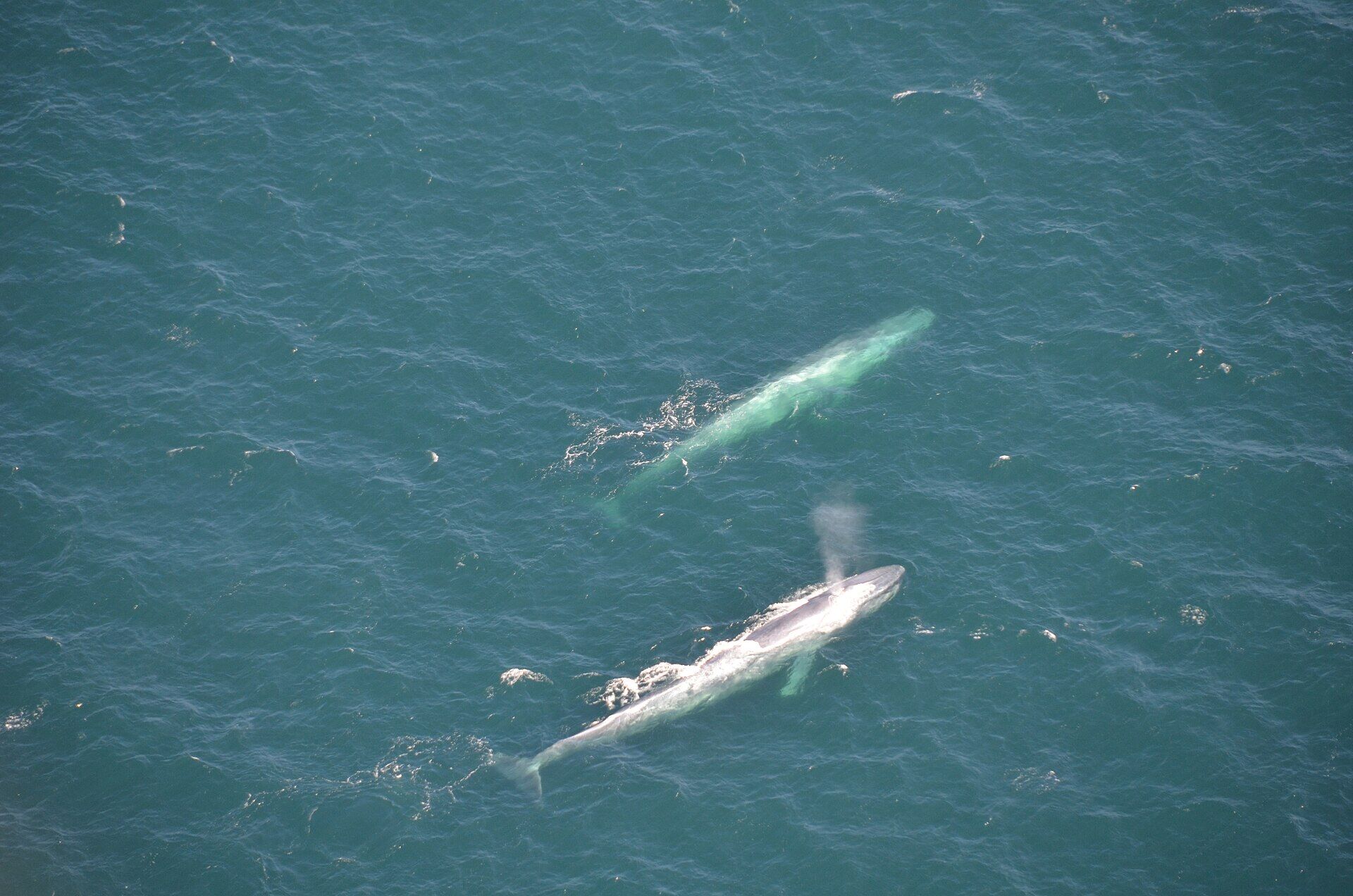
The blue whale is the largest animal known to have ever lived. Larger than any dinosaur. Larger than any creature in the fossil record. A fully grown blue whale can reach 30 metres in length and weigh as much as 190,000 kilograms, with a tongue alone heavier than a fully grown elephant and a heart the size of a small car. Despite that bulk, the blue whale lives almost entirely on a single prey item: krill, the small shrimp-like crustaceans that swarm the surface layers of every ocean. The story of how something so big came to live on something so small is one of the great mysteries (and most successful experiments) in mammal evolution.
Key facts at a glance
- Scientific name: Balaenoptera musculus
- Family: Balaenopteridae (rorquals)
- Length: around 30 metres
- Weight: up to about 190,000 kilograms
- Diet: krill (Euphausiacea), almost exclusively
- Habitat: all major oceans, with seasonal migrations between polar feeding grounds and tropical breeding grounds
- IUCN status: Endangered (some subpopulations Critically Endangered)
Taxonomy and subspecies
The blue whale belongs to the family Balaenopteridae, the rorquals, which also includes the fin whale, sei whale, Bryde’s whale, humpback, and the small minke whales. All rorquals share the long pleats on the throat that expand during lunge feeding. The blue whale is the largest member of the family and the type species. Four subspecies are recognised: the northern blue whale (B. m. musculus), Antarctic blue whale (B. m. intermedia), pygmy blue whale (B. m. brevicauda), and northern Indian Ocean blue whale (B. m. indica). The Chilean population may warrant separate status, but it is not one of the four recognised subspecies.
The Antarctic blue whale is the biggest of the bunch. Pygmy blue whales are still huge by any other standard (up to 24 metres) but proportionally shorter in the tail. Genetic work over the last decade has tightened up the family tree and provided strong evidence that blue and fin whales hybridise where their ranges overlap. See our fin whale species profile for the closest cousin.
Size and appearance
Adult body length commonly ranges from about 22 to 30 metres, while a reviewed record reached 33 metres. Females are typically a metre or two longer than males of the same age. Body mass scales steeply with length, and the heaviest on record, a 27.6 metre female taken in the Southern Ocean in 1947, weighed about 190,000 kilograms. A review accepted a 33 metre specimen as the longest confirmed blue whale. Some longer historical records remain uncertain because measurement methods varied.
The body is long, streamlined, and a mottled grey-blue colour that gives the species its name. The dorsal fin is comically small and set very far back on the body, almost two thirds of the way to the tail. The head is broad, flat, and U-shaped from above, with a single ridge running from the blowholes to the tip. There are roughly 60 to 90 throat pleats that allow the throat to expand enormously when feeding. The flippers are slim and long, around 12 percent of body length. Blue whales have between 270 and 395 baleen plates on each side of the upper jaw, each plate up to a metre long.
The tongue alone weighs about 2,700 kilograms in a large adult. The heart of a blue whale is roughly the size of a small car: the one recovered from a stranded animal in Newfoundland and preserved by the Royal Ontario Museum weighs about 180 kilograms. Drone photogrammetry now lets researchers measure free swimming animals without harming them; combined with old whaling records, this gives modern science a good handle on the species’ upper size limits.
Diet and lunge feeding
Blue whales eat almost nothing but krill, the small shrimp like crustaceans (order Euphausiacea) that aggregate in dense swarms in cold oceanographically rich water. Different populations specialise in different species: Antarctic blue whales eat almost entirely Antarctic krill (Euphausia superba); North Pacific blues focus on Thysanoessa spinifera and Euphausia pacifica; Indian Ocean pygmies eat several species depending on location.
Lunge feeding is the strategy. The whale accelerates toward a dense krill swarm, opens its mouth at nearly a 90 degree angle, and engulfs a volume of water and prey larger than its own body. The throat pleats balloon outward, then the whale closes its mouth and pushes the water back out through the baleen, leaving the krill behind to be swallowed. A single feeding day in a good swarm can put 3,600 kilograms of krill into a blue whale, which is roughly 16 million calories.
Lunge feeding is metabolically expensive. The whale has to slow down from cruising speed to nearly a stop, lose its forward momentum, and then accelerate again. To make it worth doing, the prey patch has to be dense. Blue whales appear to make decisions about which patches to attack based on energetic returns, ignoring sparse swarms even when they are nearby. See our guide to the biggest whales on Earth for how this feeding strategy shaped baleen whale size in general.
Habitat and migration
Blue whales live in all major oceans except parts of the high Arctic. The classic pattern is long range seasonal migration between high latitude feeding grounds and low latitude breeding grounds. Antarctic blue whales spend the southern summer feeding in the productive waters around the Antarctic ice edge, then migrate north to subtropical waters for winter. North Atlantic blue whales feed off the Azores, Iceland, and the eastern Canadian shelf in summer and move south in winter. North Pacific blues feed off California and British Columbia in summer and winter off the Costa Rica Dome.
Not all blue whales follow this pattern. The pygmy blue whales of the Indian Ocean and the Chilean blue whales make shorter, less predictable migrations and seem to use prey availability rather than calendar timing to decide when to move. Researchers using satellite tagging have shown some Indian Ocean blue whales staying in the same broad region year round.
The song
Blue whales produce some of the loudest sounds of any animal. Calls reach 188 decibels in the water and travel for hundreds of kilometres. The calls are low in pitch, mostly below 20 hertz, near the edge of human hearing. Each population has its own dialect: the call structure of Antarctic blue whales is distinct from that of North Pacific or Indian Ocean populations. Researchers can sometimes identify which population a recording came from just by the call pattern.
Strange thing: the pitch of blue whale calls has been dropping steadily for decades. Recordings of North Pacific blue whales from the 1960s are noticeably higher pitched than the same call type today. The drop is documented across all populations, and no single explanation has been agreed. One hypothesis links it to population recovery, on the argument that a male in a less empty ocean can afford a lower, further travelling call. Others point to changes in ambient ocean noise or in body size. It is still an open question.
Reproduction and life history
Blue whales reach sexual maturity at around 5 to 10 years old, depending on subspecies. Mating occurs in winter on the low latitude breeding grounds, and after a gestation of about 11 to 12 months a single enormous calf is born, around 7 metres long and 2,500 kilograms in weight. The calf nurses for around six to seven months on milk that is roughly 40 percent fat, gaining about 90 kilograms a day, which is some of the fastest growth in the animal kingdom. By the time it is weaned the calf has roughly doubled in length and is ready to make its first migration with the mother.
Females typically produce one calf every two to three years. Estimated lifespan in the wild is 80 to 90 years, possibly longer in some individuals. That long life and slow reproduction explain why the recovery from 20th century whaling has been so slow.
Whaling and the long recovery
Blue whales were nearly wiped out by 20th century industrial whaling. The species was too fast to catch with hand harpoons in the 19th century, but the invention of the explosive harpoon and the steam catcher boat in the 1860s changed everything. The peak of the Antarctic hunt came between the 1920s and 1960s, when factory ships could process whales at sea and tens of thousands of blue whales were killed every year. The total Antarctic catch alone is estimated at around 360,000 animals. The species was internationally protected in 1966, but Soviet whalers continued to kill blue whales illegally in the South Atlantic and Indian Oceans into the 1970s.
The result was catastrophic. The Antarctic blue whale population fell from a pre whaling estimate of around 239,000 animals to about 360 by the mid 1970s. According to the IUCN Red List, the species is now listed as Endangered overall, with the Antarctic subspecies Critically Endangered. The total global population is currently estimated at 5,000 to 15,000 mature individuals, with the largest stocks in the eastern North Pacific (around 1,700 animals) and the central Indian Ocean.
Modern threats
Whaling is no longer the main pressure, but the species still faces multiple threats. Ship strikes are the leading direct cause of mortality in some populations, especially in the busy shipping lanes off California, Sri Lanka, and the Strait of Gibraltar. Entanglement in fishing gear takes individuals every year. Ocean noise from shipping, seismic surveys, and military sonar interferes with the long range calls the species relies on to find mates and feeding grounds.
Climate change is the slow but cumulative pressure. Krill abundance is tightly linked to sea ice extent in the Southern Ocean. As Antarctic sea ice retreats, krill populations are projected to drop in some regions, with serious knock on effects for blue whales and other krill specialists. NOAA Fisheries tracks population trends and ship strike incidents for the North Pacific stock.
Conservation today
Blue whales are slowly recovering in most regions, with the eastern North Pacific population now thought to be at least 90 percent of its pre whaling size. Other stocks have not recovered as well. Antarctic blue whales remain at only a few percent of their pre whaling abundance after more than 50 years of protection. Conservation effort is focused on ship strike reduction (slow lane proposals, dynamic management areas, real time whale tracking), reducing fishing gear entanglement risk, and limiting ocean noise. Test what you have just learned with our blue whale trivia challenge or compare with the next biggest rorqual in our sei whale species profile.
Take whales home
Bring this species home with a curated collection of whale plush, books, jewelry, and apparel. Every order supports more long form whale writing on lovewhales.org.
whale plush toys
Read next
- Whale Species: A Complete Guide to the Cetaceans of the World
- Species Profile: The Antarctic Blue Whale
- Species Profile: The Antarctic Minke Whale
Frequently asked questions
How big is a blue whale?
Adult blue whales commonly reach 22 to 30 metres and can weigh about 190,000 kilograms in reliable records. Females are slightly larger than males. A review accepted a 33 metre specimen, while some longer historical records remain uncertain.
Is the blue whale really bigger than any dinosaur?
Yes. The largest dinosaurs we know of, such as Argentinosaurus and Patagotitan, are estimated at around 70,000 to 80,000 kilograms. The blue whale roughly doubles that mass, making it the largest animal known to have ever lived on Earth.
What do blue whales eat?
Almost exclusively krill, small shrimp like crustaceans in the order Euphausiacea. A single feeding day in a dense krill swarm can put 3,600 kilograms of krill into a large blue whale.
How fast can a blue whale swim?
Cruising speed is around 8 km/h, with feeding speeds slower and bursts up to 30 km/h when fleeing or socialising. Blue whales are not the fastest baleen whales (that title goes to the fin whale) but they sustain efficient cruising over very long distances.
How many blue whales are left in the world?
The global population is currently estimated at 5,000 to 15,000 mature individuals. The largest stock is the eastern North Pacific at around 1,700 animals; the Antarctic stock is still only a few percent of its pre whaling size of around 239,000.
Are blue whales still endangered?
Yes. The species overall is listed as Endangered by the IUCN, with the Antarctic subspecies Critically Endangered. Recovery from 20th century industrial whaling is slow because blue whales live a long time, mature late, and produce a calf only every two to three years.
Why are blue whales so big?
The leading explanation links their size to filter feeding on dense but patchy prey. A whale that can travel long distances cheaply and engulf huge volumes of krill in one gulp does better than a smaller animal that has to find food more often. Climate driven changes to the polar oceans over the last few million years made krill swarms exactly that kind of resource.
How long do blue whales live?
Estimated lifespan in the wild is 80 to 90 years, and possibly over 100 for some individuals. Age is estimated from growth layer counts in earplugs and from changes in eye lens proteins.
Updated 14 September 2026: corrected blue whale size records and subspecies taxonomy.
Updated 18 November 2026: aligned the heaviest blue whale on record to 190 tonnes, the 1947 female.



The heart the size of a small car is the fact that finally impressed my dinosaur-mad nephew.
Lunge feeding sounds exhausting. Glad you explained the throat pleats.
Saw a blue whale off Sri Lanka a few years ago. The size does not register until it is under the boat.
Do blue whales really sing? I thought that was mostly humpbacks.
Fiona, they do have repeated calls that researchers call songs, just lower and simpler than a humpback’s.
Is the pygmy blue whale its own subspecies now?
Brenda, yes, the pygmy blue whale is treated as a subspecies. Whether some other regional groups should be split too is still debated.