
Humpback Whale Saves Scientist from Shark
Last updated: October 14, 2026
4 min read
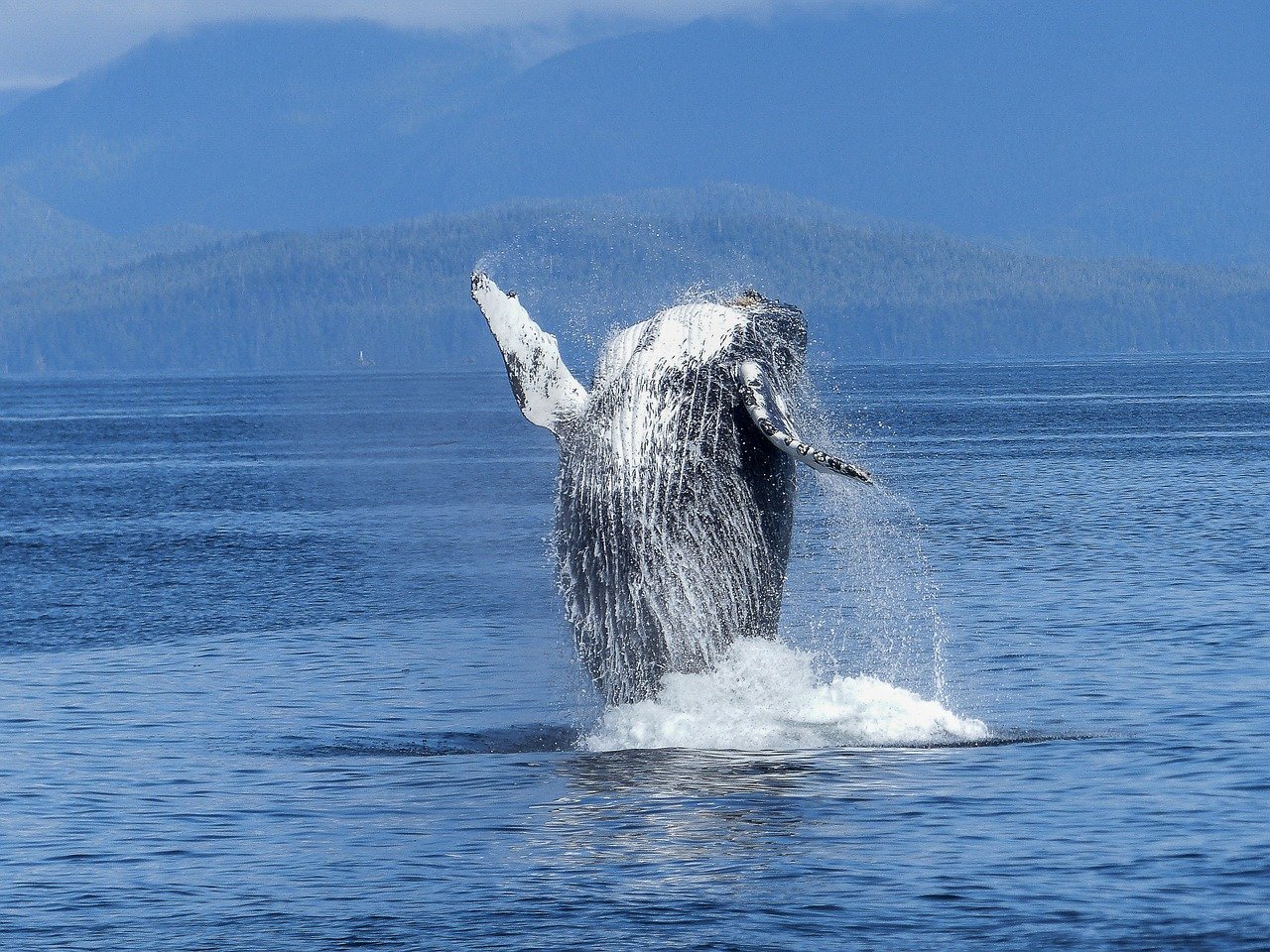
In 2017, marine biologist Nan Hauser was snorkelling in the Cook Islands when a humpback whale pushed her through the water with its head and tucked her under a pectoral fin. She thought the whale might be attacking her. It was not. A tiger shark was circling nearby, and the whale appeared to be shielding her from it.
The encounter happened off Rarotonga. Hauser, who founded the Center for Cetacean Research and Conservation and is its president and director, has spent decades swimming with and studying whales. Even she did not understand at first what the animal was doing. She spent more than ten minutes being rolled and nudged by the whale before she saw the shark, climbed onto the whale’s head, and made her way back toward her boat. She came away with bruises and scratches but no serious harm.
What actually happened in the water
From Hauser’s account and the footage filmed by her team, the sequence was roughly this. The humpback approached her head-on and began pushing her, repeatedly lifting her on its head and rostrum and pinning her against its body. To anyone in the water, that is alarming. An adult humpback reaches about 45 to 50 feet long, so being shoved by one is not a gentle experience even when the intent is protective. Only when Hauser spotted the tiger shark did the behaviour start to make sense to her: the whale was keeping her close and away from the predator. A second whale was nearby slapping the surface with its tail, a behaviour that can drive other animals off.
Did the whale really mean to save her?
This is the honest question, and it deserves an honest answer. We cannot read a whale’s intentions. What we can do is look at how this behaviour fits the wider record, and the record is genuinely interesting.
Humpback whales are well documented interfering with predators, in particular killer whales. A 2017 paper in Marine Mammal Science by Robert Pitman and colleagues, titled “Humpback whales interfering when mammal-eating killer whales attack other species: Mobbing behavior and interspecific altruism?”, gathered scores of cases in which humpbacks actively disrupted orca hunts. Strikingly, the humpbacks often intervened to protect completely different species, including seals and sea lions, animals they have no obvious reason to help. The researchers raised the possibility of interspecific altruism, behaviour that benefits another species at a cost to itself.
Other scientists offer a more cautious read. In nature, the simplest explanation usually wins, and the simplest explanation here may be a generalised anti-predator response: humpbacks instinctively harass and crowd dangerous animals, and Hauser happened to be the smaller animal the whale was steering away from the threat. Under that view the whale was not consciously rescuing a person, it was doing what humpbacks do near sharks, and a human benefited. Both explanations are worth holding at once. The behaviour is real; the motive is uncertain.
Why humpbacks confront predators
Humpbacks have good reason to be aggressive toward predators. Their own calves are vulnerable to killer whales, so adults, especially escorts travelling with mothers and young, are primed to mob and disrupt anything that hunts. That instinct does not switch off when the threatened animal is a seal, a sunfish, or a snorkelling biologist. A few traits make humpbacks effective at it:
- Their pectoral fins are the longest of any whale, up to a third of body length, and the leading edges carry barnacles, turning a flipper into a formidable weapon.
- They are large and powerful enough to physically position themselves between a predator and its target.
- Tail and pectoral slapping creates noise and disturbance that can break up a hunt.
The tiger shark’s side of it
It is worth not painting the shark as a villain. Tiger sharks are large, wide-ranging predators found through tropical and warm-temperate seas. They are curious and investigative by nature, which often reads as menacing to a human in the water but is normal foraging behaviour. The shark in Hauser’s encounter was doing what tiger sharks do: checking out an unfamiliar object. The drama in the story comes from the whale’s response, not from any unusual aggression by the shark. Recognising that keeps the account grounded: this was an interaction between three animals each behaving in character, not a tale of good against evil.
Recognising individual whales
Hauser has since said the same whale returned and spent time with her again. We have not been able to verify that second encounter against a published source, so take it as her account rather than a documented record. What is well established is the method that would make such an identification possible: humpbacks are identified individually by the unique pattern on the underside of their tail flukes, which is how researchers track named animals across years and oceans. Humpbacks are long-lived, intelligent animals with strong spatial memory and a clear capacity to recognise places and situations.
Why the story endures
Stories like Hauser’s are valuable not because they prove whales love us, but because they push against the lazy idea that large ocean animals are mindless or dangerous. Humpbacks are protective, socially complex, and capable of behaviour that genuinely puzzles the scientists who study them. That is a better reason to care about them than sentiment alone. If you want a fuller picture of the species behind the story, our humpback whale species profile covers its size, range, song, and feeding behaviour in detail.



My kids still talk about the footage of the whale pushing her along.
Hard to know if the whale meant to protect her, but it is an amazing story either way.
Rashid, agreed. It is hard to prove what the whale intended.
Imagine thanking a whale after that.
Nice to see the long-term research behind the story get a mention.
Came for the headline, stayed for the rest.
A lot of whale stories online are overhyped. This one is careful.
Kept nodding along to this one.