
Beluga Whale Rescued From the Seine River Died
Last updated: October 14, 2026
4 min read
A beluga whale that swam far up the River Seine in France in August 2022 was lifted out by a huge rescue operation, then euthanized when its condition collapsed during transport. The whale should never have been there at all: belugas are Arctic animals, and the Seine is fresh water hundreds of miles from any sea ice. This page keeps the story and explains the parts behind the headlines, including why a beluga ends up in a river, why this one could not be saved, and what its death says about a changing Arctic.
The Seine beluga, from first sighting to the end
The whale was first spotted in the Seine on 2 August 2022, heading inland toward Paris. It was eventually stopped by the Notre-Dame-de-la-Garenne lock at Saint-Pierre-la-Garenne, in Normandy west of the capital. From the moment it entered fresh water its situation was close to hopeless: the Seine holds nothing a beluga can properly eat, and rescuers who tried to tempt it with frozen herring got nowhere. It refused food, and every day in the river left it weaker.
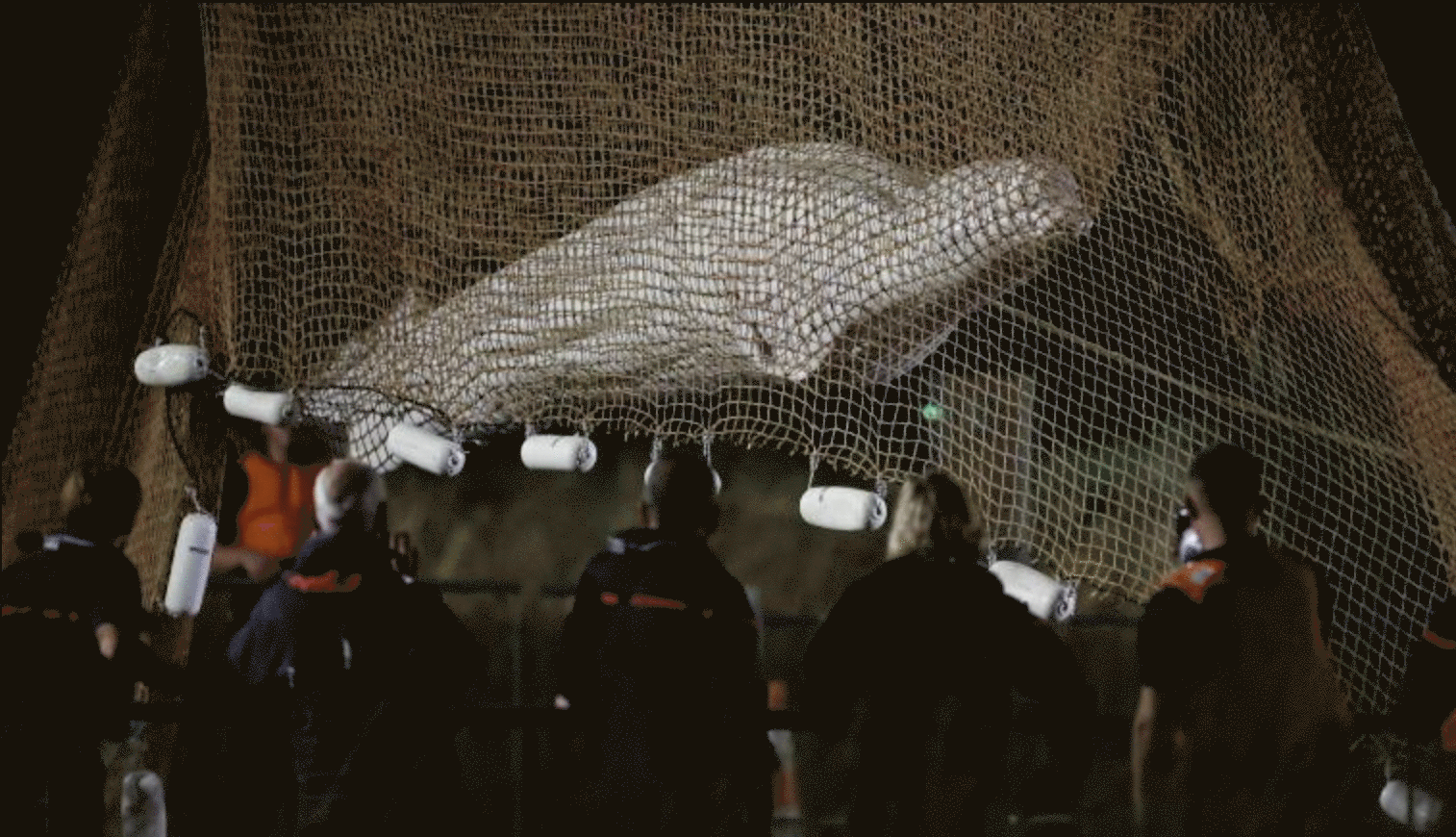
The rescue itself was enormous. A team of around 80 people, including some 40 firefighters, spent roughly six hours getting the animal out of the lock overnight on 9 August, using a net and a crane to lift it from the water at about four in the morning and place it on a barge for examination by a dozen vets. The plan was to move the beluga by refrigerated truck on the 160 kilometre journey to the port of Ouistreham on the Normandy coast, hold it in a saltwater basin, and release it to sea.
It did not get that far. During the drive the vets watching the whale saw its breathing deteriorate. The animal went into anoxia, meaning it was not ventilating properly and was not getting enough oxygen. Examinations had already shown no digestive activity at all, and it weighed around 800 kilograms when an animal of its size should have been closer to 1,200 kilograms, a third under weight. The veterinarian leading the response, Florence Ollivet-Courtois, judged that the whale was suffering with no realistic prospect of recovery, and the team decided to euthanize it.
Why fresh water is deadly for a beluga
The beluga is adapted to cold Arctic and subarctic waters, including estuaries and rivers used by some populations. It feeds on fish such as cod and capelin, on squid, and on bottom dwelling animals like shrimp and crabs, none of which it can find in a European river.
There is a deeper problem than hunger. Belugas can use estuaries and rivers, so fresh water alone does not explain this animal’s decline. Its poor condition and failure to feed were the immediate concerns during the rescue. By the time the Seine beluga was lifted out it had been starving and weakening for well over a week.
How did an Arctic whale reach a French river?
Belugas normally live thousands of kilometres north of France, around Greenland, Svalbard, the Canadian Arctic and Russia. The nearest regular population is far to the north. So how does one end up swimming toward Paris?
Scientists point to several overlapping possibilities. A whale may be ill or carrying a parasite that affects navigation. It may simply be lost, an old or disoriented individual that followed prey or a current the wrong way. And there is a broader backdrop: decades of Arctic warming have stripped away much of the oldest, thickest sea ice, opening new routes to shipping and fishing. That traffic brings underwater noise, which can disturb sound dependent animals like belugas, and it shifts where their prey is found. One lost whale is never proof of climate change on its own, but a warming, noisier, busier Arctic is the environment these animals now have to navigate.
Why rescuers chose euthanasia
It is natural to feel that euthanizing the whale, after such a vast effort, was a failure. It was not. The team tried to feed it, monitored it, mobilised around 80 people and built a plan to return it to the sea. But a beluga that had not fed in the river, was a third under weight, had no digestive function and was failing to breathe properly is not an animal that release would have saved. It would have died at sea instead of being spared further suffering. Euthanasia in that situation is the last act of care available, not a defeat.
A pattern worth watching
The beluga was not the only large marine mammal to make headlines in the Seine that year. In May 2022 an orca that had been roaming the lower river between Rouen and Le Havre was found dead. A necropsy indicated the animal was terminally ill, with a suspected fungal infection, and Sea Shepherd France reported that a bullet was found in its neck. Two lost whales in one river in one year is the kind of pattern conservationists watch closely.
The wider lesson is about how we respond. Out of range strandings are likely to keep happening as the oceans change, and stranding networks across Europe and North America depend on fast, accurate public reports. If you ever see a whale somewhere it clearly should not be, contact your local marine mammal rescue group rather than approaching the animal yourself. To read more about this white whale of the Arctic, see our full beluga whale species profile.
Updated 14 September 2026: corrected the account of beluga freshwater use.


Followed this every day on the news. So sad how it ended.
Was moving her the right call? Hard to know.
Aaron, the vets said she was very weak by the time she was moved. Probably too late either way.
I live near Rouen. Everyone here was rooting for her.
The loss of Arctic sea ice is the bigger story behind this.