
Iceland Whale Eaters to Whale Watchers
Last updated: October 14, 2026
4 min read
Iceland is slowly turning from a country that hunts whales into a country that watches them. Domestic appetite for whale meat has collapsed, polling by IFAW and Gallup has put the share of Icelanders who eat it at only a few percent, and whale watching has grown into a real tourism sector. The shift is genuine, but it has been slow, contested, and is still not finished.
If you want the background on why countries hunted whales in the first place, our piece on the facts about whale hunting and why we do it sets out the full picture.
It is worth being precise here, because two very different hunts are often blurred together. Iceland is an independent country that has carried out commercial whaling of large whales, mainly fin whales, through the company Hvalur hf. The Faroe Islands, a separate self-governing territory, run a community hunt of pilot whales and dolphins known as the grindadrap. Both involve killing whales, but they are different places, different traditions, and different species. This post is about Iceland’s move away from whaling, with the Faroese hunt as context.
How Iceland hunted whales
Iceland’s commercial whaling has centred on the fin whale, the second largest animal on Earth after the blue whale, reaching around 80 feet long. Almost all of the meat was exported to Japan rather than eaten at home. That export dependence is now the industry’s biggest weakness. With inflation and shifting demand in Japan, whaling has become hard to run at a profit.
Iceland did not cleanly “end whaling by 2024” the way many headlines once suggested. What actually happened is messier. In 2023 Hvalur caught 24 fin whales and no minke whales. In 2024 the government granted the company a fresh licence permitting up to 128 fin whales. Iceland reported no fin or minke whale catches in 2025. Fin whaling resumed in July 2026 under the current licence.
The animal welfare problem
One reason public support has collapsed is what monitoring revealed about how the whales die. On 20 June 2023, Iceland’s Minister of Fisheries suspended whaling outright over alleged breaches of the Animal Welfare Act, following a monitoring report by the country’s own Food and Veterinary Authority. The suspension ran until 31 August, and whaling resumed on 1 September under stricter conditions.
The figures reported from that monitoring work are grim: more than 40 percent of harpooned fin whales did not die immediately, a median time to death of around 11.5 minutes, and one documented case in which a whale took roughly two hours to die. The official MAST report found that 35 of 58 whales died immediately. For the others, the median time to death was 11.5 minutes, and one whale took two hours to die. What is not in dispute is the effect: for many Icelanders, seeing that data made the hunt indefensible regardless of tradition.
The Faroese grindadrap
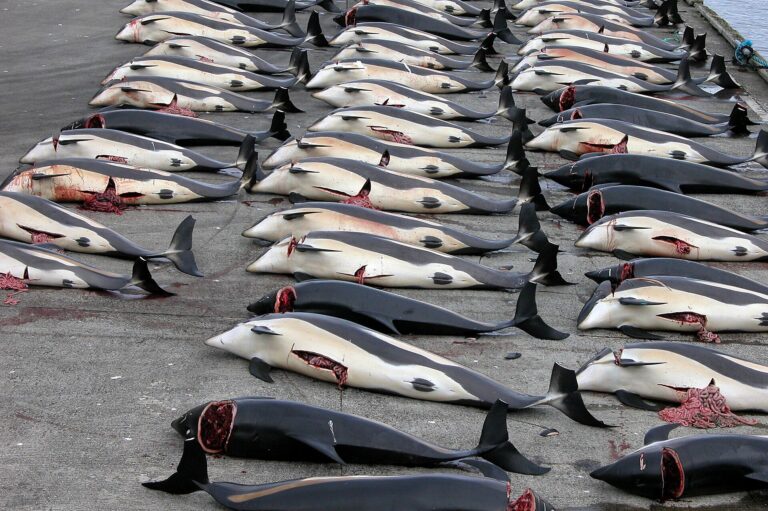
The Faroe Islands hunt is the one behind the images of red water that many people associate with this story. In September 2021, a single drive killed an unusually large pod of Atlantic white-sided dolphins, reported as 1,428 animals. The scale of that one event drew international condemnation and pushed the Faroese authorities to review the practice. You can read a fuller account of that dolphin drive for the detail. It is a separate hunt from Iceland’s fin whaling, and it is worth keeping the two apart when discussing where each stands.
Why watching beats eating
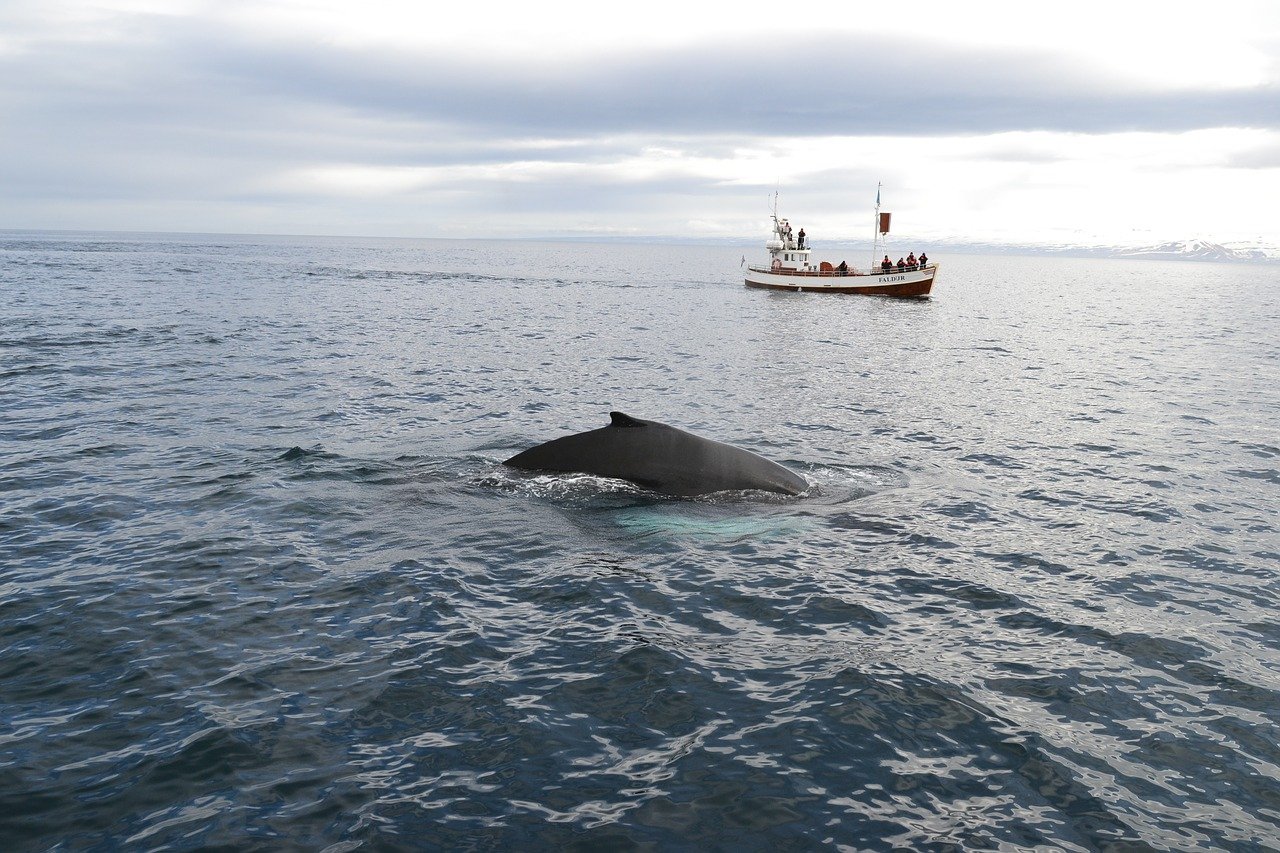
The honest reason Iceland is moving away from whaling is not only ethics. It is economics. A dead whale is sold once. A living whale can be watched by paying tourists for decades. A report commissioned by Iceland’s Ministry of Food and Fisheries concluded that whaling had a negligible impact on the national economy, accounting for less than one percent of marine exports in 2022. Whale watching, meanwhile, has become a significant industry, especially out of Husavik in the north and from Reykjavik, where boats reach humpbacks, minke whales, and white-beaked dolphins. Published estimates of its annual value run into the tens of millions of pounds, though the figures come from campaign groups rather than national statistics. The campaign slogan “meet us, don’t eat us” sums up the argument: a whale is worth more alive.
For context on the ancestral side of this debate, it is fair to remember that historic communities hunted whales because they had no other reliable source of meat and oil. That necessity is gone. Iceland has supermarkets, a modern economy, and a tourism sector that depends on whales being visible and abundant. A tradition that once meant survival now competes directly with an industry that needs the same animals alive.
The tension on the water
The change has not been smooth. While most Icelanders neither buy whale meat nor support the hunt, whaling has not fully stopped, and on the water the two industries collide. Whale-watching operators sometimes have to move their boats to find whales away from hunting vessels. For well over a decade the International Fund for Animal Welfare (IFAW) and the Icelandic whale-watching association IceWhale have campaigned to end Icelandic whaling, including a “whale friendly” restaurant scheme that marks venues with no whale meat on the menu so tourists can choose not to fund the trade.
Why the fin whale matters
The species at the centre of Iceland’s commercial hunt is not a small one. Fin whales are fast, sleek baleen whales, sometimes called the greyhounds of the sea, and they were hunted heavily worldwide during the twentieth century when faster steam vessels finally let whalers catch them. Like many great whales, fin whale populations are slowly recovering under international protection, but the species is still listed as Vulnerable on the IUCN Red List. Hunting an animal that is only now rebuilding its numbers, to supply a shrinking export market, is exactly the contradiction that has turned so much Icelandic and international opinion against the trade.
Where things stand
So is Iceland a nation of whale watchers now? Mostly, yes. Domestic demand for whale meat is tiny, the export market has weakened, the welfare evidence is damning, and whale watching has become a more dependable source of income. But “mostly” is the key word. As long as licences remain valid and a company still intends to hunt, the change is not locked in. The clearest measure of progress is not a single promised end date, it is the simple fact that almost no Icelander wants to eat whale, and a growing number would rather pay to see one swim.
Updated 14 September 2026: updated Iceland’s catches and linked the welfare findings to the official report.


I’m from Iceland. The pilot whale hunt is in the Faroe Islands, which is a different country.
Steinunn, thanks. Worth keeping the two apart.
Whale watching seems to be a much bigger business than whaling there now.