
Gray Whale Die-Offs Due to Climate Change
Last updated: October 14, 2026
2 min read
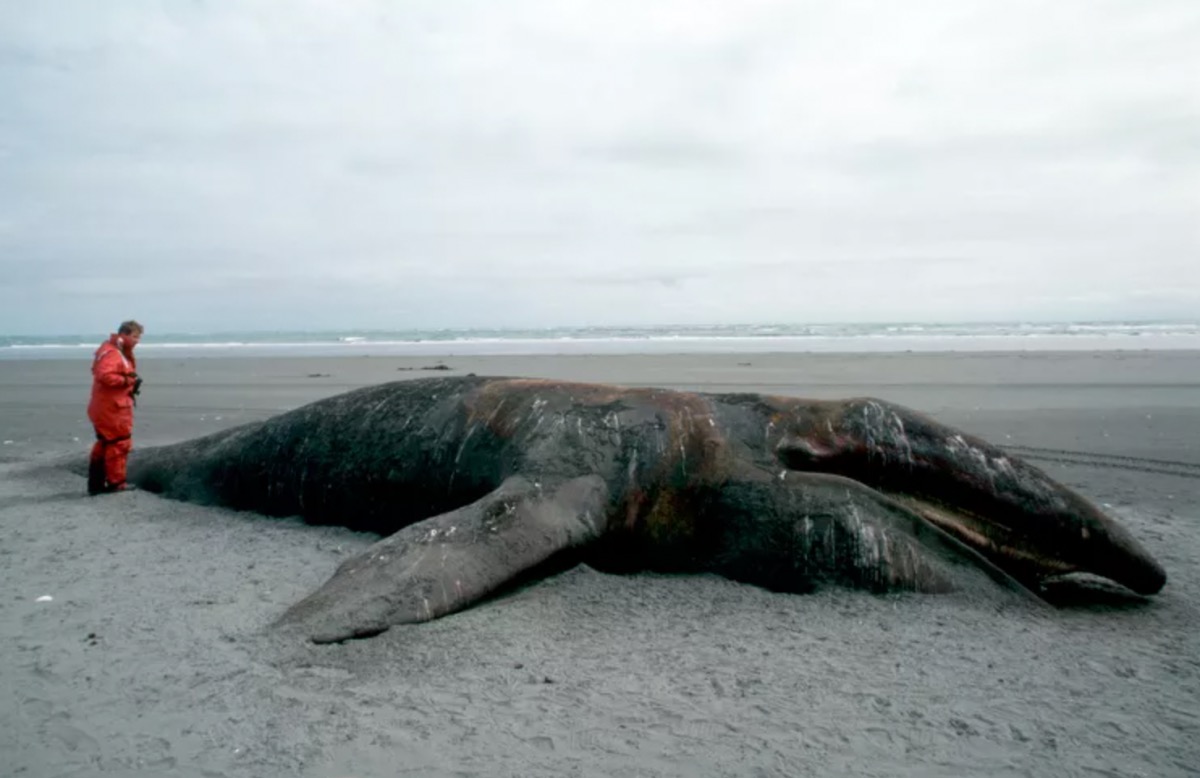
Since 2019, hundreds of dead gray whales have washed ashore in Mexico, the United States and Canada. Most were thin and malnourished. A study led by Joshua Stewart of Oregon State University, published in Science in October 2023, argues that the cause sits thousands of kilometres north of the beaches where the bodies turn up: in the Arctic, in the sea ice.
Gray whales feed on benthic amphipods, small crustaceans living on the Arctic seafloor. Those amphipods depend on algae that grows in and under sea ice and then sinks to the bottom when the ice melts. Less ice, and fewer days of it, means less algae reaching the seafloor and less food in the sediment. In Stewart’s words: “When you have less sea ice and fewer days of sea ice, you don’t get that algae reaching the sea floor to create that productivity that the gray whales need.”
The second half of the problem is access. When ice does return heavily in a given year, it locks the whales out of feeding grounds they can otherwise reach. Stewart described the combination as the trigger: “When the whales have both little food available and not much access to their feeding areas in the same year, that’s when we get these big impacts and die-offs.”
The timing leaves no margin. Gray whales migrate from the calving lagoons of Baja California to the Arctic each summer and feed hard for roughly four months, then live off those reserves for the rest of the year. A poor season in the north is not something they can make up later.
Previous gray whale die-offs
The International Whaling Commission gave gray whales protection from commercial hunting in 1949. The eastern North Pacific population recovered well enough to be removed from the United States endangered species list in 1994. Part of that recovery is down to where they travel: grays migrate close to shore, which keeps them out of some of the shipping and fixed gear that hits other large whales.
They have crashed before. A die-off in 1999 and 2000 killed a large share of the population, which then rebuilt. By 2016 there were roughly 27,000 gray whales in the eastern North Pacific. The decline that began in 2019 reached an estimated 11,700 to 14,200 whales in 2024/25. The 2025/26 estimate rose to 15,930 to 20,530, although NOAA says migration and survey effects may explain part of that apparent rise. Calf production remains low.
Stewart’s own reading is not entirely bleak. “They’re resilient. They have the ability to adapt to changes in their environment and have been able to scrape by and recover, so I hope that they’ll be able to do that moving forward as well.” The caution attached to that is that gray whales are unusually easy to count, because they migrate along a coast where people are watching. Other species feeding in the same changing Arctic are harder to monitor, and a decline in them would be much slower to show up.
Updated 14 September 2026: updated gray whale survey figures and their limits.


That drop in numbers is huge. Why isn’t it bigger news?
Reggie, it is easy to assume they will bounce back like last time, but nobody knows that yet.
The chain from algae to amphipods to whales is easy to explain to friends.
We go to Depoe Bay most springs. Felt like fewer spouts the last couple of years.
Kenan, the counts did drop over those years, so you probably weren’t imagining it.
Protection saved them from whaling. This threat is harder to fix.
Hope they recover, but their feeding grounds are changing.