
Benefits of Whale Poop
Last updated: October 14, 2026
4 min read
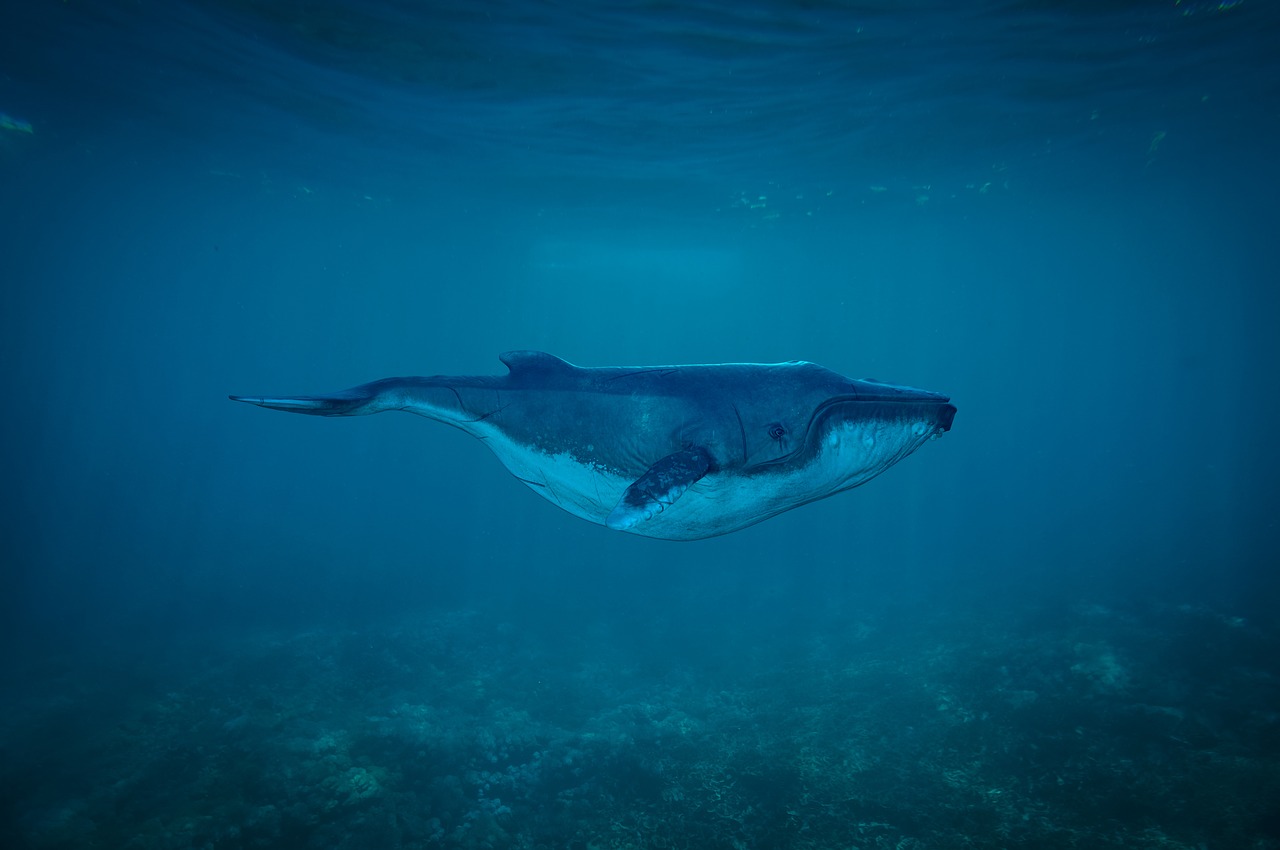
Whale poop sounds like the last thing the ocean needs, but it is one of the most valuable substances a whale produces. Scientists now treat whale faeces as a free fertiliser delivery system that feeds the entire marine food web and pulls carbon out of the atmosphere. The more a healthy whale population eats, the more it poops, and the more the surrounding sea thrives.
For years researchers assumed large whales ate modestly. Recent work using suction-cup tags, drone surveys and direct prey biomass sampling has overturned that. A 2021 paper in Nature by Matthew Savoca and colleagues found that baleen whales eat roughly two to three times more prey than earlier estimates suggested, and that an eastern North Pacific blue whale can take around 16 tonnes of krill on a single feeding day. All of that food has to come out again, and when it does, it works as ocean fuel.
The whale pump: how poop fertilises the ocean
Marine scientists call it the whale pump. Whales feed at depth on krill and small fish, then return to the surface to breathe and to defecate. Because they release their nutrient-rich waste near the sunlit surface rather than in the dark deep, they move nutrients upward against the natural sinking flow. That distinction matters: surface water is where phytoplankton can actually use those nutrients.
The key ingredient is iron. A 2010 study led by Steve Nicol measured iron in baleen whale faeces at roughly ten million times the concentration of the surrounding Antarctic seawater. Iron is the limiting nutrient across huge stretches of the open ocean, especially in the Southern Ocean. Without it, phytoplankton simply cannot bloom, no matter how much sunlight reaches the water.
The chain reaction
- A whale releases an iron-rich faecal plume near the surface.
- Phytoplankton, tiny floating plants, absorb the iron and photosynthesise.
- Krill graze on the phytoplankton and multiply.
- Whales and fish eat the krill, and the cycle restarts.
This is why an ocean with whales holds more krill, not less, even though whales eat krill in enormous quantities. A 2010 study of sperm whales in the Southern Ocean, published in Proceedings of the Royal Society B, estimated that the population there drives the export of around 400,000 tonnes of carbon to the deep sea each year, more carbon than the whales release through their own breathing. Remove the whales and the system runs down: less iron, fewer phytoplankton, fewer krill, a thinner food web.
What whale poop tells scientists
A single sample of whale faeces is a complete health report. By collecting and analysing it, researchers can tell whether an individual whale is well fed, carrying disease, pregnant, or under stress, all without ever touching the animal. Faecal hormone levels reveal stress and reproductive state. DNA in the sample identifies the whale and what it has been eating. Toxin levels show how polluted its feeding grounds are.
Some research teams use specially trained sniffer dogs that ride on the bow of survey boats and point toward floating whale scat so it can be scooped up before it disperses. It is one of the least invasive ways to study an animal that can weigh over 100 tonnes.
Ambergris: the rarest whale waste of all
Not all whale waste fertilises the sea. Sperm whales sometimes produce ambergris, a waxy substance that forms in the gut, thought to ease the passage of hard indigestible objects such as squid beaks. It occurs in only around one percent of sperm whales. It hardens over years, is expelled, and floats for a long time before washing ashore. Aged ambergris develops a sweet, earthy smell and has long been prized by perfume makers because it fixes a fragrance and makes the scent last, though synthetic substitutes have largely replaced it.
In 2012, an eight year old boy named Charlie Naysmith found an unusual waxy lump on a beach at Hengistbury Head in southern England. Press reports at the time identified it as ambergris and put a value on it in the tens of thousands of pounds. We have not been able to find a published confirmation of either the identification or the figure, so treat both as press estimates rather than settled facts. What is certain is that the trade is restricted in several countries: in the United States, possession and sale are prohibited under the Endangered Species Act. Ambergris is valuable in money terms. Ordinary baleen whale poop is valuable in a different currency: the health of the ocean itself.
Why this matters for the climate
Phytoplankton fed by whale waste do more than support krill. As they photosynthesise they absorb carbon dioxide. A 2019 International Monetary Fund analysis by Ralph Chami and colleagues put marine phytoplankton’s annual carbon capture at roughly the equivalent of four Amazon rainforests. When those plants die or are eaten, a portion of that carbon sinks into the deep ocean and is locked away for centuries.
Whales add to this in two ways. While alive, the whale pump keeps phytoplankton productive. When a whale dies and sinks, its huge body carries a load of stored carbon to the seafloor in an event scientists call a whale fall. Restoring whale populations to pre-whaling numbers would, in effect, restore a natural carbon-capture service that industrial whaling switched off.
So the next time the idea of whale poop makes you wrinkle your nose, picture the chain instead: iron, plankton, krill, fish, whales, and a measurable amount of carbon pulled from the sky. Protecting whales protects all of it. If you want to read more about the species behind the most famous whale waste of all, see our sperm whale species profile.



Whale poop feeding plankton that feeds krill that feeds whales is such a neat loop.
Amazing what they can learn from drones now.