

15 Facts About Whales You Probably Did Not Know
Last updated: November 18, 2026
9 min read
Whales are the largest, deepest, longest lived, and arguably the most acoustic animals on Earth. They are also full of surprises: a blue whale’s heart can be the size of a small car, humpbacks sing songs that travel for thousands of kilometres, and sperm whales rest in eerie vertical formations near the surface. Here are 15 of the most striking facts about whales, drawn from peer reviewed research and the open data published by NOAA, the IUCN, and the International Whaling Commission.
Key facts at a glance
- Largest whale: blue whale (Balaenoptera musculus), around 30 m and up to about 190 tonnes in reliably weighed records
- Smallest whale: dwarf sperm whale, around 2.7 m and 250 kg
- Deepest dive: Cuvier’s beaked whale, 2,992 m, recorded in 2014
- Longest dive: Cuvier’s beaked whale, 222 minutes, published in 2020
- Longest song: humpback song, up to 30 minutes, repeated for hours
- Loudest animal sound: sperm whale click, around 230 dB at source
- Order: Cetacea (within Artiodactyla)
- Two suborders: Mysticeti (baleen whales), Odontoceti (toothed whales)
- Species count: 94 living cetacean species in the April 2026 list, of which 15 are baleen whales
1. The blue whale is the largest animal that has ever lived
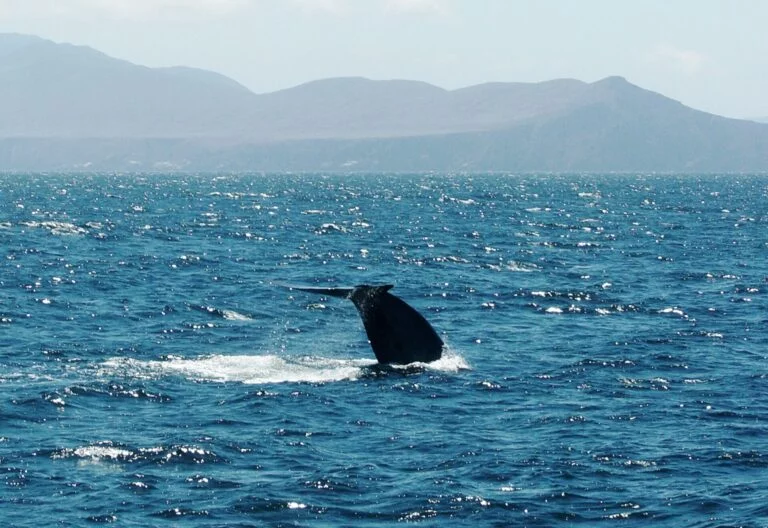
Bigger than any dinosaur. The blue whale reaches around 30 metres in length, and the heaviest on record weighed about 190 tonnes. Its tongue alone can weigh as much as an elephant, and its heart is roughly the size of a small car. A single feeding lunge can take in more than 50 tonnes of krill rich water, which the whale then filters through its baleen plates. For more on this and other giants of the deep, see our roundup of the 5 biggest whales on Earth.
2. Whales evolved from small four legged land mammals
Whales did not start in the sea. Their ancestors were small hoofed land mammals that lived around the shores of the Tethys Sea roughly 50 million years ago. Genetic and fossil evidence both place them inside the order Artiodactyla, the even toed ungulates, with the hippopotamus as their closest living relative. The transitional fossil Pakicetus, found in modern day Pakistan, still had four functional legs.
3. There are two very different kinds of whale
Modern whales split into two suborders. Baleen whales (Mysticeti) include blue, fin, humpback, gray, bowhead, and right whales. They have no teeth. Instead they filter feed through plates of keratin called baleen. Toothed whales (Odontoceti) include sperm whales, killer whales, beluga, narwhal, all dolphins, and all porpoises. They hunt prey one at a time using echolocation.
4. Sperm whales have the biggest brain on Earth
An adult sperm whale brain weighs around 7 to 9 kilograms, more than five times the mass of a human brain and the largest of any animal known to science. The brain supports a complex social system and an echolocation apparatus that produces the loudest sounds made by any living thing. Read the full sperm whale species profile for the details.
5. Cuvier’s beaked whale holds the depth and duration records
Both mammalian diving records belong to the same species. In 2014, a satellite-tagged Cuvier’s beaked whale off California was recorded at 2,992 metres, the deepest dive ever measured for any mammal. A separate record, published in 2020, logged a dive lasting 222 minutes, or 3.7 hours. Almost nothing is known about what this elusive species is doing down there, which is part of what makes it such a fascinating research target. See our Cuvier’s beaked whale profile for more.
6. Humpback whale songs evolve like pop music
Male humpbacks sing complex, hierarchical songs that can last 20 to 30 minutes and be repeated for hours. All males in the same ocean basin sing essentially the same song at any given time, but the song itself slowly changes year on year. Researchers have documented song fragments propagating across the South Pacific from Australia toward French Polynesia, moving from population to population in a cultural wave.
7. Bowhead whales can live more than 200 years
The bowhead whale of the Arctic is the longest lived mammal on Earth. Ageing studies based on amino acid racemisation in eye lens proteins have produced age estimates above 200 years for several individuals. Some living bowheads were probably born before the American Civil War. The direct evidence is stranger still: hunters have recovered 19th century stone and ivory harpoon points from the blubber of animals killed in recent decades, embedded and slowly healed over.
8. Whales support entire ecosystems even after they die
When a large whale dies and sinks to the sea floor, the carcass creates a habitat called a whale fall. A single whale fall can sustain a unique deep sea community of scavengers, worms, crabs, and chemosynthetic bacteria for decades. Whale faeces in surface waters also fertilise phytoplankton blooms, which in turn power the entire ocean food web. This is sometimes called the whale pump.
9. Killer whales are the apex predator of the ocean
Orcas (Orcinus orca) are technically the largest member of the dolphin family, but they are routinely called whales. They hunt cooperatively and take prey ranging from herring to great white sharks to adult blue whales. Different orca populations have distinct diets, dialects, and hunting techniques, and several are now considered separate ecotypes that may soon be classified as separate species.
10. Some whales migrate further than any other mammal
Gray whales make annual round trips of 16,000 to 20,000 kilometres between feeding grounds in the Bering and Chukchi seas and breeding lagoons in Baja California. That is roughly half the circumference of the planet, every year. Humpback whales rival them on most ocean basins. Read more in the gray whale profile.
11. A whale’s spout is its breath, not water
The plume of spray you see when a whale surfaces is not seawater coming from the lungs. It is warm humid breath, full of mucus and condensed water vapour, that bursts upward as the whale exhales through the blowhole. The shape, height, and angle of the spout are diagnostic. Blue whales produce tall vertical columns up to 12 metres high. Sperm whale spouts angle forwards and to the left.
12. Narwhal tusks are giant sensory teeth
The spiral tusk of a male narwhal can grow nearly three metres long. It is technically a left canine tooth that has erupted through the upper lip. Martin Nweeia and colleagues at the Harvard School of Dental Medicine have shown that the tusk is packed with sensory nerves and may help the whale detect changes in salinity, temperature, and pressure. Some females grow tusks too. A few individuals grow two tusks.
13. Whales sleep with half their brain at a time
Cetaceans cannot afford to sleep fully unconscious. They are voluntary breathers, which means they have to consciously surface to breathe. So they use unihemispheric slow wave sleep, where one half of the brain rests while the other stays awake. Sperm whales sometimes hang vertically in the water in groups during these rest periods, in a behaviour called drift diving.
14. Commercial whaling killed roughly 3 million whales in the 20th century
Between 1900 and 1999, industrial whaling fleets killed an estimated 2.9 million whales, according to a review by Robert Rocha, Phillip Clapham and Yulia Ivashchenko published in Marine Fisheries Review. The blue, fin, sei, and right whales were hit hardest. A global moratorium took effect in 1986 under the International Whaling Commission, but Japan, Norway, and Iceland have continued limited hunts.
15. Whale populations are recovering, unevenly
Most large whales were pushed close to extinction. Some have rebounded strongly: the IWC reports that more than 100,000 humpbacks now exist worldwide, with trends assessed by population, with the western South Atlantic population back near its pre-whaling abundance. Others have not. The North Atlantic right whale remains critically endangered, with about 382 individuals in the 2025 estimate. Modern threats are mostly ship strikes, fishing gear entanglement, underwater noise, and climate change. The IUCN Red List is the canonical place to check current status for each species.
A bonus fact: whales have personalities
Long term photo identification work has shown that individual whales have stable, measurable personality traits. Some humpbacks are consistently bold and approach boats. Others remain shy across decades of sightings. Killer whale matriarchs make decisions for their pods, with younger animals deferring to their experience during foraging. Sperm whale family units, called social units, can be distinguished by their codas: rhythmic click patterns that function much like cultural dialects or accents. Two units with overlapping ranges will avoid each other rather than merge.
All of this is starting to change how scientists think about non human intelligence. The Cetacean Translation Initiative (CETI) is running on sperm whales in the Eastern Caribbean, using machine learning to try to map the structure of their codas to social context.
How researchers know all this
Whales are notoriously hard to study. They spend most of their lives below the surface, often far from land. Researchers rely on a few core techniques: photo identification of individual flukes and dorsal fins, satellite telemetry tags that track movement and dive behaviour, hydrophone arrays that listen for vocalisations, and biopsy darts that collect small skin samples for DNA and hormone analysis. NOAA stock assessment reports include abundance estimates where available. Strategic stocks receive annual review, while other stocks are reviewed at least every three years.
Whales as carbon sinks
Each large whale stores tens of tonnes of carbon in its body across its long life. When it dies and sinks, that carbon goes with it to the deep sea, locked away for centuries. A 2010 paper by Andrew Pershing and colleagues estimated that the pre-whaling population of large whales was sequestering around 200,000 tonnes of carbon per year through whale falls alone. Modern populations are still recovering, which means whales are also a credible part of any serious ocean based climate solution.
How to see whales for yourself
Whale watching is one of the great wildlife experiences. The best season and species vary by location. Iceland and Norway are excellent for orcas and humpbacks in winter. Kaikoura in New Zealand and the Azores are sperm whale strongholds. Baja California is the place for gray whale calves up close. For a full tour, see our guide to the 10 best spots for whale watching worldwide by species.
Take whales home
If this piece pulled you in, our curated whale book collection is the next step: deep dives on biology, behavior, and the history of human relationships with cetaceans.
whale books
Read next
- Whale Species: A Complete Guide to the Cetaceans of the World
- Is Underwater Sonar Harmful To Whales Or Not?
- Japanese Whale Hunting: The Facts And Impact On Whales
Frequently asked questions
How many species of whale are there?
The April 2026 Society for Marine Mammalogy list recognises 94 living cetacean species. Fifteen are baleen whales and 79 are toothed whales, including dolphins and porpoises. Taxonomy is still in flux: some orca populations and some Bryde’s whale populations may soon be split into new species.
What is the biggest whale in the world?
The blue whale (Balaenoptera musculus). Adults reach around 30 metres, and the heaviest on record weighed about 190 tonnes. It is the largest animal that has ever lived, bigger than any known dinosaur.
What is the smallest whale?
Among the species commonly called whales, the dwarf sperm whale (Kogia sima) is the smallest, at around 2.7 metres and 250 kilograms. If you count all cetaceans, the vaquita porpoise is even smaller, at around 1.5 metres.
How long do whales live?
It varies by species. Most large whales live for 60 to 90 years. Bowhead whales of the Arctic are the longest lived mammals known, with individuals estimated at well over 200 years old based on eye lens chemistry.
Are whales fish?
No. Whales are mammals. They breathe air through lungs, give birth to live young, nurse their calves with milk, and are warm blooded. Their closest living relative on land is the hippopotamus.
Why do whales beach themselves?
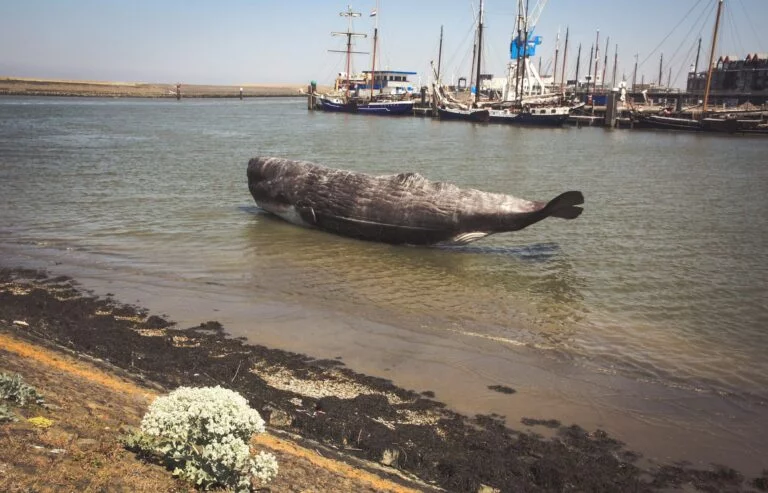
Beachings can be triggered by illness, navigational errors near shallow gently sloping coasts, exposure to mid frequency naval sonar, group cohesion in highly social species like pilot whales, or pursuit of prey. In many cases the exact cause is never determined.
Are whales endangered?
Some species are, some are not. Humpback whales have recovered well in most ocean basins and are listed as Least Concern. The North Atlantic right whale is critically endangered, with about 382 animals in the 2025 estimate. Sperm whales and blue whales are listed as Vulnerable or Endangered depending on region. Check the IUCN Red List for current species level status.
Can I help whales from where I live?
Yes. Support marine protected areas, choose seafood certified by sustainable fisheries programmes, cut single use plastics, reduce noise pollution by supporting slow steaming in shipping lanes, and back the IWC moratorium. Donations to organisations like WWF, WDC, and Ocean Conservancy fund direct conservation work.
Updated 14 September 2026: updated blue and right whale figures.
Updated 17 November 2026: updated the North Atlantic right whale population to the consortium’s 2025 estimate of 382, released on 16 November 2026.
Updated 18 November 2026: aligned the heaviest blue whale on record to 190 tonnes, the 1947 female.

How do they even work out a whale’s age? Fascinating.
The beaked whale dive record sounds impossible.
Used the whale evolution bit with my class. The deer-like ancestor always gets a reaction.
Annaliese, glad it worked in class. The evolution quiz on the site might be useful too.
Whale falls feeding the deep sea for years is my favourite fact on here.
Perfect Sunday morning read.
Made a cup of tea halfway through and came back to finish it. Good read.