
Japanese Whale Hunting: The Facts And Impact On Whales
Last updated: November 17, 2026
5 min read
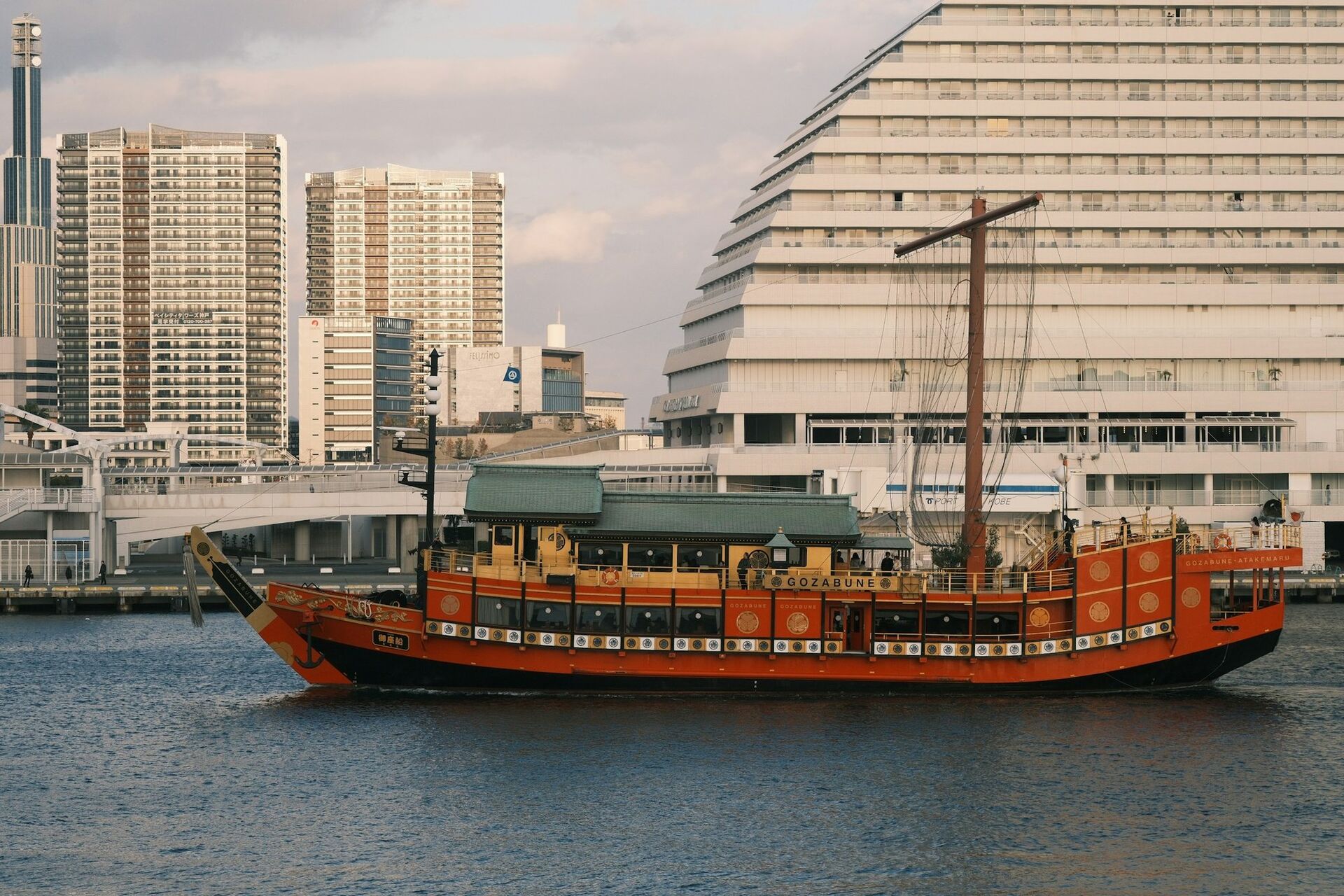
Photo: Life.Time.Values via Unsplash
Japanese whale hunting is no longer a story about a research loophole. Japan left the International Whaling Commission on 30 June 2019 and has hunted whales openly and commercially ever since, inside its own waters, under quotas it sets itself. This page sets out what the hunt actually is today, how it got here, and what it means for the whales involved.
Key facts at a glance
- Japan withdrew from the IWC on 30 June 2019 and resumed commercial whaling the next day.
- The hunt is confined to Japanese territorial waters and its exclusive economic zone. The Antarctic hunts have ended.
- Species hunted: common minke, Bryde’s and sei whales, plus fin whales since 2024.
- 2025 catch: 60 fin, 143 Bryde’s, 35 sei and 88 minke whales, totalling 326 animals.
- Whale meat consumption in Japan peaked at 233,000 tonnes in 1962. The Fisheries Ministry now puts it at roughly 2,000 tonnes a year.
- Other commercial whaling nations: Norway, under a formal objection to the 1986 moratorium, and Iceland, where fin whaling resumed in 2026.
What Japan hunts now
Japan’s Fisheries Agency sets an annual catch limit for each species. Japan’s 2025 catch was 60 fin whales, 143 Bryde’s whales, 35 sei whales and 88 minke whales, totalling 326 animals. The fin and Bryde’s catch reached the limits, while the sei and minke catch did not. The operator blamed fog and bad weather.
The fin whale is the significant change. It was added to the commercial list in May 2024, and the first one was killed that summer, Japan’s first fin whale in roughly half a century. The fin whale is the second largest animal on Earth and is still classed as Vulnerable on the IUCN Red List after being hunted to a fraction of its original numbers in the 20th century. Sei whales, also on the quota, remain Endangered.
The fleet has new equipment to match. Kyodo Senpaku retired the old factory ship Nisshin Maru in November 2023 and replaced it with the Kangei Maru, a 112 metre vessel that sailed from Shimonoseki on its first hunting voyage in May 2024. It is currently the only whaling mother ship in the world.
The Nisshin Maru Whaling Vessel Returned With 333 Minke Whale Carcasses After A Hunt in March 2017. (Photo: Reuters/Kyodo)
How the “scientific research” era worked, and how it ended
The IWC adopted a moratorium on commercial whaling in 1982, and it took effect for the 1986 season. The treaty behind the IWC also lets member states issue themselves permits to kill whales for scientific research, and from 1987 Japan used that clause, in the Antarctic and later the North Pacific. The meat from those hunts was sold for food, which is what made the arrangement so contested.
On 31 March 2014 the International Court of Justice ruled that the Antarctic programme was not designed for scientific research within the meaning of the treaty, and ordered Japan to stop issuing the permits. Japan redesigned the programme and went back, taking 333 minke whales a year in the Southern Ocean. In January 2017 Sea Shepherd photographed the Nisshin Maru with a dead minke whale on its flensing deck inside the Australian Whale Sanctuary, and those images went around the world. That March the fleet came home with 333 carcasses. A parallel North Pacific plan launched in 2017 proposed 304 whales a year, 170 minke and 134 sei.
The IWC then rejected a Japanese proposal to resume commercial quotas in September 2018. Three months later Japan announced it was leaving the organisation altogether. The research framing went with it: what Japan does now is commercial whaling, described as such, which is at least more honest than what came before.
Why Japan keeps hunting
Minke Whales Are The Main Target Of Japanese Whale Hunting (Photo: NOAA/Wiki Commons, P.D.)
The usual defence is that whaling is an ancient Japanese tradition. Coastal communities did hunt whales for centuries, but the industry at the centre of this argument is not ancient. Japan adopted Norwegian style commercial whaling, with steam catchers and grenade harpoons, at the end of the 19th century.
The bigger driver was hunger. During the Allied occupation after the Second World War, General Douglas MacArthur encouraged Japanese whaling as a cheap source of protein for a starving population, which was far easier than shipping food across the Pacific. Whale meat became a school dinner staple for a generation, and that is the generation whose appetite the industry has been trying to recover ever since.
Almost nobody eats it
Consumption peaked at 233,000 tonnes in 1962. Japan’s Fisheries Ministry now estimates around 2,000 tonnes a year, a fall of about 99 percent. Kyodo Senpaku has said it wants to get consumption up to 5,000 tonnes to keep the industry viable, and has tried vending machines, tastings and restaurant promotions to get there. Meanwhile Iceland’s fin whalers, whose main export market is Japan, sat out the 2024 and 2025 seasons because prices there were too low to make the hunt worth running.
What it means for the whales
Compared with the industrial era, the numbers are small. Roughly 2.9 million whales were killed worldwide in the 20th century, and a single Antarctic season in the 1930s could account for more than 50,000. A few hundred a year is a different order of magnitude, and no population is being driven towards extinction by Japan’s current quotas.
That is not the whole picture. Several of the hunted species have not recovered from what was done to them before the moratorium, which is why the fin whale addition drew such criticism. Recovery elsewhere is real but uneven: humpbacks have come back strongly in much of the Southern Hemisphere, blue whales remain far below pre whaling numbers, and the 2025 North Atlantic right whale estimate is about 382 animals, kept there by ship strikes and entanglement rather than by hunting. The welfare argument is separate again, and it is the one that moves most people: an explosive harpoon does not always kill quickly.
Who else is still hunting
Norway never stopped. It lodged a formal objection to the 1986 moratorium and has hunted minke whales under its own quotas ever since, setting a limit of 1,641 for 2026, although the real catch is far lower: 429 whales in 2025. Iceland issued a fin whale licence and two vessels resumed hunting in 2026. The government has scheduled a review of the Whaling Act for February 2027. For the wider picture of who hunts whales and the reasons given for it, see our overview of the facts about whale hunting and why we do it.
Japanese whaling now survives on a market that has almost disappeared: 2,000 tonnes of demand, a new factory ship, and a species list that keeps growing rather than shrinking. That gap between the size of the fleet and the size of the appetite is the thing to watch over the next few seasons.
Updated 14 September 2026: updated the North Atlantic right whale population figure.
Updated 17 November 2026: updated the North Atlantic right whale population to the consortium’s 2025 estimate of 382, released on 16 November 2026.




More balanced than most articles I’ve read on this.
What happens to the moratorium if more countries leave the IWC?
Anna-Maria, that is the big open question.
I read that hardly anyone in Japan eats whale meat now. Is that right?