
Whale Collisions: The Little Known Danger That Ships Can Avoid
Last updated: November 17, 2026
5 min read
A ship strike is one of the few threats to a large whale that can be reduced by a decision taken on the bridge. Slow the vessel, move the shipping lane, or tell the captain where the whales are, and the risk drops. All three have been tried along the east coast of the United States and Canada, and the results have been measured rather than assumed.
Key figures
- Recovered carcasses accounted for only 36 percent of estimated North Atlantic right whale deaths between 1990 and 2017 (Pace et al., 2021).
- Vessel strikes caused 44 percent of the right whale deaths that could be diagnosed between 1970 and 2009 (van der Hoop et al., 2013).
- The probability that a struck whale dies runs from about 0.21 at 8.6 knots to about 0.79 at 15 knots (Vanderlaan and Taggart, 2007).
- US rule since 2008: vessels 65 feet and longer must travel at 10 knots or less inside five Seasonal Management Areas.
- The North Atlantic Right Whale Consortium estimated 382 North Atlantic right whales in 2025, down from a revised 389 in 2024.
Most collisions are never counted
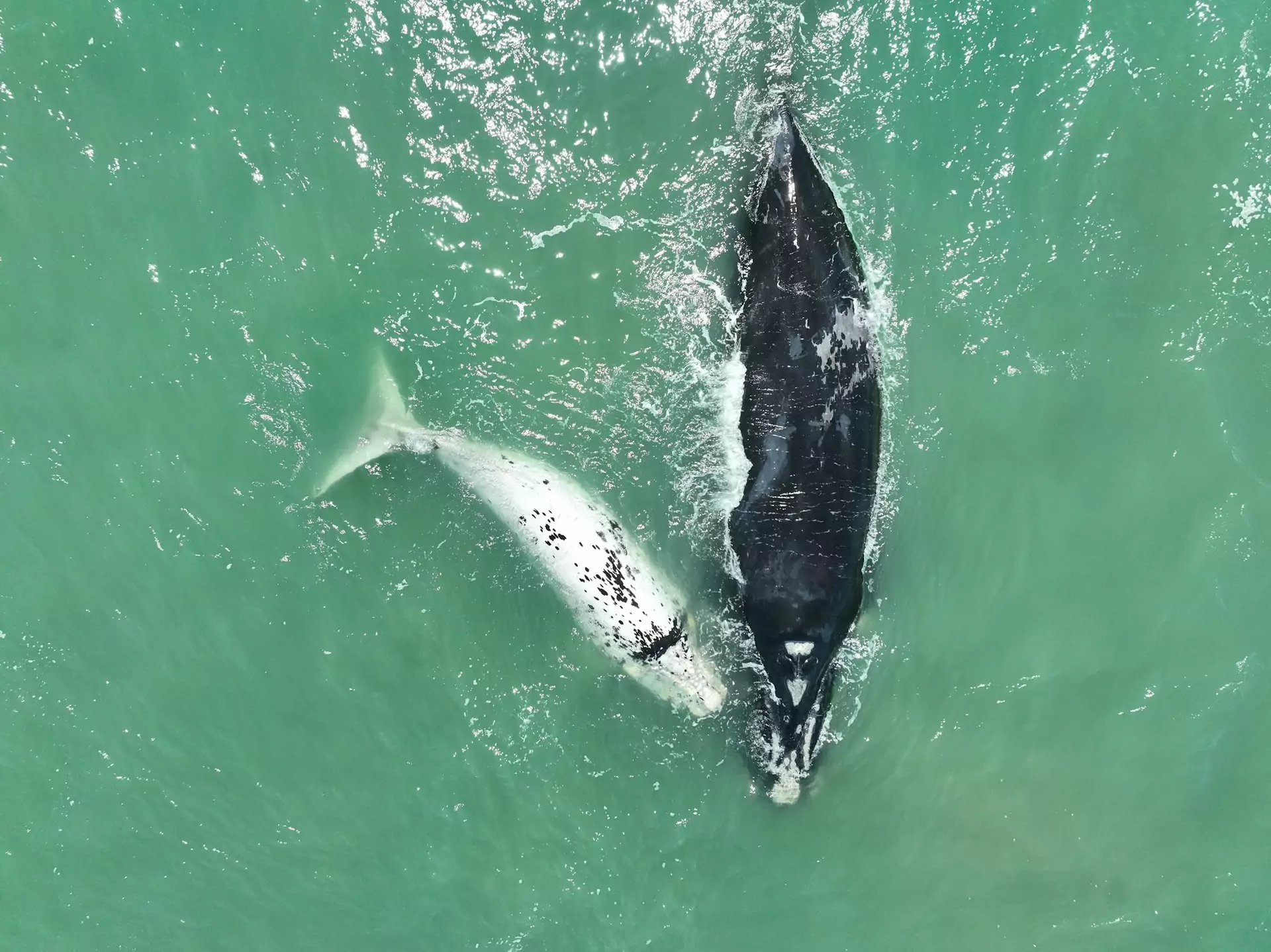
Strike numbers look small because most strikes leave no evidence. A struck whale often sinks, or drifts offshore, or comes ashore too decomposed for a necropsy to name a cause. Pace and colleagues modelled that gap in 2021 and found recovered carcasses accounted for only 36 percent of estimated North Atlantic right whale deaths between 1990 and 2017. Close to two thirds of the deaths in that population were never seen by anyone.
The undercount shapes policy as well as arithmetic. Rules get written against the deaths that are documented, so a species whose carcasses mostly sink will always look less threatened by shipping than it actually is.
What the mortality records do show
Where a cause of death has been established, collisions account for a large share of it. Knowlton and Kraus documented 45 right whale deaths between 1970 and 1999 and attributed 16 of them, about a third, to vessels. Van der Hoop and colleagues extended the analysis to 2009 and found ship strikes behind 44 percent of the deaths that could be diagnosed, with entanglement in fishing gear behind another 35 percent. Those two human causes together account for roughly half of every documented right whale death since 1970.
Which whales get hit
Reported strikes are not spread evenly across species. Laist and colleagues reviewed the global record in 2001 and found fin whales the species most often reported struck, with humpbacks second. Both spend long stretches at or just below the surface, which is exactly where a hull is.
Population size changes the picture again. The Marine Mammal Commission lists North Atlantic and North Pacific right whales, Rice’s whale, and blue, humpback, gray and fin whales as the large whales most affected by vessel strikes. For the North Atlantic right whale, with fewer than 400 animals left, a handful of strikes a year is a population-level problem in a way the same number would not be for a humpback.
Why whales do not move out of the way
The quiet patch ahead of the bow
A ship’s noise comes mostly from the propeller, at the stern. The hull sits between that propeller and the water directly ahead and blocks a good deal of the sound. Acousticians call the result the bow null effect: a shadow zone in front of a moving ship where the vessel is far harder to hear than its total noise output would suggest. Measurements of commercial traffic in the Gulf of Maine found these shadow zones across every class of ship examined, with hull shape and propulsion type mattering more than speed. A whale feeding near the surface can sit inside that shadow until the ship is almost on top of it.
They largely ignore the ships they can hear
Nowacek, Johnson and Tyack tagged North Atlantic right whales in 2004 and exposed them to recordings of approaching vessels as well as real ship passes. The whales showed no clear response to either. The one stimulus that produced a strong reaction was an artificial alert tone, and five of the six whales tested answered it by ascending rapidly to the surface and then staying up there. The authors flagged the problem in their own result: the reaction a warning signal triggers is the reaction most likely to put a whale in the path of a propeller.
What has actually reduced strikes
Slowing down
Speed changes the outcome of a collision more than it changes the odds of one happening. Vanderlaan and Taggart fitted a model to recorded strikes in 2007 and found the probability of lethal injury rising from about 0.21 at 8.6 knots to about 0.79 at 15 knots, crossing 0.5 at 11.8 knots. Nearly all the change happens inside that narrow band, which is why 10 knots became the number written into the regulations.
The US rule has been in force since 2008, with a permanent provision adopted in 2013. Vessels 65 feet and longer must travel at 10 knots or less inside five Seasonal Management Areas along the east coast, each active only in the months right whales are expected there. The Marine Mammal Commission reports east coast vessel strike deaths falling from ten in the decade before the rule to four in the decade after it.
Moving the lane
Taking the ships away from the whales works wherever the whales are predictable. In June 2003 Canada shifted the Bay of Fundy shipping lanes around the Grand Manan Basin, where right whales gather through summer and autumn. It was the first time the International Maritime Organization had amended a shipping lane to protect a marine mammal. In 2007 the traffic separation scheme into Boston was narrowed and moved north to cut its overlap with whale feeding grounds off Cape Cod. Lanes off San Francisco and Los Angeles have since been repositioned for the same reason.
Telling the bridge where the whales are
Thirteen acoustic buoys sit along the shipping lane into Boston Harbor and in Cape Cod Bay. Each listens for right whale calls within roughly a five mile radius, identifies them automatically and relays the detection by satellite. Those detections feed the Whale Alert app, which shows a mariner on the approach whether a right whale has been heard nearby in the past 24 hours and where NOAA is recommending 10 knots. Aerial and vessel surveys do the same job more slowly, and thermal imagery and satellite detection are being tested to extend the coverage.
Quieter ships
There is no such thing as a silencer for a merchant vessel, and a quieter ship is not automatically a safer one for whales. What the IMO’s revised guidelines on underwater radiated noise ask for, in effect since 2023, is design work: hull and appendage shapes that deliver an even wake to the propeller, and propellers selected to avoid cavitation, which is the dominant noise source on most ships. The benefit to whales is mainly acoustic space, giving them back the range over which they can hear each other and read their surroundings.
Where the rules stand now
NOAA proposed extending the speed rule in August 2022 to vessels between 35 and 65 feet, over larger areas and longer seasons. It withdrew that proposal on 16 January 2025, citing the volume and scope of the public comments it had received. The 2008 rule remains in force unchanged.
The population those measures protect grew slowly for four years, then slipped. The consortium estimated 382 North Atlantic right whales in 2025, down 1.8 percent on a revised 389 for 2024, after annual increases from a low of 359 in 2020 (IFAW). That growth happened with the existing speed limits, rerouted lanes and detection buoys all running. Whether recovery resumes without the wider rule that was withdrawn is not yet known.
Read next
- Whale Species: A Complete Guide to the Cetaceans of the World
- Can A Whale Swallow A Human Being? Let's Consider The Facts
- Recent Mass Whale Strandings And What We Can Do To Help
Updated 17 November 2026: updated the North Atlantic right whale population to the consortium’s 2025 estimate of 382, released on 16 November 2026.


That collision figure is shocking.
Do the speed limits actually work?
From a ship’s bridge you would barely see a whale in time. Slowing down seems like the only real answer.
Esme, thanks for the view from the bridge.