
10 Best Spots For Whale Watching Worldwide By Species
Last updated: October 14, 2026
8 min read
Whale watching is one of the few wildlife experiences that lives up to the hype every single time. The world’s best whale watching spots are not random. They line up with predictable patterns of food, migration, and bathymetry. This guide picks 10 destinations, each anchored to a specific species or species mix, and tells you what to expect, when to go, and how to maximise your chances of seeing them well.
Key facts at a glance
- Best months for humpbacks: seasons vary by hemisphere and population
- Best months for gray whales: Jan to Mar in Baja, Mar to May in the Pacific Northwest
- Best months for orcas: Jun to Sep in the San Juan Islands, Oct to Jan in Arctic Norway
- Best months for blue whales: Dec to Apr in Sri Lanka, Jun to Sep in Monterey
- Best months for sperm whales: year round in Kaikoura, Apr to Oct in the Azores
- How to choose a tour: small boat, naturalist on board, hydrophone if possible
1. Kaikoura, New Zealand: sperm whales year round
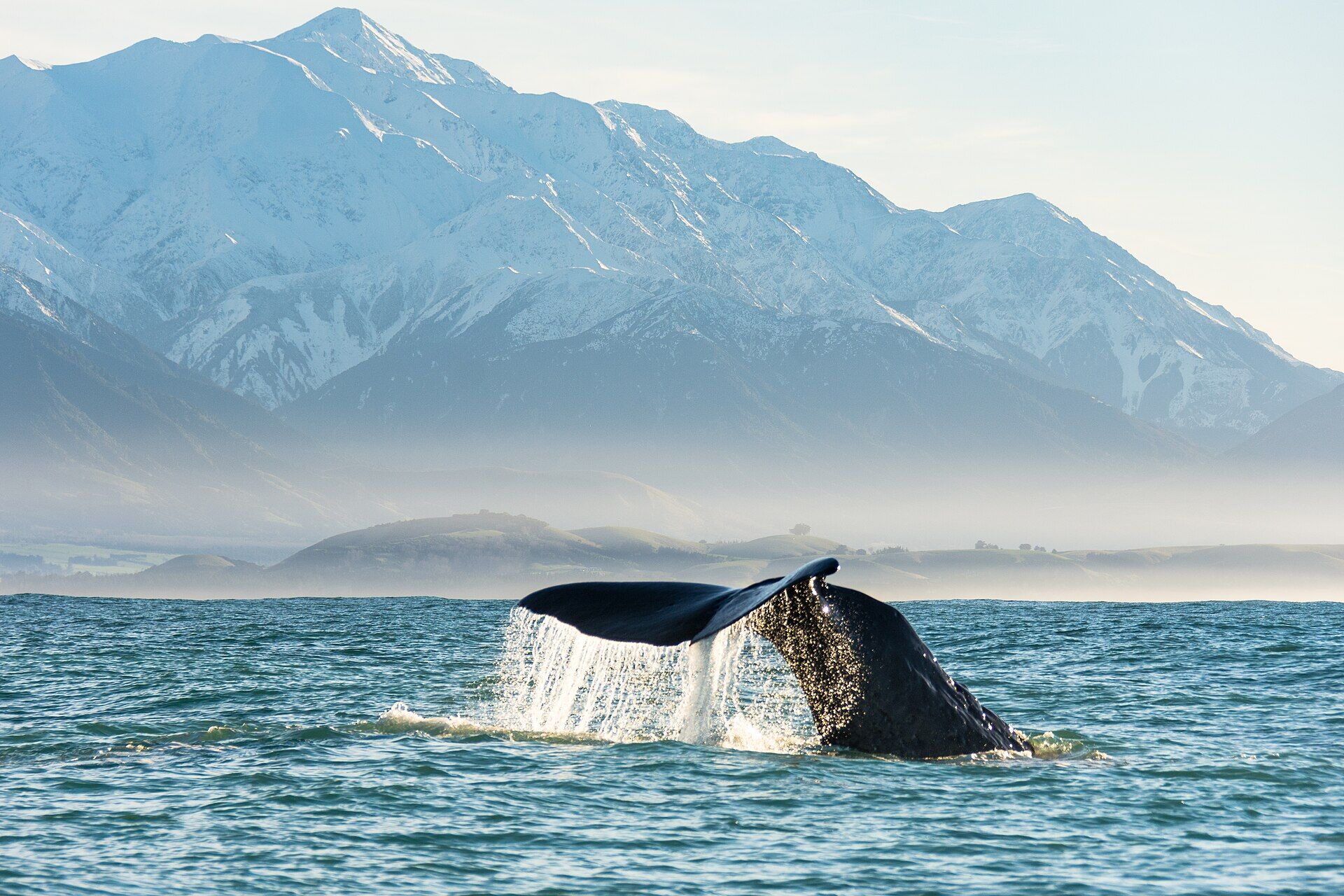
Kaikoura on the east coast of New Zealand’s South Island sits beside a deep underwater canyon that drops away within a few kilometres of shore. That makes it one of the few places on the planet where you can see sperm whales reliably from a half day boat trip. Resident bulls feed on squid in the canyon year round. Humpback, fin, blue, and orca whales are seasonal extras. Operators use hydrophones to locate sperm whales acoustically before moving in. Read more about the species in our sperm whale profile.
2. Hermanus, South Africa: southern right whales from the cliffs
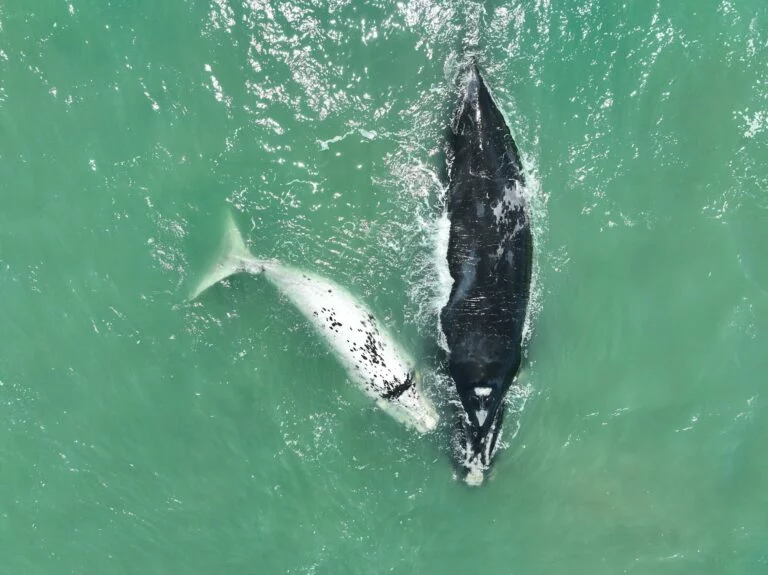
Hermanus, two hours east of Cape Town, is one of the few places where whales come close enough to shore that you can watch them properly without a boat. From June to November, southern right whales calve in Walker Bay just metres from the cliff path. The town even employs a designated whale crier who blows a kelp horn to signal sightings. Boat based tours exist, but the land based option is unusually good. Best months: August and September.
3. The Azores, Portugal: sperm whales and a long species list
The Azores archipelago in the mid Atlantic sits over a mid ocean ridge with very deep water right up to the shore. That single feature makes it a hotspot for more than 25 recorded cetacean species, including a year round resident sperm whale population. The peak season is April to October, when blue whales, fin whales, and sei whales pass through on migration. Operators on Pico and Sao Miguel still use traditional cliff top vigias as land spotters, guiding boats by radio.
4. Husavik, Iceland: humpbacks and minkes in midnight light
Husavik on Iceland’s north coast bills itself as the whale watching capital of Europe, with good reason. From May to September, Skjalfandi Bay reliably produces humpback whales, minke whales, white beaked dolphins, and harbour porpoises. Blue whales and orcas are rarer but possible. Trips typically run during daylight, but in midsummer that includes the midnight sun. Sustainable tourism here is well organised, with multiple operators carrying marine biologists.
5. Baja California Sur, Mexico: gray whale calves up close
From January to March, Pacific gray whales gather to breed and calve in the warm shallow lagoons of Baja California Sur. San Ignacio, Ojo de Liebre, and Magdalena Bay are the main centres. The whales are famously curious here, often approaching small boats and allowing visitors to touch them. The Mexican government tightly regulates the activity, with limited operator permits and short trip windows. See the gray whale profile for full natural history.
6. Monterey Bay, California: blue whales over the canyon
Monterey Bay sits over the head of the Monterey Submarine Canyon, which brings deep cold water right against the shore. From late June to September, that drives a bloom of krill, which in turn draws feeding blue whales, making this one of the most reliable blue whale destinations on Earth. Humpbacks, fin whales, and the transient orcas that hunt gray whale calves are seasonal bonuses. Trips typically leave from Monterey or Moss Landing.
7. San Juan Islands, Washington: resident and transient orcas
The San Juan Islands in the Salish Sea are the historic summer range of the Southern Resident Killer Whales, a critically depleted population of fish eating orcas that follow Chinook salmon runs. June to September is the prime season, with Bigg’s (transient) orcas, minke whales, and humpbacks also showing up, and Bigg’s now seen far more often than residents. Land based viewing from Lime Kiln Point State Park on San Juan Island is excellent and free, and a good supplement to a boat tour.
8. Tromso and Skjervoy, Norway: orcas and humpbacks on the herring
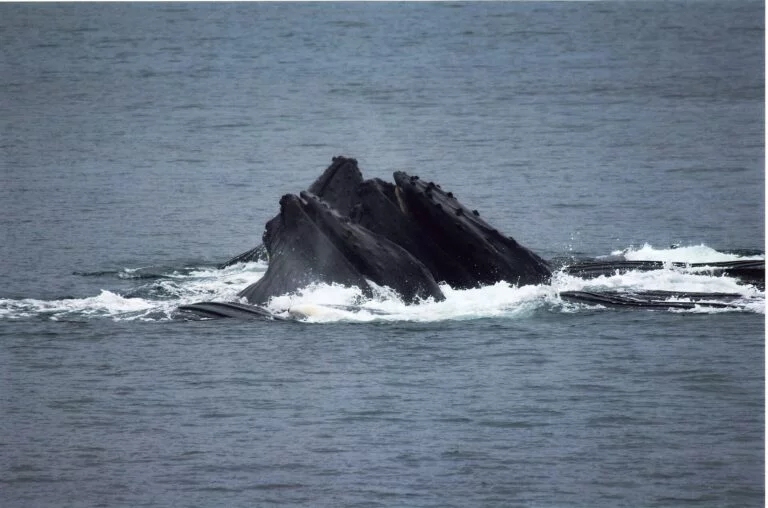
From late October to mid January, vast schools of overwintering Atlantic herring pile into the fjords around Tromso and Skjervoy in Arctic Norway. The herring brings the predators. Orcas use coordinated carousel feeding to round up the schools, and humpback whales lunge through the resulting bait balls. Trips often happen in low polar light or under the northern lights. Snorkelling with orcas under strict licensing is also available.
9. Mirissa, Sri Lanka: blue whales in tropical water
Off the southern tip of Sri Lanka, deep water comes close to shore and blue whales feed within reach of a short boat trip. The best season on the south coast runs from December to April. Sperm whales, Bryde’s whales, and large pods of spinner dolphins are common as well. Mirissa is the main launch point, with Kalpitiya on the west coast and Trincomalee on the east running in different parts of the year. Choose operators that follow approach distance guidelines: the area suffers from over crowding during peak season.
10. Hervey Bay, Australia: humpback nursery
From late July to early November, humpback whales pause in Hervey Bay on their way back south from their Great Barrier Reef breeding grounds. The bay is sheltered, the whales are relaxed and curious, and mother and calf pairs are common. This is some of the best humpback watching in the world. Trips run from Urangan Boat Harbour. Hervey Bay is one of the World Cetacean Alliance’s designated Whale Heritage Areas.
Why these ten spots work, in one line each
What every great whale watching destination has in common is convergence. Each spot brings whales and people together in a place where the geography does most of the work.
- Kaikoura: a deep canyon close to shore keeps squid eating sperm whales in range
- Hermanus: a sheltered bay with deep close shore approach for calving right whales
- Azores: a mid ocean ridge concentrates a long species list in one archipelago
- Husavik: a productive subarctic bay funnels feeding humpbacks and minkes
- Baja: warm shallow lagoons make perfect gray whale nurseries
- Monterey: a submarine canyon delivers krill in summer and draws blue whales
- San Juan Islands: a salmon migration corridor sustains resident orcas
- Tromso: herring overwintering pulls orcas and humpbacks into the fjords
- Mirissa: deep tropical water close to shore feeds blue whales
- Hervey Bay: a sheltered rest stop for southbound humpback mothers and calves
Bonus: Dominica, deep Caribbean
Dominica in the eastern Caribbean has a resident sperm whale population and allows in water encounters under permit. Females and calves are present for much of the year. The same waters are the focal site for the Cetacean Translation Initiative (CETI), which is using machine learning on sperm whale codas. Tours operate from Roseau.
How to pick a responsible whale watching tour
Whale watching is a global industry worth billions: the most widely cited study, an IFAW report from 2009, put it at about 2.1 billion US dollars a year, and it has grown since. Done well it funds conservation. Done badly it harasses animals and damages local ecosystems. Look for operators that follow the IWC’s whale watching guidance on approach speed, minimum distances and time limits on encounters, and that do not offer swim-with tours where the local rules forbid them. Small boats with a naturalist on board offer a better experience and a much lower wildlife footprint than large cruise style vessels.
- Group size: smaller is better
- Distance: commonly 100 m from any whale and 200 m from mothers with calves, though the legal figure varies by country
- Approach: parallel and slow, never head on, never from behind
- Time on whale: usually capped at 30 minutes per encounter
- Hydrophones: a good operator will let you listen
What to bring and how to dress
Even tropical whale watching is colder and wetter than you expect. Bring a windproof outer layer, a warm fleece, polarised sunglasses, a brimmed hat, high SPF sunscreen, and good binoculars. Take seasickness medication before boarding if you are at all prone. Cameras with a 100 to 400 mm zoom hit the sweet spot. Phone cameras struggle. Some of the best operators provide hydrophone audio routed through the boat’s PA system.
How long to stay, and how many trips to book
If a destination is on your bucket list, give it at least three full days, ideally five. Weather cancellations are common. Booking back to back trips on consecutive mornings dramatically increases your odds of a stand out encounter. Most operators offer a partial refund or re booking if your trip is blown out or whales fail to appear. A naturalist on board, polite questions, and a willingness to stand outside in cold rain are almost always rewarded.
Honourable mentions and where to plan next
Other strong destinations include the Saguenay fjord in Quebec for belugas and minkes, Sydney and Eden in New South Wales for humpbacks and orcas, Maui for the Hawaiian humpback season, the Faroe Islands for pilot whales, Andenes in Norway for sperm whales above the Arctic Circle, and Plettenberg Bay in South Africa for southern rights. For deeper detail on the species themselves see our roundup of the 5 biggest whales on Earth or the full species profile category.
Take whales home
Gear up for your next whale watching trip. Browse field friendly clothing and accessories built for cold deck mornings and long horizons.
whale clothing
Read next
- Whale Species: A Complete Guide to the Cetaceans of the World
- Best Month-by-Month Calendar for Whale Watching Worldwide
- Species Profile: The Antarctic Minke Whale
Frequently asked questions
What is the best month to go whale watching?
It depends on the species and the location. Northern populations often feed from July to October and breed from December to March. Southern populations feed during the southern summer and migrate to warmer breeding waters during the southern winter. Gray whales peak in Baja California from January to March. Orcas around Tromso peak from October to January. Always check the seasonal calendar for the species and spot.
Where is the easiest place to see whales from land?
Hermanus in South Africa for southern right whales between June and November, Lime Kiln Point on San Juan Island for orcas in summer, and parts of the Big Sur coast in California during the gray whale migration in winter and spring.
Are whale watching tours safe?
Reputable tours are very safe. The main risks are seasickness and weather, not the whales themselves. Stick with licensed operators. Avoid swimming with whales unless you are on a permitted, regulated trip with strict protocols, for example in Dominica or French Polynesia.
Can I swim with whales?
In a few jurisdictions yes, under permit. Tonga, French Polynesia, Niue, Dominica, and parts of Australia run regulated in water encounters with humpbacks, dwarf minkes or sperm whales. Numbers and approach rules are strictly limited. Most other countries ban swim with whale tourism on conservation grounds.
How close can a boat get to a whale?
It varies by country. A hundred metres is the most common minimum, with 200 metres where mothers and calves are involved, and some sanctuaries require more. A good operator will let the whales approach the boat rather than chasing them.
Is whale watching bad for the whales?
Well managed whale watching is mostly neutral or net positive. Poorly managed tourism causes stress, displacement, and occasional collisions. The biggest difference is operator behaviour: small boats, slow approaches, time caps, and trained naturalists.
What is the best whale to see on a first trip?
Humpback whales. They are widely distributed, predictable, charismatic, and easy to spot. They breach, lobtail, slap pectoral fins, and sometimes sing audibly through the hull. Almost every location on this list has a humpback season.
Do I need binoculars?
Yes, ideally 8 by 42 or 10 by 42 marine binoculars. They are useful both before the boat reaches the whales (spotting spouts on the horizon) and after, for behaviour watching when the boat must stay back at the legal distance.
Updated 14 September 2026: corrected worldwide humpback season guidance.




We did the Hermanus cliff path and saw whales without ever getting on a boat.
Mirissa was busy when we went. Lots of boats around one whale. Worth picking a small operator.
Liam, good tip. Smaller operators are often the better trip.
Kaikoura is on my list. Did anyone go in winter?
Didn’t know Dominica had whales all year. Adding it to the list.
Nice to see so much written about whales now.
Do the distance rules still apply when the whale comes to the boat?
Cass, the rules are about how the boat approaches. If a whale comes closer, operators are expected to stop and wait.
Hervey Bay was amazing for mums and calves. Nobody on our boat said a word for a minute.
Saving this for when we finally book a trip.
Sent this to my sister, who has been asking where to go.