
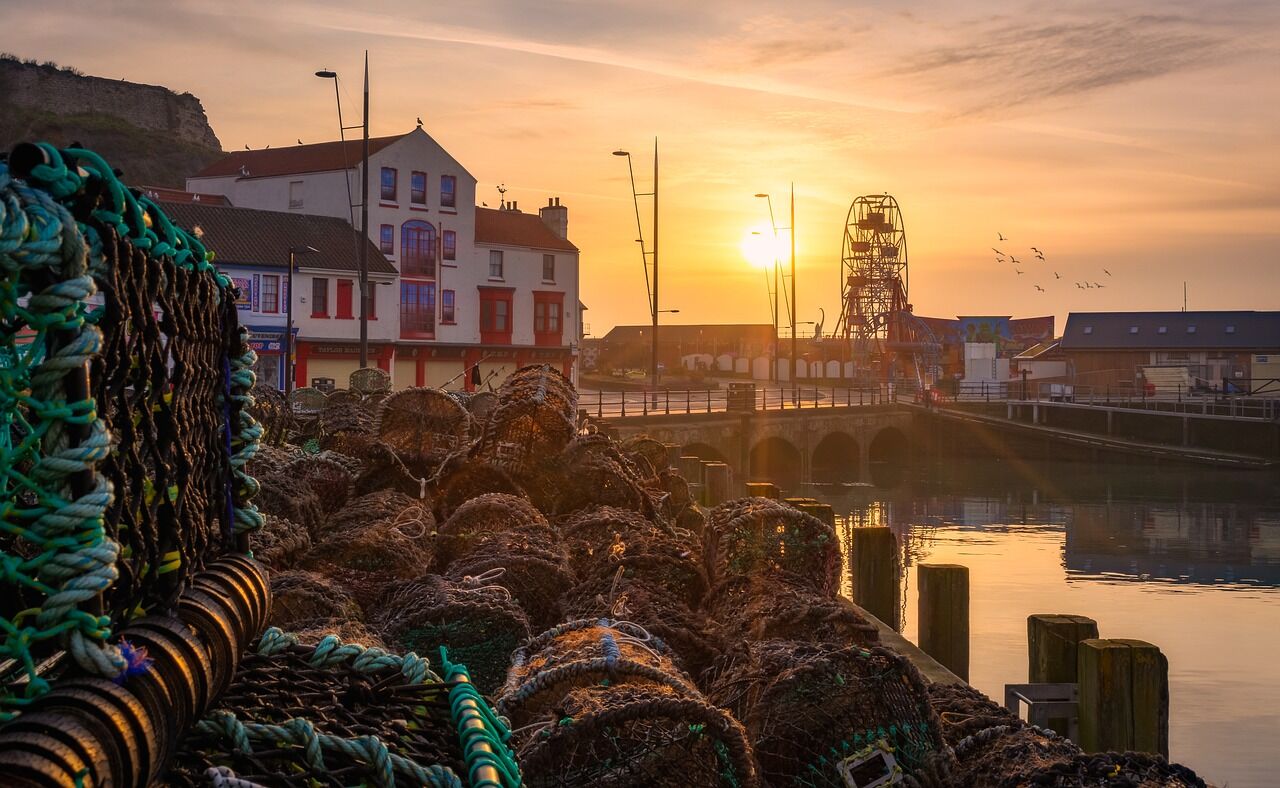
Ban on Lobster Fishing to Save Whales in Maine
Last updated: November 17, 2026
5 min read
A seasonal closure keeps lobster boats out of a rectangle of ocean off Maine every winter, and it took two court decisions in the space of a month to settle whether it could exist at all. The closure protects a species whose entire global population is fewer than 400 animals, which is why one 967 square mile box of water has become the centre of one of the longest running wildlife disputes on the United States east coast.
I have followed this story for a while, and what strikes me every time is the scale of the gap. The ocean off New England is enormous, and yet the whole future of this whale rests on a few hundred individuals. Below is what actually happened in court, why lobster gear and right whales collide so badly, and where the conservation effort stands now.
What the courts actually ruled
The Maine Lobstering Union sued to stop the closure and won the first round. In October 2021 a federal district judge in Bangor granted an injunction delaying it, finding that regulators had not shown right whales reliably congregate inside that particular box.
It lasted a month. On 16 November 2021 a panel of the First Circuit Court of Appeals stayed the injunction, and the closure took effect. The appeals judges pointed to acoustic gliders that had detected right whales in the area in 2018 and 2019, and to the arithmetic of a population where losing even one whale a year to entanglement pushes the species closer to extinction. In July 2022 the same court upheld the closure outright.
So the rule stands. Lobster gear with traditional vertical buoy lines is banned from the 967 square mile area roughly three miles off the Maine coast from 1 October to 31 January each year, and that closure has run every winter since. Other proposed measures, such as requiring more traps on each buoy line so there are fewer ropes in the water, went nowhere: in December 2022 Congress wrote into a spending bill that the existing 2021 rule counts as sufficient protection until the end of 2028, which froze any new regulation of the fishery for six years.
Why lobster gear is so dangerous for right whales
The danger comes from the vertical line. A lobster trap sits on the seabed, and a rope runs from it up to a buoy floating on the surface so the crew can find and haul it. Maine alone licenses roughly 4,500 commercial lobster boats, each allowed up to 800 traps, and the result along the New England coast is a forest of near invisible ropes hanging through the water column. A right whale swimming through can catch a flipper, the tail or the mouth in that line and drag the gear for months.
Entanglement in fishing rope is one of the two leading causes of death for the species. The other is being struck by ships. An entangled whale does not usually die quickly. It carries the rope, the drag slows it down, it cannot feed properly, infection sets in, and the animal weakens over a year or more. Females that survive an entanglement often stop breeding because the energy cost is too high. That is why every single line in the water matters when the population is this small.
Where the population stands
The North Atlantic Right Whale Consortium’s newest estimate, released in November 2026, puts the population at 382 animals for 2025, down from a revised 389 for 2024 (IFAW). Before that, the consortium had put 2024 at 384, up from a recalculated 376 for 2023, which scientists described as cautious optimism rather than recovery. The dip shows how fragile a rise of about 2 percent is: a single bad year can erase it. In that same year researchers logged five right whale deaths, sixteen entanglements and eight vessel strikes, and eleven calves were born.
One of those deaths closed a long-standing argument. A juvenile female known as #5120 washed up on Martha’s Vineyard in January 2024 with rope embedded in her tail. Gear marking rules brought in by Maine in 2020 and by NOAA in 2021 meant the rope could be traced, and the purple markings identified it as Maine lobster gear. It was the first right whale death formally attributed to that fishery.
For context, North Atlantic right whales were hunted close to extinction during the commercial whaling era. They got their name because whalers considered them the “right” whale to kill: they swim slowly, stay near the coast, and float when dead. Centuries later the species has never bounced back the way humpbacks or gray whales have, and human industry is still the thing holding it down.
The lobstermen’s side of it
It would be unfair to write this as a simple villain story. Maine lobstermen landed about 528 million dollars’ worth of lobster in 2024, and the fishery supports thousands of families in small coastal towns where few other jobs exist. Many crews work on tight margins and cannot easily afford to re-rig every trap line. They also point out that right whale deaths have been linked to Canadian fishing gear and to shipping lanes, not only to Maine rope, and they argue the data does not single them out fairly.
That is the real knot in this story. The whale needs ropeless or low-rope fishing to survive, and the fishing community needs a livelihood that does not collapse overnight. Promising answers exist, including on-demand gear where the trap line stays on the seabed until a crew releases it acoustically, but that equipment is expensive and still being tested at scale.
What you can do
- Check a seafood rating before you buy lobster or crab. Monterey Bay Aquarium’s Seafood Watch put US American lobster on its red “avoid” list in September 2022 over entanglement risk, a decision Maine’s political leadership rejected outright.
- Support organisations funding on-demand gear trials for lobster fleets, which is the technology most likely to end the conflict.
- If you sail or boat in New England waters, slow to 10 knots or less in seasonal speed zones. Vessel strikes are the other main killer.
- Report any entangled or distressed whale to your national stranding hotline rather than approaching it yourself.
The underlying maths has not changed since the case was argued. With fewer than 400 right whales left, the species cannot absorb steady losses to rope and ships, and the regulatory freeze runs to the end of 2028. If you want to read more about the case for changing how lobster is caught, see our related piece, Stop Eating Lobsters to Save Whales.
What do you think about the closure? Do tighter rules help the North Atlantic right whale recover, or is on-demand gear the only real fix? Share your view in the comments.
Read next
- Whale Conservation: Threats, Solutions, and How You Can Help
- Stop Eating Lobsters to Save Whales
- Two Dead Sperm Whales in One Week
Updated 17 November 2026: updated the North Atlantic right whale population to the consortium’s 2025 estimate of 382, released on 16 November 2026.



I live on the Maine coast and this is a very heated subject here.
With so few right whales left, it is hard to see how there’s time to wait.
Olivia, ropeless gear seems to be the most hopeful option.
The ropes in the water are the real problem either way.