

Animal Welfare Monitoring on Whaling Ships
Last updated: October 14, 2026
4 min read
In August 2022 Iceland made it mandatory, for the first time, to put government inspectors aboard whaling ships and record exactly how each whale was killed. When Hvalur hf., the country’s last large-whale hunting company, returned to the water after a four-year break, the inspectors went with it.
This is a different story from whether Iceland should hunt whales at all. It is the narrower question: if a country allows whaling, can the killing be measured and held to a legal standard? Iceland answered it, and the answer was worse than the industry had claimed.
What the monitoring required
The rule was issued with immediate effect by the minister of fisheries, Svandis Svavarsdottir, to enforce Article 27 of Iceland’s Animal Welfare Act, which requires that hunting “must always be conducted in a manner that minimises the pain inflicted on the animals and the time needed to kill them”.
- Officials from the Directorate of Fisheries and the Icelandic Food and Veterinary Authority (MAST) would be stationed on board the hunting vessels.
- Their job was to record each kill: whether a single harpoon struck the brain or spinal cord, how many shots were needed, and how long the whale took to die.
- MAST would then assess whether the hunt complied with the welfare law.
An inspector’s only job on board was to watch and document.
Why welfare monitoring is so hard at sea
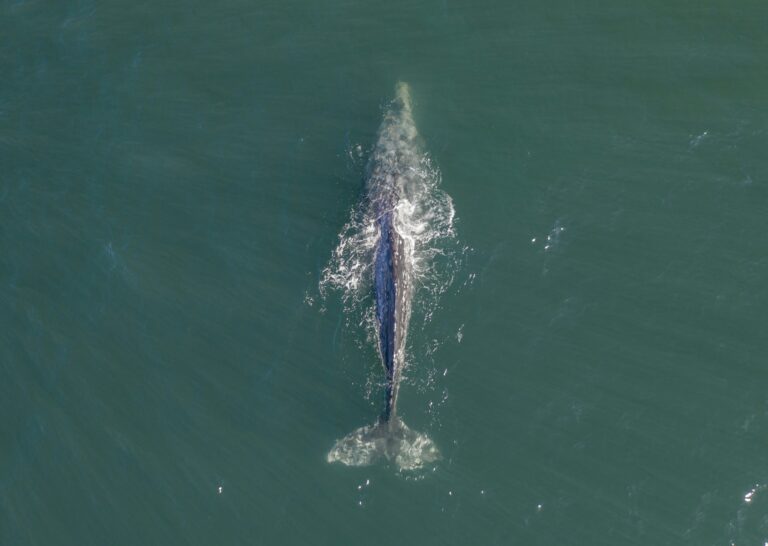
Killing a large whale humanely is genuinely difficult, and that is the uncomfortable core of the issue. Iceland’s hunt targets fin whales, animals that reach up to about 24 metres. They are shot with explosive-tipped harpoons fired from a moving vessel at a moving target in open water. The charge is meant to kill quickly, but a whale that is not struck cleanly can take a long time to die. Until inspectors were on board there was no independent record of how often that happened.
What the data showed
MAST published its report in May 2023, covering the 2022 season. Hvalur killed 148 fin whales that year, and monitors observed the deaths of 58 of them.
- 41 percent of the whales did not die instantly.
- For those whales the median time to death was 11.5 minutes and the mean was 17.4 minutes.
- The longest recorded death took two hours.
- Roughly a quarter were shot more than once, and two whales were hit with four explosive harpoons each.
- One whale was chased for five hours with a harpoon embedded in it, and escaped.
- 73 percent of the whales killed were female, including 11 that were pregnant.
Those numbers came from the government’s own inspectors, not from campaigners. The monitoring turned a slogan into evidence.
The consequence: a suspended season
On 20 June 2023, the day before the season was due to open, Svandis Svavarsdottir suspended the hunt until 31 August. The government’s animal welfare experts had concluded that the killing method did not comply with the Animal Welfare Act. It was the first time welfare evidence had stopped an Icelandic whaling season.
The suspension was not extended. Hunting resumed on 1 September 2023 under stricter conditions, and Hvalur killed 24 fin whales before the season closed. Mid-month the ministry suspended one of the two whaling vessels after a whale had to be shot twice and took more than half an hour to die.
What happened next
It would be neat to say the monitoring ended Icelandic whaling. It did not.
Hvalur took no whales in 2024 or 2025, but for commercial reasons rather than legal ones: poor demand in Japan, its main export market, and rising costs. The company holds a multi-year licence, and in June 2026 it sent its ships out again, the first Icelandic fin whale hunt since 2023, against a recommended quota of 150 animals. Iceland’s government has said it intends to introduce legislation ending commercial whaling after the 2026 season. That legislation does not exist yet.
What a hunted whale is for
A fin whale killed by Hvalur is processed at a shore station into meat, blubber and other products, with the meat overwhelmingly exported to Japan rather than eaten in Iceland. The original justification for whaling, that coastal communities needed the meat and oil to survive, no longer applies in a modern economy with supermarkets and a large tourism sector. So the welfare problem and the commercial problem stack on top of each other: a hunt that causes prolonged suffering in a large share of cases, supplying a product the home country does not eat and a foreign market that keeps shrinking.
Why this matters beyond Iceland
The Icelandic case shows what independent on-board monitoring can and cannot do. It produced numbers no government could defend as humane, and it forced a suspension that years of protest had not. What it did not do is end the hunt. Measurement changes the argument. It does not by itself change the law, and when the ships went back out in 2026 the same welfare data was still on the record.
A monitoring requirement is also not the same as approving the hunt. It can be the mechanism that constrains it, by replacing assumptions with measurements. For background on the company at the centre of this, see our piece on Iceland’s whaling company resuming the hunt.




Getting vets on board the whaling ships is a big step.
Will someone be on every trip though? That matters.
Iceland’s whaling has changed a lot since this was written. Would love an update.
Solveig, agreed. It has gone back and forth since.