
Lost At Sea: How Whales Lose Their Way Home
Last updated: October 14, 2026
4 min read
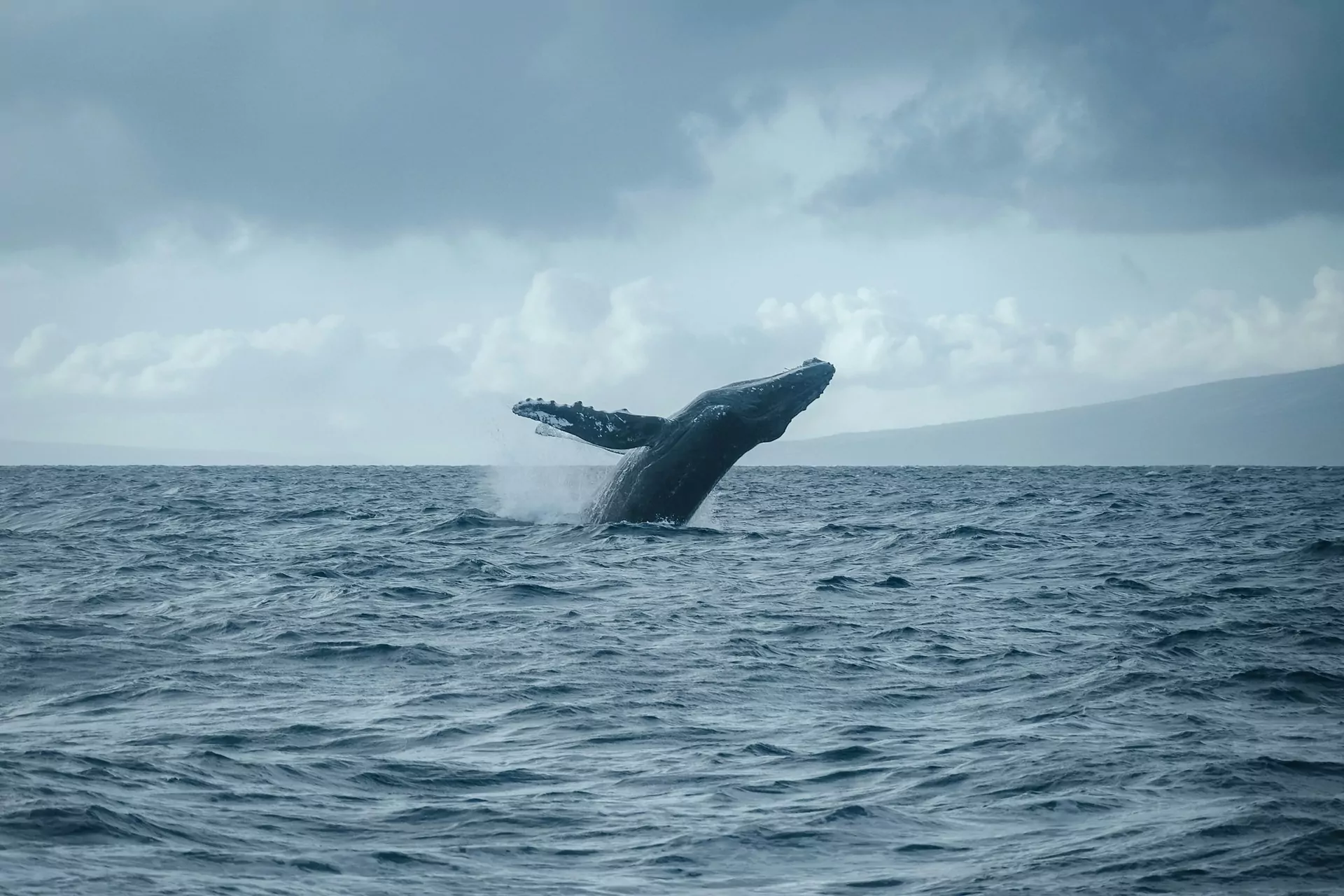
Photo: Saroj Bhandari via Unsplash
Whales strand. Sometimes one animal, sometimes an entire pod, and often with no obvious cause on the beach itself. Aristotle wrote about it in the fourth century BC and nobody has produced a single explanation since, because there is not one. A stranding is an outcome, not a cause, and several very different problems end the same way.
Here are the causes that are actually on the record, and how strong the evidence is for each.
Loud underwater noise
This is the best documented human cause, and it is specific rather than general. Mid frequency military sonar has been repeatedly linked to atypical mass strandings of beaked whales, above all Cuvier’s beaked whale.
The case that established the link was in May 1996, when twelve Cuvier’s beaked whales stranded along the west coast of the Peloponnese in Greece. The marine biologist Alexandros Frantzis matched the timing to a naval sonar trial in the same water and published the finding in Nature in 1998. Similar events have followed naval exercises in the Canary Islands and the Bahamas.
Post mortems on sonar linked strandings have found gas and fat emboli, injuries consistent with decompression sickness. The leading explanation is that intense noise drives deep diving whales to surface too fast from extreme depth. It is worth being precise about which animals this affects: beaked whales and other toothed whales echolocate, and it is their hearing range that mid frequency sonar sits in. Baleen whales such as blue whales do not echolocate at all, and the noise problem for them is different, mostly low frequency shipping noise drowning out their long distance calls.
We cover this in more detail in our piece on whether underwater sonar is harmful to whales.
Toxins and harmful algal blooms
The strongest evidence here is for biological toxins rather than industrial pollution. Algal blooms produce neurotoxins, notably domoic acid and saxitoxin, that accumulate in the fish and shellfish cetaceans eat. Animals poisoned this way become disoriented and can seize, and marine mammal strandings have been tied to bloom events on several coasts.
Industrial pollutants are a slower problem. Persistent organic pollutants build up in blubber over a lifetime, are passed to calves in milk, and are associated with suppressed immune function and reproductive failure. That makes an animal more likely to get into trouble rather than driving it onto a beach directly.
Coastal geography and tides
Some places strand whales more often than others. Seabed shape is one proposed contributing factor, alongside health, weather, navigation, and social behaviour. Long, shallow, gently shelving bays with soft sand return weak echoes, so an echolocating whale gets poor information about how close the bottom is until it is too shallow to turn around. Cape Cod in Massachusetts, Golden Bay in New Zealand and parts of the Scottish coast all have this geometry and all strand pilot whales repeatedly.
Tide amplifies the trap. On a large spring tide the water drops further and faster, and an animal that came in on the flood can be left in a pool or on wet sand with no route out.
Following prey inshore
A hunting whale is not navigating carefully. Squid and schooling fish move, and whales that chase them into unfamiliar shallow water can end up committed to it. Shifts in prey distribution driven by warming water have pushed some populations into coastal areas they did not previously use, which brings them into contact with both shallow ground and shipping.
Illness and injury
A sick whale in shallow water is often a sick whale that came inshore because it was already dying. Morbillivirus has caused mass mortality in pilot whales and dolphins. Pneumonia, heavy parasite loads in the inner ear and sinuses, and infections following entanglement injuries all turn up in necropsies.
Ship strikes belong in the same category. An animal that survives a collision but is badly injured cannot swim, feed or navigate properly, and the beach is where that story often ends.
Social bonds in pilot whales
This is why mass strandings are so heavily skewed towards a few species. Pilot whales, false killer whales and some dolphins live in tight matrilineal groups and stay with each other. Social cohesion may cause some group members to follow or re-strand, but this does not explain every event. Released animals can survive, and the cause often remains unknown.
Predator avoidance
Killer whales and large sharks do hunt smaller cetaceans, and animals fleeing into shallow water to escape can end up aground. This is plausible and occasionally observed, but it accounts for a small share of recorded strandings.
What we still do not know
Recorded strandings have risen, but so has the number of people watching, photographing and reporting them, and so has the coverage of formal stranding networks. Separating a real increase from better recording is genuinely hard, and it is one of the open questions in the field rather than a settled fact.
If you find a stranded whale, do not push it back to sea. Call your local stranding network or coast guard, keep people and dogs back, and note the exact location and whether the animal is alive.
Updated 14 September 2026: qualified hypotheses about seabed shape and social cohesion.



The sonar link to strandings is worrying.
Didn’t know strandings had been recorded that far back.
Hadn’t thought about pollution affecting calves this way.
Funny to think people were puzzled by strandings that long ago.
Hal, Aristotle wrote about it too. Some questions take a long time to answer.
First time on this site. Liked that it gets to the point.
Cried a bit at the end. Probably tired, but it landed.
Clicked through a few of the sources and they checked out.