
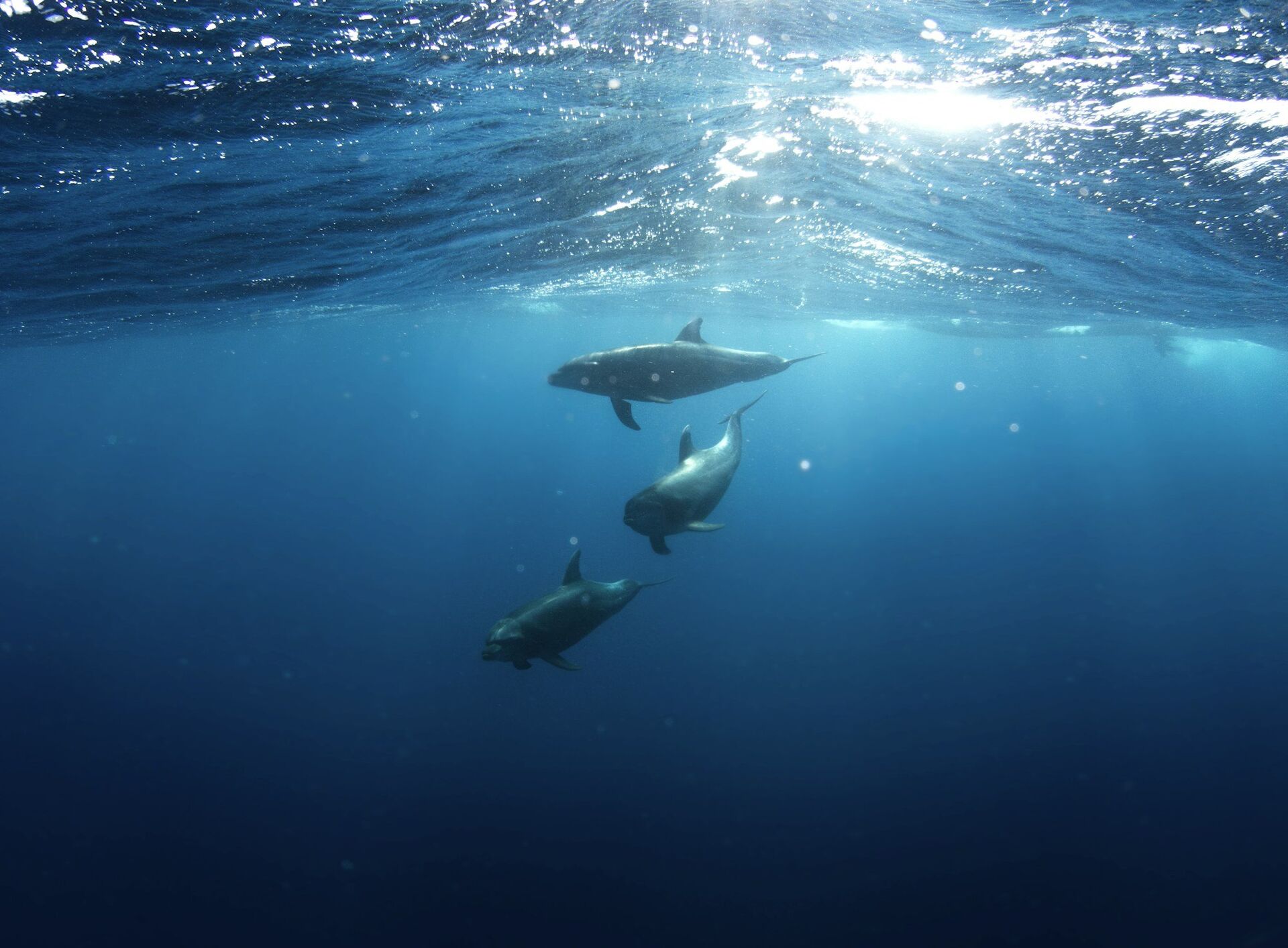
Cetacean Intelligence: What We Know About Whale and Dolphin Cognition
Last updated: October 14, 2026
6 min read
Whales and dolphins are smart. That is one of those statements everyone half believes and almost nobody can defend with precision. What does intelligence even mean for an animal that lives in a fluid three dimensional world, hears in chirps and clicks, and has no hands? The honest answer is that cetaceans pass a startling number of the tests we have been able to design, and they also do things that suggest our tests are missing most of the picture.
This guide walks through the evidence: brain anatomy, self recognition, tool use, culture, problem solving, and what cognitive scientists actually argue about now.
Key facts at a glance
- Brain size: the sperm whale brain is the largest known, about 8 kg, roughly six times the human brain
- Encephalisation: bottlenose dolphins have an encephalisation quotient second only to humans
- Mirror test: bottlenose dolphins have shown mark directed self examination; evidence for orcas and false killer whales remains inconclusive
- Culture: documented in song, foraging tactics, and clan level click dialects
- Lifespan: species with long lived matriarchs (orcas, sperm whales, pilot whales) show the strongest cultural transmission
Brain anatomy is not the whole story
Sperm whales have the biggest brain on the planet. Killer whales have huge brains relative to body size. Bottlenose dolphins have brains so densely folded that their cortical surface area rivals primates. None of this on its own proves much. Body size partly explains brain size, and not all brain tissue is equal. The right question is whether cetacean brains have the structural features, long range connections, dense cortical layers, large neuron counts in cognitive regions, that we associate with complex behaviour. The answer is broadly yes, with some quirks: cetacean cortex has its own unique layer organisation, which suggests an independently evolved kind of intelligence rather than a copy of ours.
Self recognition
The mirror self recognition test asks whether an animal understands that its reflection is itself. The classic version uses a mark placed where the animal can only see it in a mirror. Bottlenose dolphins pass. Comparable mark directed evidence has not been shown for orcas or false killer whales. Asian elephants and magpies pass too. Most other mammals fail or are inconclusive. Whether the test really measures self awareness or just visual attention is debated, but it consistently sorts species in ways that match other independent measures of social complexity.
Tool use
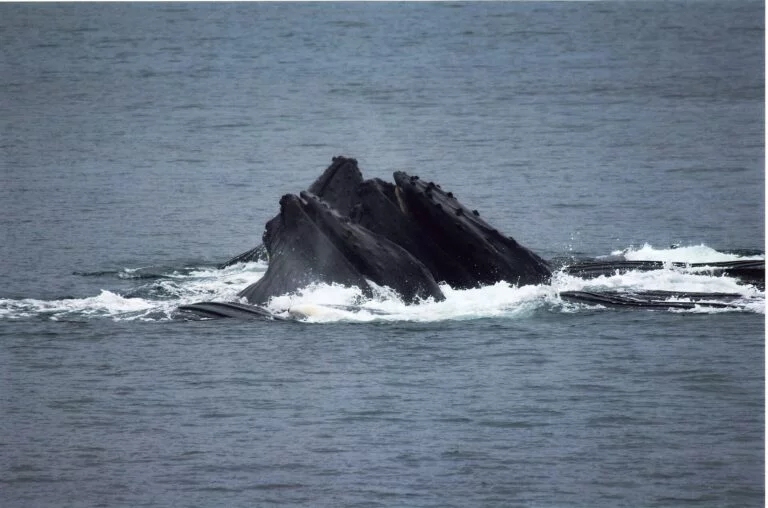
Bottlenose dolphins in Shark Bay, Western Australia, carry marine sponges on their rostrums to protect them while rooting in the sand for fish. The technique passes from mother to daughter and forms a recognisable cultural lineage within the population. Humpbacks in the Gulf of Maine cooperatively blow bubble nets around schools of herring, and surface feed in coordinated groups that look like role specialisation. Not knife and fork tool use, but tool use in the functional sense.
Culture and dialects
Sperm whales in the Pacific live in distinct vocal clans defined by their click patterns, called codas. The clans overlap geographically but rarely mix socially. Membership is inherited culturally, not genetically. Orca populations in the Pacific Northwest similarly have resident and transient ecotypes with completely different vocal repertoires, prey preferences, and social structures. These are populations that have, in a real sense, different cultures. Our piece on whale ancestors touches on the deep evolutionary roots of these behaviours.
Project CETI is applying large language model techniques to multi year recordings of sperm whale codas in the Caribbean, looking for structure that might hint at compositional meaning. Whether they find it or not, the work shows how seriously the field is taking cetacean communication.
Problem solving and play
Belugas in captivity learn to imitate human speech badly but recognisably: the famous Noc recordings. Wild humpbacks have been recorded interfering with killer whale attacks on seals in what looks like deliberate intervention rather than incidental disruption. See our coverage of humpbacks interfering with killer whale attacks. Bow riding, breaching for no obvious reason, and surf riding are behaviours with no clear utility that look a lot like play, which is itself a marker of cognitive sophistication.
Social cognition and politics
Sperm whale female led units share calf care, with one mother babysitting calves at the surface while the rest of the unit forages at depth. Orca matriarchs lead pods for decades after menopause, accumulating ecological knowledge their grandchildren rely on. Bottlenose dolphin males form first order alliances of two or three for mating access, plus second order coalitions of allied alliances for conflict between groups. That layered alliance structure is one of the few social systems outside human societies that requires an individual to track who is allied with whom.
The hard questions
Three open questions dominate the field. First, what is the actual structure of cetacean communication? Sperm whale codas, dolphin signature whistles, and humpback songs are all clearly communicative, but the symbolic or compositional content is unresolved. Second, do whales have something like episodic memory and mental time travel? Some long lived species behave as if they do, but proof is hard. Third, what moral status follows from any of this? Several countries have debated whether cetaceans deserve legal personhood, and India barred new dolphinariums for entertainment and display in 2013, citing intelligence, welfare, and rights concerns. The argument is far from settled.
Imitation, gesture, and language like behaviour
Beluga whales have been recorded imitating the cadence of human speech. The most famous example is Noc, a beluga at the United States Navy Marine Mammal Program in the 1980s, who lowered his fundamental frequency several octaves to produce a human like vocal pattern. Bottlenose dolphins have been trained to understand syntactic distinctions in human designed gestural languages: the same words in a different order produce different actions. None of this is language in the wild cetacean sense, but it shows that cetacean brains can handle the kind of operations human language relies on.
Wild evidence is harder to interpret and more suggestive. Bottlenose dolphins use signature whistles, individually distinctive calls that function like names, and other dolphins can address a specific individual by mimicking that individual’s signature whistle. By every functional measure, that is name calling, a behaviour previously thought unique to humans.
Counting and abstraction
Bottlenose dolphins can distinguish numerosity, more against fewer, and handle abstract concepts such as same against different across modalities, matching a sound to a visual symbol. They solve novel problems quickly and generalise from learned rules. These are the same tasks primate cognition labs use, which is what makes the comparison possible in the first place.
Cooperation across species
Cetacean cognition shows up in cross species cooperation too. Off the coast of Brazil, generations of bottlenose dolphins have worked with human fishermen, herding mullet toward shore and signalling with a distinctive dive when to cast the nets. The behaviour is taught dolphin to dolphin and human to human, and it has persisted across decades. Humpbacks have repeatedly interfered with killer whale attacks on other species. Researchers still debate the cause and whether other animals benefit by chance.
Why it matters for conservation
If sperm whales hold cultural knowledge in specific elders, losing those elders to a ship strike is not only demographic loss, it is cultural loss. If orca pods rely on matriarchal ecological memory, damaging Chinook salmon runs hits the orcas alive today and their ability to teach the next generation where to forage. How whales, dolphins, and porpoises differ matters here, because conservation strategy depends on these social facts and not just on body counts. Researchers have proposed including animal culture in conservation decisions, and the IUCN is consulting on the evidence and policy gaps.
What you can do
- Avoid captive cetacean shows. The case against them has both welfare and cognitive rights dimensions.
- Support quiet ocean campaigns. Noise pollution directly degrades cetacean communication.
- Pick whale watching operators with research partnerships. Many fund the long term studies that answer these questions.
- Read the source literature. Hal Whitehead, Denise Herzing and Janet Mann have all written accessible books on cetacean social life.
Take whales home
Most of the research described here has been written up for general readers. Our whale book collection is where to start if you want the long form version.
Read next
- Whale Species: A Complete Guide to the Cetaceans of the World
- Whale or Dolphin: 15 Questions to Test Your Cetacean Knowledge
- Humpback Whale and Dolphin Playing in Hawaii
Frequently asked questions
Are dolphins smarter than whales?
Dolphins are whales. The traditional split does not map onto cognition. Bottlenose dolphins, orcas (also dolphins), and sperm whales all rank near the top by every measure researchers have devised.
Do whales have language?
They have rich, structured communication systems. Whether those systems meet the formal definition of language, symbolic, compositional and generative, is unresolved. Machine learning studies of sperm whale codas may shift the answer in the next few years.
Can whales recognise themselves in a mirror?
Bottlenose dolphins have shown mark directed self examination. Evidence for orcas and false killer whales remains inconclusive. Most other species have not been tested rigorously.
Do whales have culture?
Yes, by most working definitions. Songs, foraging tactics, and click dialects are transmitted socially, vary between populations, and persist across generations.
Are whales self aware?
By the operational tests we have, the most studied species behave as if they are. Self awareness in a deep philosophical sense is hard to demonstrate in any animal, including humans, but the cumulative behavioural evidence is strong.
Why does cetacean intelligence matter for conservation?
Social knowledge is concentrated in specific individuals: matriarchs, elders, cultural specialists. Losing them is a kind of loss that population counts miss, and conservation strategy increasingly reflects that.
Updated 14 September 2026: corrected mirror-test, policy, and humpback intervention claims.



Losing an older whale as a loss of knowledge, not just a number, is a powerful idea.
Dolphins having name-like whistles blows my mind.
Has Project CETI published anything on what the codas mean yet?
Henk, they have published papers on how codas are structured, but no claims yet about what they mean.
Dolphins using sponges as tools is my go-to fact.
Brain size alone doesn’t say much about intelligence, though.
Tomas, fair point. Relative brain size is a better measure.