
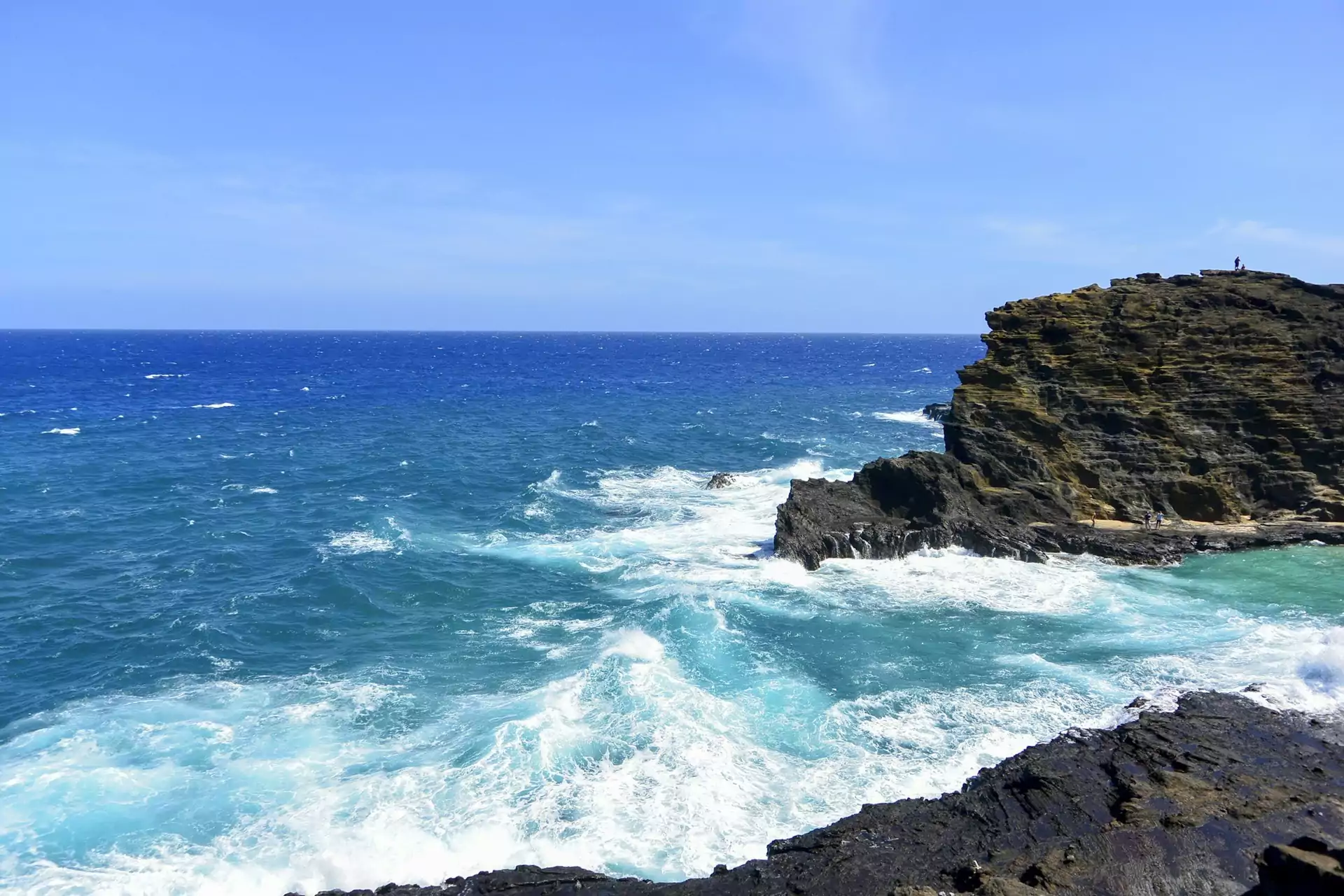
Whale Watching From Shore: 10 Free Vantage Points
Last updated: November 18, 2026
6 min read
Photo: Hoyoun Lee via Unsplash
Whale watching does not require a boat. Some of the best, most reliable and least disruptive whale viewing in the world happens from shore. Cliffs, headlands, lighthouses and seawalls put you well above the water with a wide field of view. You take your time, you do not get seasick, and you have no direct impact on the animals. This guide covers ten shore-based spots, the seasons they peak, and the species you can expect.
Key facts at a glance
- Best gear: binoculars (8×42 or 10×42), polarised sunglasses, layers, and patience
- Best time of day: early morning has calmer water and better surface visibility
- Best months overall: March to May for gray whales, June to September for northern hemisphere humpbacks
- Cost: most spots are free, but some charge admission or parking fees
- Impact on whales: none directly, unlike boat-based watching
1. Hermanus and Cape Point, South Africa
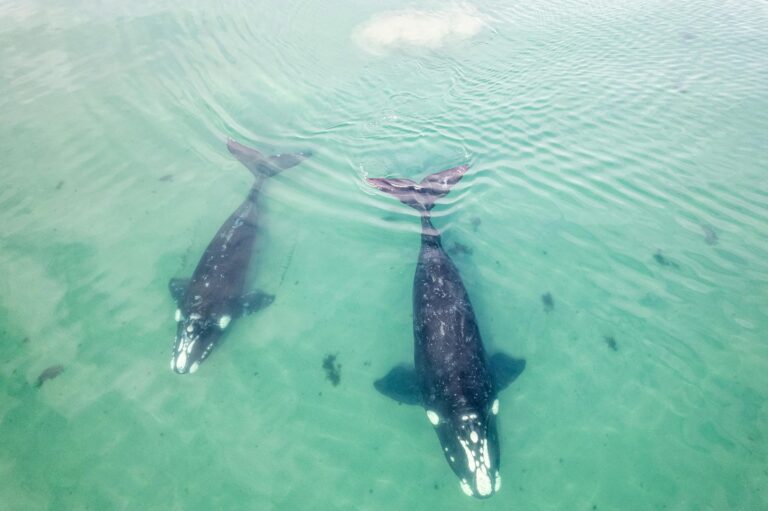
Hermanus is widely called the best land-based whale watching location in the world. The Cliff Path Walking Trail looks down on Walker Bay, where southern right whales calve from June to November, peaking in September and October. The town employs a whale crier who blows a kelp horn when whales are sighted nearby. Cape Point on the southwestern tip is good in the same season.
2. Depoe Bay, Oregon
Depoe Bay calls itself the whale watching capital of the Oregon coast. From the Whale Watching Center on the seawall you can see the resident summer gray whales that linger from June to October, plus the migratory grays passing through in March and December. Oregon runs a network of state whale watching sites with trained volunteers stationed at viewpoints during peak migration weeks.
3. Race Point, Provincetown, Massachusetts
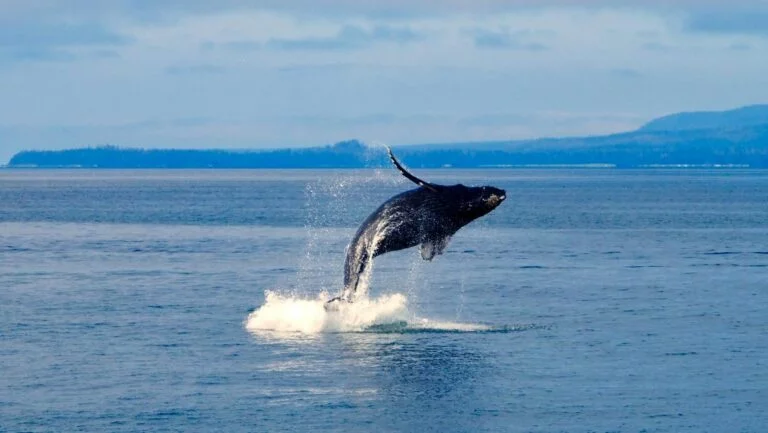
Race Point Beach looks straight out to Stellwagen Bank, one of the richest feeding grounds in the western North Atlantic. From the dunes you can watch humpbacks lunging and bubble-net feeding through the summer. Peak is May to September.
4. Cabo de Sao Vicente, Portugal
The southwest tip of Europe, just south of Sagres, has bottlenose dolphins year-round and seasonal common dolphins, pilot whales and occasional fin whales offshore. The cliffs are dramatic and the wind is fierce. Best for patient watchers with good binoculars. The fishing fleet’s wakes bring dolphin groups in close.
5. Pico Island, Azores
The clifftop lookouts above the south coast of Pico, the vigias, are still used by whale watching operators to spot animals and radio positions to their boats. As a land-based watcher you can stand in the same places. The Azores have sperm whales year-round and seasonal blue, fin and sei whales passing through. The Azores as a whole is one of the twelve designated Whale Heritage Areas recognised by the World Cetacean Alliance.
6. Kaikoura, New Zealand
Kaikoura is one of the few places on earth where a deep submarine canyon runs right up against the coast, which is why resident male sperm whales surface only a few kilometres offshore all year. The cliff walks above town, and the Point Kean lookout in particular, give you a chance of spotting blows. Dusky dolphins, orcas and humpbacks all pass through at different times of year.
7. Husavik harbour and lighthouse, Iceland
Husavik is Iceland’s whale watching capital and you do not need to leave town to spot animals. The lighthouse hill has a wide view over Skjalfandi Bay, where humpbacks, minkes and white-beaked dolphins feed from June to August. Blue and fin whales are seen from shore occasionally. The long northern daylight makes evenings productive.
8. Cape Naturaliste, Western Australia
The lighthouse at Cape Naturaliste overlooks Geographe Bay. Humpback mothers and calves rest in the bay from September to early December on the southbound leg of their migration, and pygmy blue whales pass in November and December. The headline humpback migration runs up the east coast, but this stretch of the west is quieter and just as rewarding.
9. Cabrillo National Monument, San Diego
The bluff at Point Loma gives a clear sightline onto the Pacific gray whale migration corridor. December and January are best for the southbound leg, February to April for the northbound return. The visitor centre has whale-spotting volunteers on weekends through the season.
10. Canary Island clifftop viewpoints
The Canaries have one of the highest cetacean species counts anywhere, with around 30 species recorded in the surrounding deep water. The strait between Tenerife and La Gomera is the reliable stretch and is itself a designated Whale Heritage Area, with short-finned pilot whales and bottlenose dolphins resident year-round. Punta de Teno on Tenerife and the cliffs of La Gomera both overlook it. Viewpoints on the other islands, including Mirador del Rio on Lanzarote, are worth a scan but are not in the same league.
Land-based watching with citizen science
Several organisations run formal shore-based surveys that anyone can join. The Whale Trail in the United States Pacific Northwest is a network of dozens of viewing stations with trained volunteers. Britain’s Sea Watch Foundation accepts public sightings from any coast and organises timed land watches. If you would rather be on the water, the UK charity MARINElife runs volunteer survey teams on ferries and other vessels around Britain and Ireland. Any of these turns casual viewing into a contribution to long-term population monitoring. In northeast Florida, the Marineland Right Whale Project runs a shore-based volunteer network that watches for right whale mothers and calves each winter; my guide to where to see right whales in Florida lists where they were seen.
Reading the water
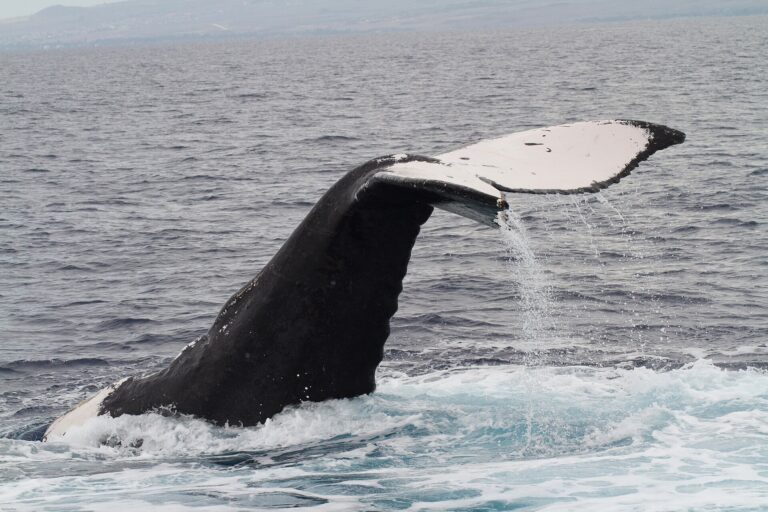
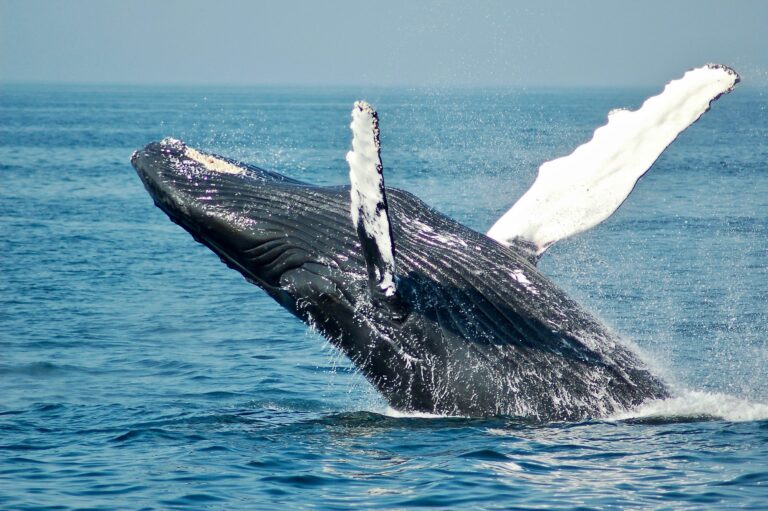
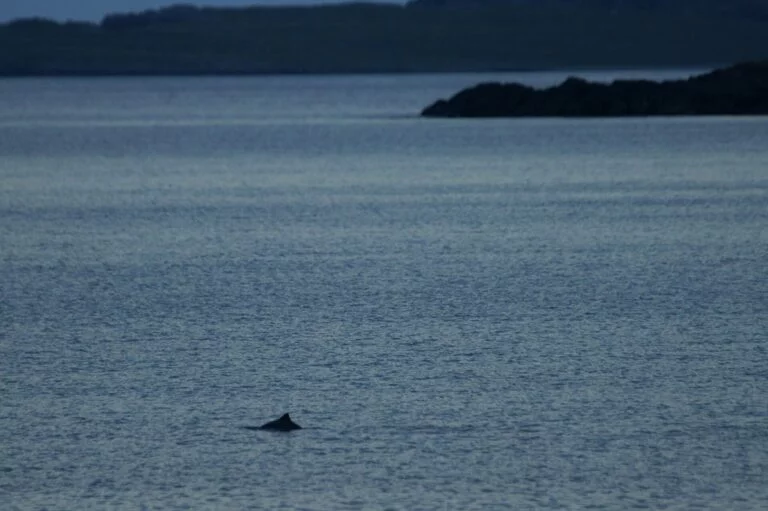
Shore watching rewards learning to read the surface. A blow is the most visible cue: white vertical mist that hangs longer than a wave crest. A fluke silhouetted briefly above the water means a deep dive is starting. Logging looks like a black hump sitting flat for several seconds. A breach is unmistakable but easy to miss if you are looking the wrong way. Bird activity, especially gulls or kittiwakes diving repeatedly in a tight patch, often marks a feeding whale below. Splashing with no obvious cause is usually dolphins or porpoises moving fast.
Honourable mentions
- Cape Spear, Newfoundland: humpbacks, minkes and drifting icebergs in early summer.
- Bicheno, Tasmania: southern rights and humpbacks on migration.
- Skjervoy and Senja, Norway: orca and humpback activity from shore in winter, with luck and short daylight.
- Galway Bay, Ireland: regular bottlenose dolphins, occasional fin and humpback sightings.
- Cape Vidal, KwaZulu-Natal: humpbacks on the run between Mozambique and South Africa.
How to get the most out of shore watching
- Use binoculars in the 8x to 10x range. Higher magnification mostly amplifies hand shake.
- Scan with the naked eye first and bring the binoculars up only when you have something.
- Look for the blow, not the body. A whale’s back is hard to pick out at distance; the spout is much higher contrast.
- Polarised sunglasses cut surface glare and make a real difference.
- Morning and early evening are best, when the sun is low and the water is calmer.
- Be patient. A 90 minute scan often turns up several sightings even at a quiet site.
- Bring snacks and a windproof layer. Most of the best spots are exposed.
Cliff safety
Many of the best shore watching spots sit on tall, eroding sea cliffs, and the urge to step closer to the edge for a better angle is real. Stay back from unfenced edges, especially in wet or windy weather. Almost every viewpoint has a marked path that delivers the same sightings without the risk.
Photography from shore
From land you have stability, time and a wide field of view, which suits long lenses. A 400 to 600 mm lens on a sturdy tripod produces usable frames of distant blows and surface activity. Fast shutter speeds of 1/1600 or quicker freeze breaches and tail slaps even at range. Continuous autofocus helps with the faster animals, and a polarising filter improves any frame with water in it.
Why shore watching matters for conservation
Every shore-based watcher is one fewer boat slot demanded, which keeps pressure off the animals. Several coastal towns now promote shore watching as a lower-impact alternative to boat tours, and the volunteer-staffed land programmes behind that (Oregon’s viewpoint network, the Whale Trail, the Hermanus whale crier) are a public-good model worth supporting. If you live near any of these sites, consider volunteering for a peak-season shift. For the broader case, see our whale watching ethics piece.
Take whales home
Gear up for your next trip. Our store stocks whale clothing and accessories built for cold deck mornings and long horizons.
Frequently asked questions
Can you really see whales from the shore?
Yes. Some of the best whale viewing in the world is land-based. Hermanus, Depoe Bay, Provincetown and Kaikoura all offer reliable sightings without a boat.
What gear do I need for shore-based whale watching?
Binoculars (8x or 10x), polarised sunglasses, layered clothing and patience. A long-lens camera helps but is not essential.
Is shore-based whale watching less reliable than boat-based?
Sometimes, but not always. For coastal migrators such as gray whales and southern rights, shore watching is as reliable as a boat trip and a good deal more comfortable.
What time of day is best?
Early morning gives calm water and good light. Late afternoon also works, especially in high-latitude summer when daylight runs long.
How far offshore can you see whales?
Through 8x binoculars on a calm day, blows are visible several kilometres out. Body details only start to resolve within a kilometre or two.
Are shore-based whale watching spots free?
Most are free to reach. Cabrillo National Monument and Cape Point charge admission, and some other sites charge for parking.
Updated 14 September 2026: corrected admission claims for two shore sites.
The whale crier in Hermanus is a real thing and very useful.
Saw several gray whales from Cabrillo in January. The volunteers there are great at spotting.
How far out can you really spot a blow? Feels like it depends a lot on the light.
Marek, agreed. On a calm clear day you can see further than in glare or wind.
Cape Spear in Newfoundland deserves a mention too.
Kazuki, it is on the honourable mentions.
Agree on 8×42 binoculars. Anything stronger shakes too much on a windy cliff.
Glad Cape Vidal got a mention. Great spot in season.