
Whale Strandings: Causes and What Scientists Are Learning
Last updated: November 17, 2026
7 min read
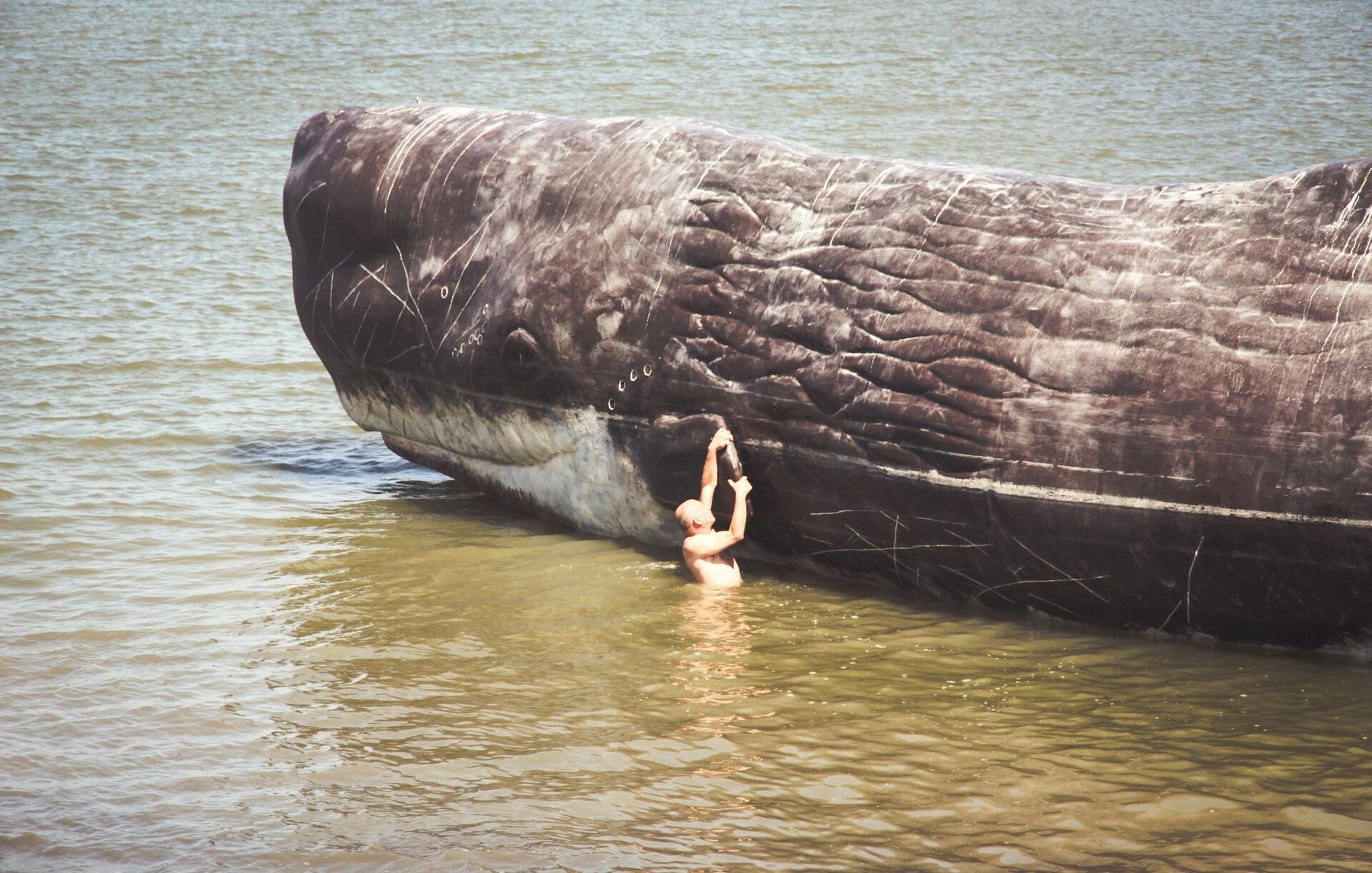
Every year, thousands of whales and dolphins strand on coastlines around the world. Some are single sick or injured animals. Others are mass events involving dozens, sometimes hundreds, of pilot whales or beaked whales pushed onto a beach in a single tide. Strandings are tragic to witness and difficult to prevent, but they are also one of the most important sources of data we have on cetacean biology, disease, and human impact on the ocean.
This guide breaks down the leading causes of whale strandings, what scientists do with stranded animals, how the science has shifted in the last decade, and what to do if you find a stranded animal yourself. Most coastal countries now run organised volunteer networks that anyone can join.
Key facts at a glance
- Annual cases: Several thousand documented cetacean strandings worldwide each year
- Mass strandings: Most often pilot whales, sperm whales, and some beaked whale species
- Common causes: Disease, ship strike, entanglement, sonar exposure, navigation error, group dynamics
- Survivors: Live single strandings of small dolphins have the best refloat outcomes; mass strandings are usually fatal
- Data value: Necropsies provide most of what we know about diet, parasites, contaminants, and emerging disease
What counts as a stranding
A stranding is any case of a live or dead cetacean that ends up ashore or in shallow water where it cannot return to deeper habitat under its own power. Some authorities distinguish single strandings (one animal), mass strandings (two or more, often of the same species), and unusual mortality events (UMEs), which are statistical clusters that exceed expected baselines and trigger a federal response in countries like the United States.
Cause one: disease
Infectious disease is probably the leading cause of single live strandings. Cetacean morbillivirus, related to measles and canine distemper, has driven major mortality events in bottlenose dolphins and pilot whales in the Atlantic. Toxoplasmosis (from cat borne parasites running off into coastal water), brucellosis, and fungal infections also show up in stranded animals.
Harmful algal blooms are a real pressure on some species, and biotoxins such as domoic acid turn up regularly in stranded marine mammals on the US west coast. It is worth being precise about the gray whale case, because the two often get conflated. NOAA’s investigative team closed the 2019 to 2023 gray whale unusual mortality event in November 2023 with 690 strandings recorded across the United States, Mexico, and Canada, and concluded the cause was localised ecosystem change in the Arctic and subarctic feeding grounds: less food, malnutrition, fewer births, more deaths. Biotoxins were found in some carcasses at the same rate as in normal years, so they were not the driver.
NOAA Fisheries runs the US UME programme that tracks these clusters. The humpback and North Atlantic right whale events on the East Coast remain open.
Cause two: ship strike and entanglement
Anthropogenic injury is the biggest threat to large whales, and many stranded carcasses show its signature. Necropsies routinely find broken vertebrae and propeller wounds from ship strikes, or deep rope cuts from ghost gear and active fishing gear. The North Atlantic right whale is the textbook case: with about 382 animals in the 2025 estimate, every stranded carcass with entanglement marks is a meaningful demographic loss.
Cause three: navigation error and acoustic disturbance
Beaked whales (Cuvier’s, Sowerby’s, Blainville’s) sometimes strand within hours of nearby military sonar exercises. Necropsies have found evidence of decompression like injuries: gas bubbles in tissue similar to what divers experience with the bends. Sonar can alter beaked whale diving and may contribute to decompression injuries, but the exact mechanism remains uncertain. See also our explainer on whether sonar harms whales.
For other species, navigation error in shallow, gently sloping bays is suspected. Echolocation works less well over sandy slopes, and groups following a sick or disoriented leader can get stranded en masse. Cape Cod and the New Zealand coast see this pattern repeatedly. Our mass strandings explainer digs further into this.
Cause four: group cohesion
Pilot whales and false killer whales are extremely social, with tight matrilineal pods. When one animal becomes stranded or sick, the rest sometimes follow it ashore rather than abandon it. This is why pilot whale mass strandings can involve hundreds of animals, and why refloating the survivors is so difficult: a freed pilot whale will often turn back to a beached relative and re strand within hours. See how whales lose their way home for more on this.
What happens at a stranding response
In most coastal countries, trained stranding response networks handle live animals. The priority order is: assess (is the animal alive, what species, how injured), stabilise (shade, water on the skin, support around the flippers), and decide (refloat candidate, palliative care, or euthanasia). For mass strandings, triage is brutal: not everyone can be saved, and the volunteer staffed effort focuses on the animals with the best chance.
Dead animals get necropsied where possible. Tissue samples go to contaminant labs, genetic labs, parasite labs, and disease labs. Each carcass is a months long data point that feeds peer reviewed papers and conservation policy. Teams vent trapped gas before they open a large carcass, for reasons our piece on famous whale explosions makes clear.
Stranding hotspots around the world
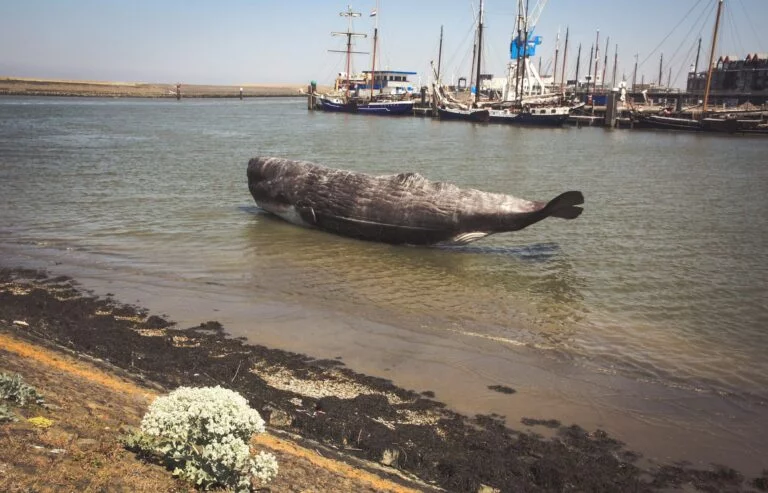
Some coastlines see strandings disproportionately. Farewell Spit at the top of New Zealand’s South Island is one of the world’s most active mass stranding sites, with hundreds of pilot whales coming ashore over the decades. Cape Cod in Massachusetts is another classic hotspot, especially for common dolphins. The west coast of Tasmania saw a record Australian event in September 2020 when about 470 pilot whales stranded in Macquarie Harbour, of which 111 were refloated. Scotland’s east coast and the German Wadden Sea both see periodic sperm whale strandings. Each hotspot has its own combination of contributing factors, but gently sloping sandy shores and complex tidal regimes recur.
Volunteer networks and how to help
Most maritime nations have organised volunteer stranding response groups. In the UK it is British Divers Marine Life Rescue (BDMLR). In the US the Marine Mammal Stranding Network coordinates regional responders. In Australia each state has its own programme, often run jointly by wildlife agencies and universities. Training is usually free, runs over a weekend, and qualifies volunteers to assist with assessments, refloats, sampling, and necropsies. If you live on a coast and care about cetaceans, joining a stranding network is one of the most direct ways to be useful.
Climate change and shifting baselines
Warming oceans have already shifted prey distributions for several whale species. The gray whale mortality event is the clearest worked example: a change in food availability in the north cascades into poor body condition, and animals weakened that way are more susceptible to disease and ship strike, so the strandings start to cluster. The IUCN Red List has been updating threat assessments accordingly.
The science that strandings make possible
Stranded animals are essentially free natural history samples that no permit could otherwise obtain. From them we learn diet (stomach contents), parasite load, contaminant burden (heavy metals, PCBs, PFAS, microplastics), pathogen ecology, reproductive status, age at death (via teeth, or earplugs in baleen whales), and population genetics. Bowhead earplugs have been used to reconstruct century long histories of hormone levels.
Long term stranding databases also reveal trends that field surveys miss. The US and UK networks have been collecting records for decades. Researchers use these databases to spot emerging diseases, novel mortality patterns, and slow shifts in species distribution. Every well documented stranding contributes to that ledger.
Common questions about specific species
Two species generate disproportionate stranding inquiries from the public: pilot whales and sperm whales. Pilot whales are the world’s mass stranding champions because of their tight matrilineal social bonds. Sperm whales strand less often but when they do, the carcasses are dramatic and sometimes explosively gassy. Both deserve respectful coverage rather than tabloid framing.
What you can do if you find a stranded whale
- Do not push it back to sea. Stranded whales are stranded for a reason and refloating without assessment usually fails.
- Call your local stranding hotline. In the US that is the regional NOAA stranding network number. In the UK it is BDMLR.
- Keep distance. Stranded animals are stressed and can injure people accidentally with tail and head movements.
- Keep dogs away. Disease transmission risk goes both ways.
- If safe, keep the skin damp with seawater and shade the eyes and blowhole, but only under guidance.
For more on the response side, see our short field guide on safety tips when rescuing a stranded whale.
Take whales home
Want to go deeper on whales and their threats? Browse our curated whale book collection: science, history, and field guides for serious enthusiasts.
Frequently asked questions
Why do whales strand on beaches?
Causes include disease, ship strike, entanglement, sonar induced decompression injury, navigation error in gently sloping bays, and the tendency of social species like pilot whales to follow a stranded relative.
Can stranded whales be saved?
Single live strandings of small dolphins sometimes can. Large whale strandings and mass strandings of pilot whales rarely refloat successfully. Volunteers triage to the cases with the best chance.
Why do beaked whales strand near sonar exercises?
Tagging studies show that sonar can alter beaked whale diving. It may contribute to decompression injuries, but the exact mechanism remains uncertain.
Are strandings increasing?
Reported strandings are up, partly because of better reporting networks, partly because of real causes like ship strike, fisheries interaction, and climate driven prey shifts.
What should I do if I find a stranded whale?
Call your local stranding network immediately. Do not push the animal back to sea. Keep distance, keep dogs away, and follow the responder’s instructions.
What happens to the body after a dead whale strands?
Necropsy by trained marine mammal pathologists is the priority. Samples support research on disease, contaminants, diet, and population genetics.
Updated 14 September 2026: updated the North Atlantic right whale population figure.
Updated 17 November 2026: updated the North Atlantic right whale population to the consortium’s 2025 estimate of 382, released on 16 November 2026.



Did the BDMLR course a few years ago. Managing the crowd was half the job.
Coleen, good point about the crowds. Keeping people back helps the whale.
Macquarie Harbour was so sad to watch.
Never thought of each stranding as research data. Makes it a little less pointless.
The sonar findings in beaked whales should be better known.
Didn’t know morbillivirus was related to distemper in dogs.