
Recent Mass Whale Strandings And What We Can Do To Help
Last updated: September 14, 2026
3 min read
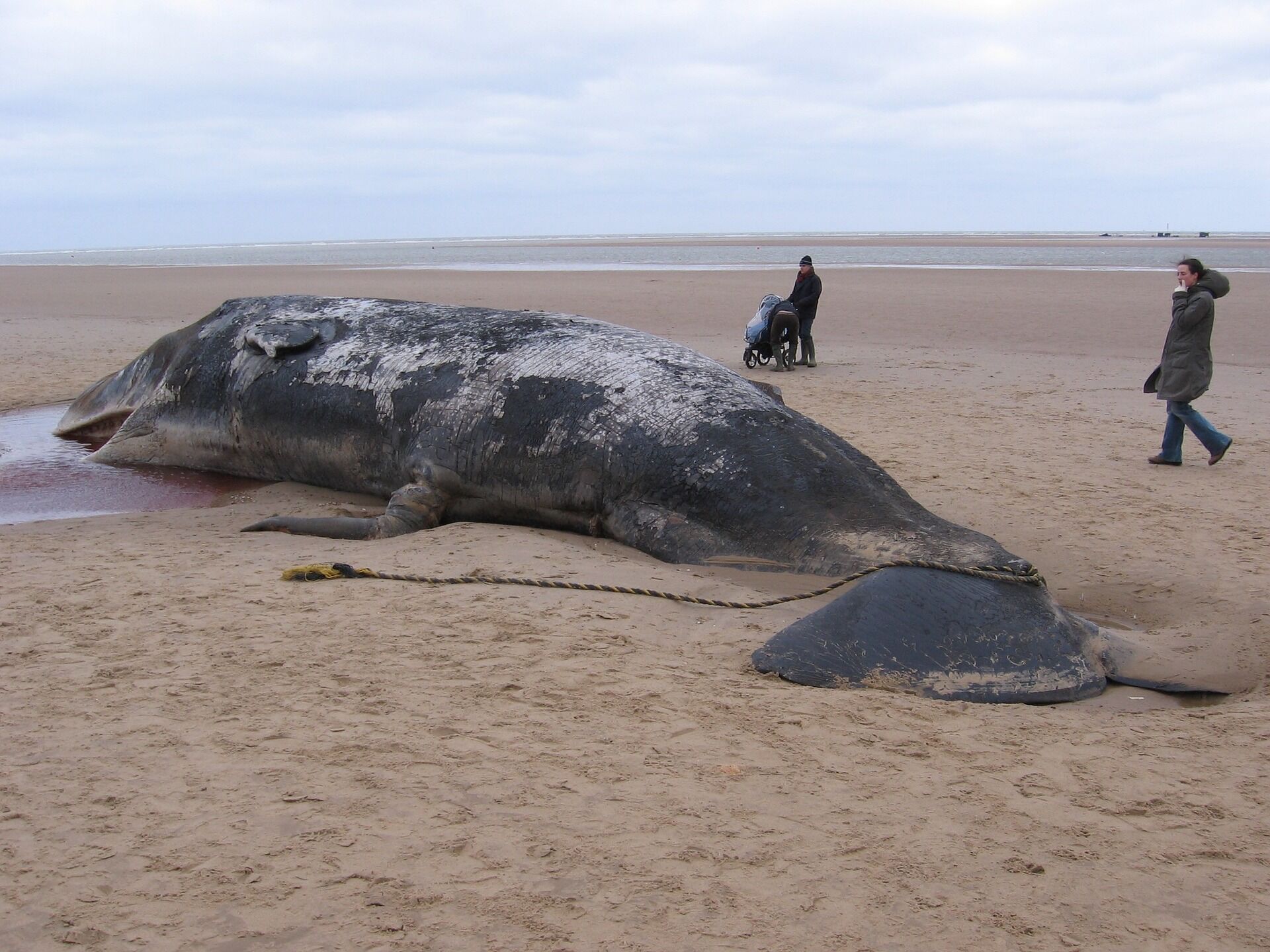
A mass stranding is one of the hardest things to watch on any coastline. Dozens or hundreds of whales come ashore together, and most of them die where they lie, crushed by their own weight, overheating, or drowning as the tide comes back over the blowhole. This is a short record of the events people still ask about, and what the evidence says about why they happen.
The events people remember
In September 2020 about 470 long finned pilot whales stranded in Macquarie Harbour on the west coast of Tasmania, the largest mass stranding recorded in Australia. Rescue teams refloated 111 of them. Three years earlier, at Farewell Spit at the top of New Zealand’s South Island, roughly 650 pilot whales came ashore over two days in February 2017, and around half died.
Not every mass mortality happens on a beach. In 2015 researchers surveying a remote fjord system in Chilean Patagonia found the carcasses of more than 300 sei whales, the largest die off of baleen whales on record. Toxic algal bloom is the leading explanation.
In early 2016 around 30 sperm whales stranded around the shallow southern North Sea, in England, Germany, the Netherlands, and France. All were young males, but genetic and contaminant evidence found at least two groups from different origins. They had moved into shallow southern North Sea waters.
Why it keeps happening in the same places
The same handful of coastlines appear again and again: Farewell Spit, Macquarie Harbour, Cape Cod. They share a shape. Gently shelving sand, a big tidal range, and a wide bay that closes behind an animal swimming into it. Echolocation works poorly over soft sloping ground, because the sound is absorbed rather than returned, so a whale can lose the acoustic picture it navigates by and find itself in a metre of water before it knows.
Species matters too. Pilot whales dominate the mass stranding record, along with false killer whales, sperm whales, and beaked whales. What those species have in common is deep water habits and, in the pilot whale’s case, extremely tight social bonds.
The causes with evidence behind them
A sick or dying leader. An old or diseased animal heads for shallow water where surfacing to breathe takes less effort, and strands. Pilot whales will follow a pod member ashore and refuse to leave it, which is why refloated animals so often turn round and beach themselves again within hours.
Naval sonar, for beaked whales specifically. The first well argued case was Greek: a dozen Cuvier’s beaked whales ashore in the west Peloponnese in 1996 while NATO was running sonar trials offshore, with nothing but the coincidence to go on because no carcass could be examined. Four years later the Bahamas produced the same coincidence and, this time, bodies that pathologists could open. The findings, haemorrhage around the inner ear, matched acoustic injury. The Canary Islands then repeated the pattern twice. It is a real and specific effect on deep diving beaked whales, not a general explanation for every stranding. Our piece on whether underwater sonar harms whales goes through the evidence properly.
Poor body condition. Whales that arrive at a coast underfed are more likely to fall ill, get hit, or run out of options. Stomachs full of plastic and fishing gear turn up in necropsies often enough to matter, and shifting prey distribution is now part of nearly every large scale mortality investigation.
What is actually within our control
Nobody can stop a pod following a dying matriarch onto a sandbank. Two things are within reach: the noise we put into the water, and the rubbish. Both are conservation priorities in their own right, and both show up in the stranding record.
If you find a stranded whale, do not push it back out. Call your national stranding network and let them assess it. For the fuller picture, read our guide to what causes whale strandings and what scientists learn from them, our explainer on how whales lose their way home, and our safety tips for rescuing a stranded whale.
Updated 14 September 2026: corrected the origins of the 2016 North Sea strandings.



The way a whole pod follows one whale ashore is heartbreaking.
That sei whale event in Chile was huge. Hard to take in.
Has anyone looked at whether solar storms affect strandings? I’ve seen it mentioned.
Is there a follow-up on why mass strandings happen?
Read this with the cat on my lap. She seemed interested.
Good reminder to keep your distance.
Is there newer research on why pilot whales strand so often?
Marcia, our explainer on the causes of whale strandings covers the newer research.
Could the photo credits be a bit easier to see?
First piece I’ve read on here. Won’t be the last.