Baleen Whales vs Toothed Whales: The Two Big Groups
4 min read
Every whale you have ever seen in a photo belongs to one of two groups. One group has a mouth full of teeth. The other has a mouth full of comb-like plates. Scientists call them Odontoceti and Mysticeti, and nearly everything else about a whale follows from which side of the split it sits on.
The Society for Marine Mammalogy species list, updated in April 2026, counts 94 cetacean species, with one possibly extinct. Of those, 15 are baleen whales. The other 79 are toothed whales, dolphins and porpoises, and one of that group is possibly extinct. So the toothed side has far more species, while the baleen side holds the biggest animals.
The feeding gear is the main difference
PBS Nature puts it plainly: the primary difference between the two suborders has to do with the whale’s feeding hardware. Baleen whales have baleen plates that work as a filter-feeding system. Toothed whales are better equipped to grab larger, individual prey such as fish, squid and other invertebrates.
Baleen is not bone and it is not teeth. New World Encyclopedia describes it as a sieve-like structure in the upper jaw made of keratin, the same tough protein found in your fingernails. The whale takes in water and prey, then pushes the water out through the plates. As the National Marine Life Center says, the baleen filters the water and traps food like krill in the whale’s mouth.
Toothed whales hunt single animals. The same source notes they use their teeth to latch onto prey and break it into smaller pieces. Their menu includes fish, squid and, for some species, marine mammals such as seals.
Baleen whales start life with teeth
One odd detail: baleen whales are not toothless from the start. According to New World Encyclopedia, living baleen whales have teeth only during the embryonal phase. The teeth go before birth, and the adults rely on baleen instead. It is a hint at the ancestry of these animals, and our post on surprising facts about whale ancestors goes further back in time.
The count matters for another reason. Because the toothed group includes every dolphin and porpoise, the phrase “toothed whale” covers 79 species on the Society for Marine Mammalogy list, while “baleen whale” covers only 15. When a headline says “a whale”, it helps to know which of these two very different groups it means.
Two blowholes or one
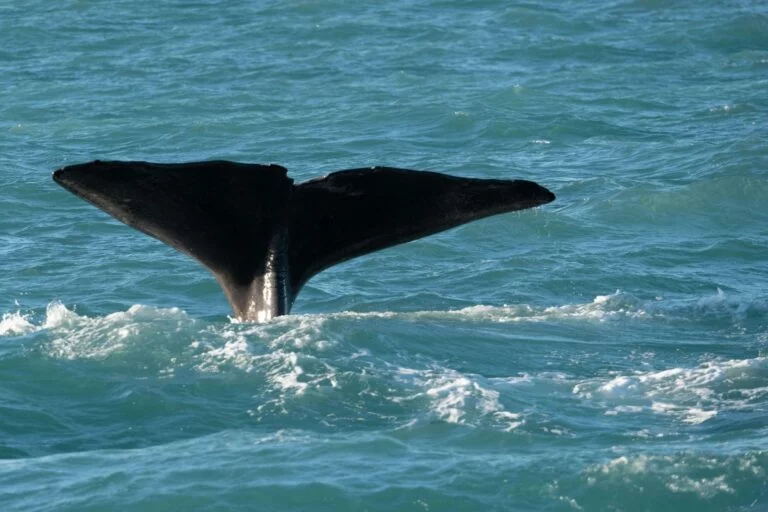
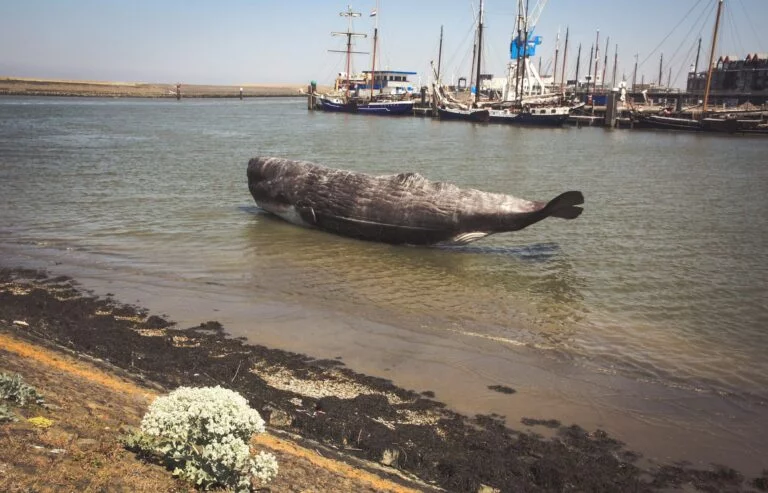
Count the holes on top of the head and you can sort a whale quickly. A glossary in a NOAA Fisheries activity book states that whales with teeth, like orcas, have one blowhole, and baleen whales have two. A sperm whale is the odd one out among the toothed group, with a single blowhole set off to the left side of its head, according to NOAA Fisheries.
Sound and echolocation
The same NOAA glossary defines echolocation clicks as repetitive sounds used by toothed whales to navigate and find food. That is the sonar skill dolphins and sperm whales are known for. Baleen whales are not described as using clicks this way. They are famous for other sounds, such as the long songs covered in why whales sing.
Which whales sit where
Among the baleen whales, PBS Nature lists the blue whale, bowhead, gray whale, humpback and North Atlantic right whale. New World Encyclopedia says the suborder holds four families: Balaenidae, Balaenopteridae, Eschrichtiidae and Neobalaenidae. You can read our profiles of the blue whale, humpback whale and gray whale.
Among the toothed whales, PBS lists the sperm whale, plus dolphins and porpoises. Yes, a dolphin is a toothed whale in the scientific sense. If that surprises you, try our whale or dolphin quiz, or read about the differences between whales, porpoises and dolphins. Our sperm whale profile covers the largest toothed whale.
Size is not the dividing line
People often assume baleen means big and teeth means small. The National Marine Life Center gives a useful pair: humpbacks reach up to 52 feet, while mature male sperm whales reach up to 67 feet. So a toothed whale can out-measure a baleen whale. Even so, the very largest animals are baleen whales. The blue whale, a baleen whale, is the largest animal known.
Filter feeding is a big business
Researchers describe baleen whales as gigantic obligate filter feeders that exploit aggregations of small-bodied prey. Most baleen whale species have evolved their own filter-feeding mechanisms and foraging strategies. The detail varies by species, and it is a field where scientists are still testing ideas about how it all works. This post keeps to the basics for that reason.
Seen side by side, the pattern is simple. One group is built to strain huge amounts of small prey from the water. The other is built to find and catch single animals. Neither is better. Both groups have lasted because each design suits the food it targets.
A quick way to remember it
- Baleen plates and two blowholes: a baleen whale, such as a humpback or blue whale.
- Teeth and one blowhole: a toothed whale, such as a sperm whale, orca or dolphin.
- Clicking sonar to find prey: a toothed whale.
Those rules cover almost every whale you will meet. What do you look for first when you spot one at sea? Add what you know in the comments.
Sources
- Society for Marine Mammalogy, List of Marine Mammal Species and Subspecies
- PBS Nature, Ocean Giants whale fact sheet
- National Marine Life Center, Toothed Whales vs. Baleen Whales
- New World Encyclopedia, Baleen whale
- NOAA Fisheries, Saving Springer activity book
- Cascadia Research Collective, How Baleen Whales Feed
Photo: James St. John, CC BY 2.0, via commons.wikimedia.org.