
Dead Right Whales In The Gulf Of St. Lawrence: The 2017 Die-Off
Last updated: November 17, 2026
3 min read
In the summer of 2017, twelve North Atlantic right whales were found dead in the Gulf of St. Lawrence. For a population then numbering only a few hundred animals, losing twelve in a single season was the worst year on record for the species.
The first carcass was spotted drifting in the Gulf on 6 June 2017. Six had been found by 23 June. More kept appearing through July, August and September, and further right whale deaths were recorded that year on the United States side of the border. It was the trigger for the Unusual Mortality Event that NOAA declared for the species, and that investigation is still open today.
A Bit About Right Whales
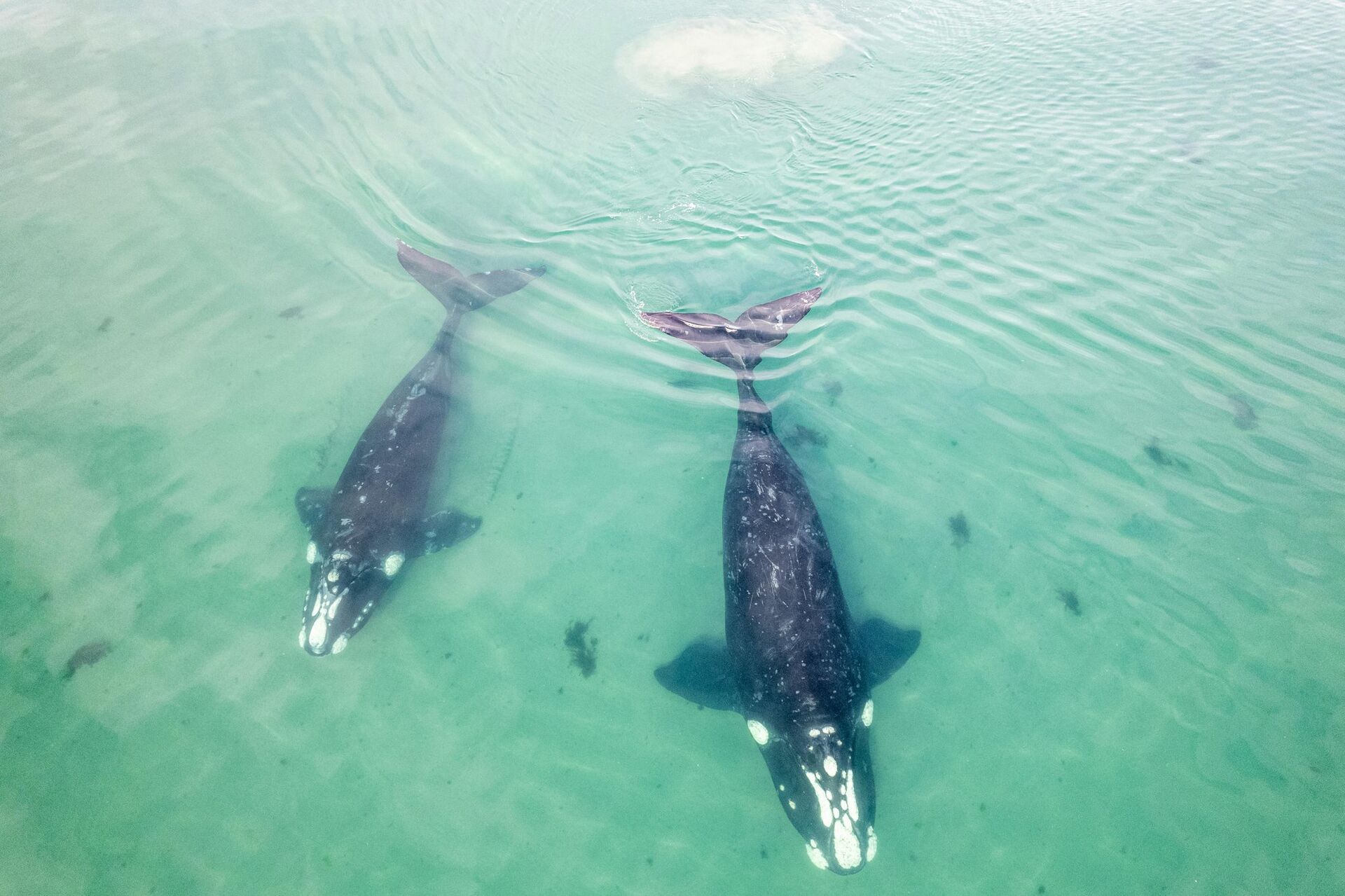
There are three right whale species: the North Atlantic, the North Pacific and the southern right whale. They are stocky, slow-moving baleen whales with big bulbous heads covered in callosities, rough patches of thickened skin whose pattern is unique to each animal and is how researchers tell individuals apart.
They have no teeth. They feed by straining enormous volumes of water through their baleen to catch copepods, small crustaceans a few millimetres long.
The name comes from commercial whaling. Right whales were the “right” whales to hunt because they swim slowly, stay close to shore and float when killed rather than sinking. That combination nearly finished them.
The southern right whale has recovered reasonably well. The two northern species have not. The North Atlantic right whale is one of the most endangered large whales on Earth, and the North Pacific right whale is rarer still.
- Maximum length: up to about 52 feet (16 metres), according to NOAA Fisheries.
- Maximum weight: up to about 140,000 pounds (roughly 63 tonnes).
- Lifespan: up to 70 years.
- Diet: copepods, filtered through baleen.
What Killed Them
Seven of the twelve carcasses were fresh enough to necropsy, which is a large number of post-mortems on animals this size to complete in one season. The incident report, compiled by Pierre-Yves Daoust and colleagues, gave clear answers.
Four whales had died from blunt force trauma consistent with being struck by a large vessel. Two had died from entanglement in fishing rope. The seventh was too decomposed for a firm conclusion, although there were signs of impact injury. Biotoxins, disease and starvation were ruled out.
Five more right whales were seen alive but entangled in gear that same summer. Disentanglement teams freed some of them.
Why The Whales Were There At All
The Gulf of St. Lawrence is the outlet for the Great Lakes, draining through the St. Lawrence River into the Atlantic. It covers around 236,000 square kilometres and is usually described as the largest estuary in the world.
Right whales had not historically spent much of the summer there. From about 2010 the numbers returning to their traditional feeding grounds in the eastern Gulf of Maine and the Bay of Fundy dropped sharply, and through the second half of that decade a large share of the population started using the southern Gulf of St. Lawrence instead from spring through autumn. Researchers link the move to a northward shift in Calanus finmarchicus, the copepod the whales depend on, driven by warming in the northwest Atlantic.
The whales moved into water that had no protections written for them. Busy shipping lanes and an active snow crab fishery were already operating there.
What Canada Did About It
Fisheries and Oceans Canada closed Snow Crab Fishing Area 12 in the southern Gulf on 20 July 2017, after the eighth carcass was found. The season had been due to run to 28 July and roughly 98 per cent of the quota had already been landed, so the closure cost the fleet little, but it set the precedent for the far more aggressive seasonal and dynamic closures that followed in later years.
On 11 August 2017 Transport Canada imposed a mandatory speed limit of 10 knots on vessels 20 metres or longer across the western Gulf. It stayed in force until 11 January 2018. Fourteen ships were fined for breaking it. From 2018 the blanket limit was replaced with dynamic shipping zones that switch on and off depending on where whales are actually detected.
Where Things Stand Now
The North Atlantic Right Whale Consortium put the 2025 population at 382 animals, give or take about eleven, in figures released in November 2026 (IFAW). That is a 1.8 per cent fall on a revised 2024 figure of 389, after several years of small increases.
It is a genuine improvement on the years around the die-off. In the 2018 calving season researchers found no calves at all. But 382 is still a very small number, over 85 per cent of the population has been entangled in fishing gear at least once, and vessel strikes and entanglement remain the two things most likely to kill a right whale. Both were already the causes of death in the Gulf in 2017.
Read next
- Whale Species: A Complete Guide to the Cetaceans of the World
- Two Dead Sperm Whales in One Week
- North Pacific Right Whales in Bering Sea
Updated 17 November 2026: updated the North Atlantic right whale population to the consortium’s 2025 estimate of 382, released on 16 November 2026.


Losing that many in one summer from such a small population is awful.
People I know in fishing are split on the new rules but most accept something had to change.
Were the causes of death ever published?
Veronica, Canada’s Department of Fisheries and Oceans published necropsy results. Vessel strikes and entanglement came up repeatedly.
Has anything changed for the right whales since 2017?
Read this on a bench by the harbour. Fitting.
Came looking for something else and stayed for this.