How Toothed Whales Use Echolocation to Hunt and Navigate
4 min read
A dolphin in murky water can find prey without seeing it. It does this with sound it makes itself, then listens for what comes back. That is echolocation, and every toothed whale does it. Here is how the system works, what the forehead has to do with it, and why a small porpoise hunts differently from a deep-diving beaked whale.
Sonar built from one voice and two ears
Echolocation is active sonar. The animal makes a sound, and the time between the sound going out and the echo coming back tells it how far away an object is. The same source says that animal echolocation has one transmitter and two receivers, the ears. An echo reaches each ear at a slightly different time and loudness, and those differences give the animal the direction as well as the distance.
Researchers put it plainly in a 2024 paper in BMC Genomics: echolocation lets toothed whales navigate and hunt underwater by producing high-frequency clicks and listening for the returning echoes. The science is younger than you might expect. Echolocation in toothed whales was not properly described until Schevill and McBride did it in 1956.
Baleen whales are a different story, and our guide to baleen whales versus toothed whales covers the split between the two groups. The papers behind this post are about toothed whales, so that is where I stay.
Clicks, not whistles
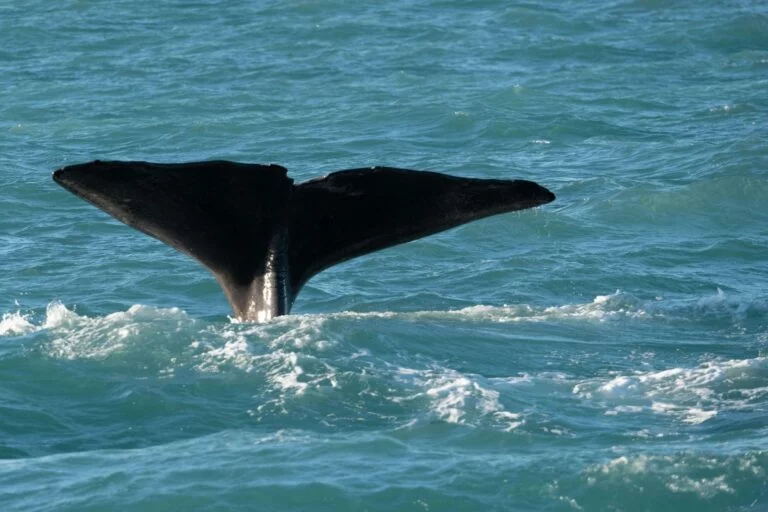
Toothed whales send out a focused beam of high-frequency clicks in the direction the head points. Most species use clicks in a series, called a click train. The sperm whale is the exception noted in the literature: it may produce clicks individually. If you want to know more about that animal, see our sperm whale profile.
Whistles are a separate matter. They do not appear to be used in echolocation, so the sounds you hear on a whale watching boat hydrophone are not all sonar. For the social side of whale sound, read why whales sing.
Click rate matters because it sets how often the animal gets an update. In bottlenose dolphins, the auditory brain response can resolve individual clicks up to 600 per second. That is a fast listener.
The melon: a lens made of fat
Look at a dolphin from the side and you see a rounded forehead. That bulge is the melon, a mass of fatty tissue found in the foreheads of all toothed whales. It focuses and modulates the animal’s sounds and works like a sound lens.
The fat is not uniform. The melon is a mixture of triglycerides and wax esters, and the inner core has a higher wax content than the outer parts. Sound travels more slowly through the core, and that gradient bends the sound and focuses it, much as a glass lens bends light.
Scientists do not claim to understand every detail. The same source says the function of the melon is not completely understood. An older idea that it helped with deep diving and buoyancy is no longer considered plausible. One more detail from the source: a starving dolphin keeps a full melon even when the rest of its body is emaciated.
Hunting with clicks
Echolocation gets most interesting when the target moves. A team led by Heather Vance, with colleagues at the University of St Andrews and Aarhus University, fitted recorders with suction cups to two hunters: harbour porpoises in shallow water and Blainville’s beaked whales, which dive deep for fish and squid. Their results appeared in eLife.
Just before a kill, a harbour porpoise can click over 500 times a second. As the animal closes in, it clicks faster to get quicker updates on where the prey is. The recorders showed that toothed whales changed their clicking within 50 to 200 milliseconds of a prey escape response.
That speed raised a puzzle. If the animal processed every echo before sending the next click, its brain would need to work about 100 times faster than human vision. The authors report that this is not what happens. The whales and porpoises do not act on each echo before clicking again. They respond to groups of tens of clicks at a time, so the response time looks similar to visual tracking in monkeys and humans.
The beaked whales, which are three times the size of the porpoises, showed longer response times. The authors suggest that the control speed may scale inversely with predator size. That is a suggestion from one study, not a settled rule.
There is a second advantage. Very few marine animals have ultrasonic hearing, so a hunting toothed whale can approach most prey without being detected until it is close. Prey can then sense the whale only through movements in the water.
When a small porpoise uses a different sonar
Not every toothed whale clicks the same way. According to the overview I used, thirteen living species evolved narrow-band high-frequency echolocation in four separate events. The group includes the pygmy sperm whales, the porpoises, some Lagenorhynchus dolphins, all Cephalorhynchus dolphins and the La Plata dolphin.
The leading explanation is predator evasion. These species are small, so they are viable prey for large toothed whales. The same source notes that orcas cannot hear frequencies above 100 kHz, so a click pitched higher than that stays out of their hearing. The source adds that three of the groups developed the trick before orcas appeared, so other ancient predators must have driven it.
Habitat shapes the sound too. In cluttered coastal waters, prey are closer, and Commerson’s dolphin has lowered its source levels to suit.
What hearing genes say about habitat
A 2024 BMC Genomics study looked at four hearing genes, CDH23, prestin, TMC1 and CLDN14, across 37 toothed whale species. All the species with genes evolving under positive selection were shallow coastal species. The authors read this as a sign that shallow habitats put particular pressure on sonar, because sound travels differently there than in the open ocean.
Why it matters to us
Because toothed whales live by sound, human noise is a real problem for them. Our posts on ocean noise pollution and underwater sonar cover what researchers know about it. A whale that cannot hear its echoes cannot hunt well.
What I find striking is how much is still being worked out. The melon, the click rates and the brain’s role are all active research. If you have watched toothed whales or dolphins and noticed something about how they use sound, add it in the comments.
Sources
- Vance et al. (2021), Echolocating toothed whales use ultra-fast echo-kinetic responses to track evasive prey, eLife
- Magpali et al. (2024), Molecular evolution of toothed whale genes reveals adaptations to echolocating in different environments, BMC Genomics
- Animal echolocation, Wikipedia
- Melon (cetacean), Wikipedia
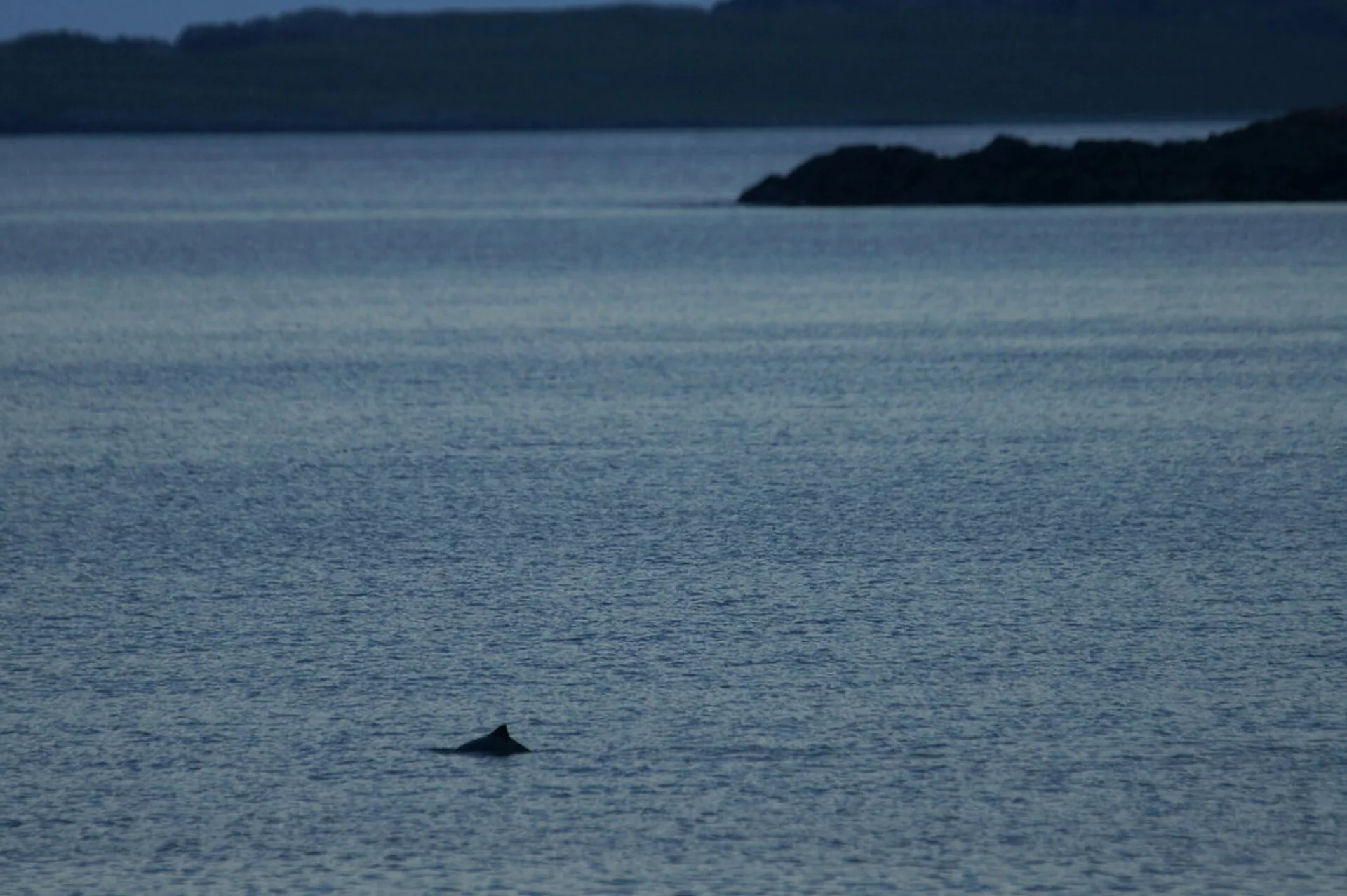
Photo: Mike Pennington, CC BY-SA 2.0, via commons.wikimedia.org.