
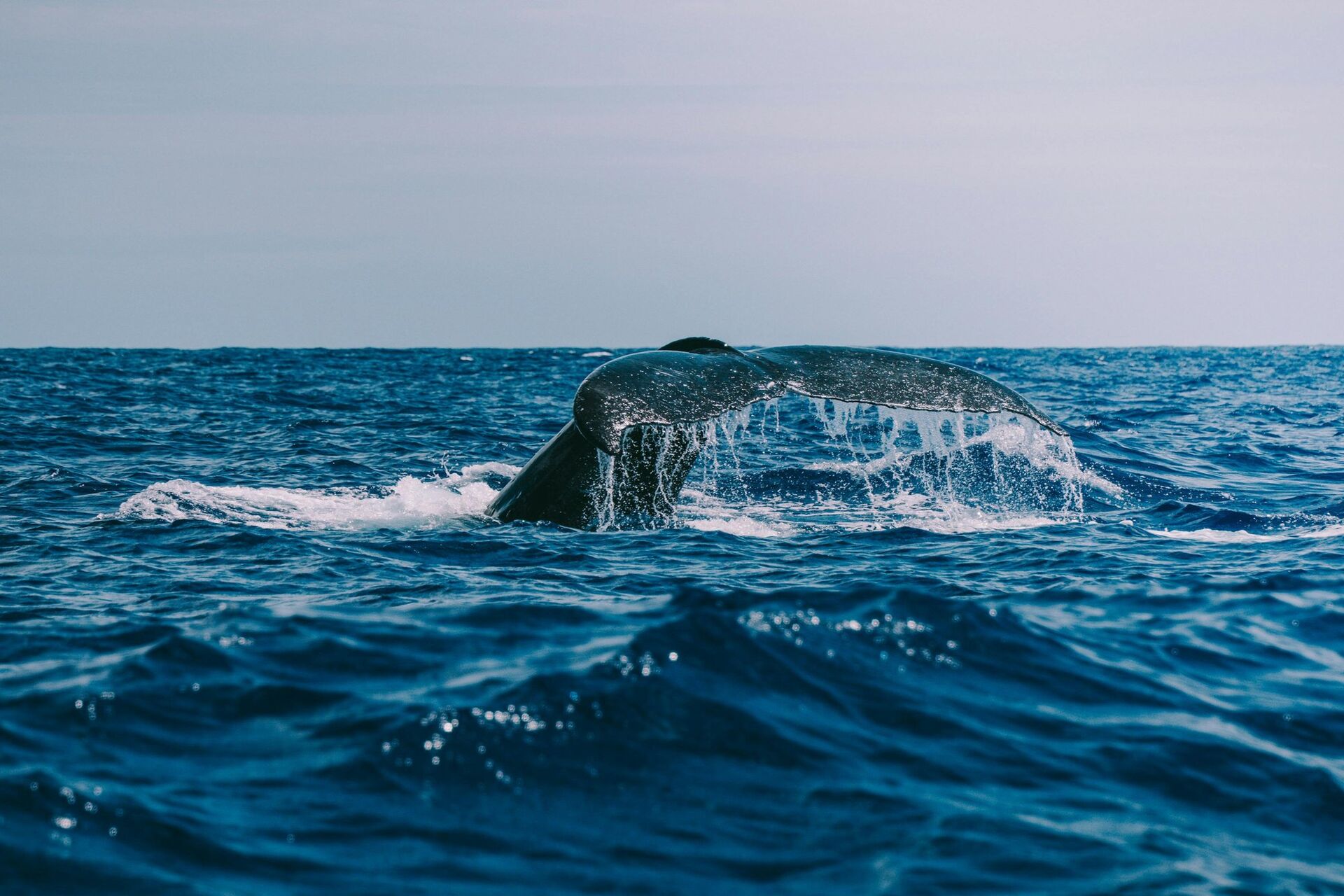
Whales And The Dangers Of Marine Plastic
Last updated: October 14, 2026
3 min read
Two beaked whale cases, in Norway and Scotland, showed the harm caused by swallowed plastic. The Norwegian whale was emaciated, very sick, and euthanised after repeated strandings.
Norway, 2017: the whale they called Plasthvalen
In early 2017 a Cuvier’s beaked whale appeared off Sotra, near Bergen on the Norwegian west coast, repeatedly coming into the shallows and clearly in distress. It was in such poor condition that the decision was taken to put it down.
The examination found the stomach packed with plastic: bags, packaging, bin liners and food wrappers, some with labels still legible. Terje Lislevand, the zoologist at the University of Bergen who studied the animal, described the stomach as full of plastic bags and packaging with labels in Danish and English. The whale had almost no blubber left. Plastic had taken up so much of the stomach that it could not have been feeding properly for a long time. Norwegian coverage named it Plasthvalen, the plastic whale.
Scotland: four kilos on the Isle of Skye
A Cuvier’s beaked whale washed up on the Isle of Skye with more than four kilograms, around nine pounds, of plastic bags coiled and tangled through its stomach and intestines. The plastic had irritated the gut and very likely killed it.
Dr Andrew Brownlow, who carried out the post mortem, made the point that matters most about a case like this: “For every one of these pieces it is possible that there would have been some form of human action that could have stopped it from getting into the marine environment.” Mariel ten Doeschate, of the Scottish Marine Animal Stranding Scheme, added that any animal dying from the effects of plastic debris is one too many, and that stopping more plastic entering the sea is urgent.
Why beaked whales keep turning up in these stories
Cuvier’s beaked whale is the most widely distributed of the beaked whales and is not currently considered threatened: the IUCN lists it as Least Concern, with population estimates in the tens of thousands worldwide and around 80,000 in the eastern tropical Pacific alone.
It is also the deepest diver known among mammals. Researchers recorded a dive of 2,992 metres (9,816 feet) off California in 2014, and a separate study documented a dive lasting 222 minutes, three hours and 42 minutes, the longest ever recorded for any mammal. These are animals that hunt squid in deep water far from any coastline. When they die with a stomach full of carrier bags, the plastic has travelled from a bin somewhere to the deep open ocean, which is the part of this that should be alarming.
The scale behind the two cases
A 2014 study estimated more than five trillion pieces of plastic floating in the world’s oceans. The Ellen MacArthur Foundation’s widely cited 2016 report projected that by 2050 there could be more plastic than fish in the sea by weight. A European Commission assessment estimated that the EU used 98.6 billion carrier bags in 2010 and littered about 4.5 billion of them.
Numbers that size are hard to feel. Two whales with their stomachs opened on a beach are not. Animals that hunt at depth or at night take floating and drifting plastic for food, and when they are not eating it they are getting caught in it.
Where this leaves us
The Norwegian whale was emaciated and very sick, and authorities euthanised it. Plastic in its stomach probably contributed to its illness. The other case also linked plastic ingestion with starvation. Millions of tonnes of plastic still enter the ocean every year, and the fix is not complicated so much as collective: less single use plastic produced, better recovery of what is already out there, and disposal that does not end at a beach.
Updated 14 September 2026: corrected plastic bag figures and the Norwegian whale’s outcome.



That beaked whale story is horrible. Do we know where the bags came from?
Makes sense that a floating bag looks like squid in the dark.
Damaris, yes, that is the usual explanation for why deep divers swallow plastic.
Microplastics in the food chain is scary to think about.